

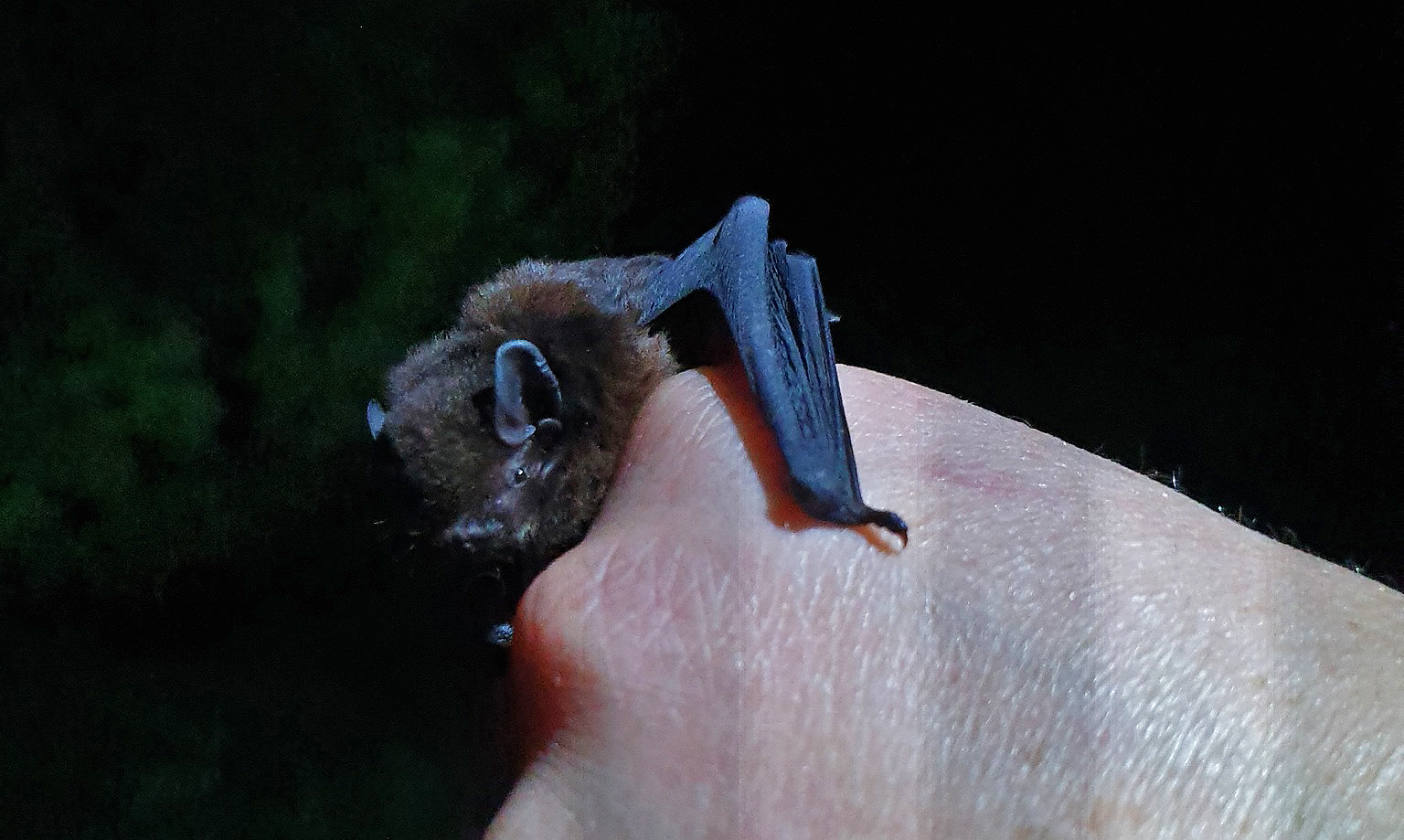
- Aotearoa New Zealand’s only native land mammals are three bat species — one of which is likely extinct and the other two headed in the same direction due to habitat loss and other threats.
- A community-led bat research group, one of the first in the country, is working to help save the New Zealand long-tailed bat (Chalinolobus tuberculatus) by conducting surveys for bats in and around Franklin county, near Auckland.
- Their research project, called Finding Franklin Bats (FFB), is also aiming to spread local awareness of New Zealand’s bats and their plight by working with landowners and community members.
- Over the past three years, volunteer numbers have swelled from 50 to more than 180, and in 2026 FFB received enough funding to employ seven people, six of them members of local Indigenous communities.
Billy Mclean knew nothing about bats. As a lifelong Kiwi, there was no reason for him to.
Unlike in neighboring Australia and other parts of Oceania whose renowned flying foxes grow meter-long wingspans, Aotearoa New Zealand is famous for its birds, not bats.
Mclean worked as an arborist in the Franklin area, an agricultural county south of Auckland on the North Island. He said he felt he knew everything about the local forest, until one night 23 years ago.
As he headed home from a nighttime walk on his property, a shadow swooped from the arched tree canopy. He ducked — all his years spent in the trees, and he had never seen anything move like it.
Mclean said it took a minute to register what he had seen. “As the picture develops, you get that classic crescent-shaped wing,” he told Mongabay by phone. “That’s when I knew. We’ve got bats.”
That night sparked a passion for bats that Mclean has been pursuing ever since. After years of being “straight-up ridiculed” for trying to convince his community that these creatures lived in their backyards, many are starting to believe him.
Today, he’s an active member with Finding Franklin Bats (FFB), a locally run research project teaching community members how to find, monitor and protect the overlooked bats that live in their backyards.
Unlike New Zealand’s famous kiwi (genus Apteryx) and takahē (Porphyrio hochstetteri), bats aren’t flashy or feathered. They’re elusive and tiny: “chicken nugget-sized,” Ben Paris, a senior conservation adviser for the Auckland City Council, told Mongabay over a Zoom call.
While small, they’re significant. Bats, or pekapeka in Te Reo Māori, the country’s official Indigenous language, are taonga, meaning they’re recognized as significant “treasure” species. They appear in Māori stories and sacred face tattoos, known as tā moko.
Two species — the New Zealand long-tailed bat (Chalinolobus tuberculatus) and the New Zealand lesser short-tailed bat (Mystacina tuberculata) — are the country’s only known native land mammals still around today. (A third species, the New Zealand greater short-tailed bat, Mystacina robusta, hasn’t been recorded since 1967 and is likely extinct.) These last two are also at risk of extinction: lesser short-tailed bats are classified as vulnerable on the IUCN Red List, while long-tailed bats as considered critically endangered. Both are primarily threatened by deforestation, which carves up their habitats into shrinking islands in a sea of developed farmland. This leaves their roosts more vulnerable to predation by invasive possums, stoats and feral cats.
And while both species are protected under the country’s Wildlife Act, bats are frequently killed because rural landowners don’t know to check for bat roosts before felling trees.
Zion Flavell is a part of Ngāti te ata, a Māori iwi, or tribe, from the surrounding Auckland region. He joined Finding Franklin Bats in 2023.
“I heard the stories of the tā moko, but it didn’t click,” he told Mongabay over video call. As bat populations have decreased, Flavell said, many people in the surrounding Franklin area aren’t aware that fragmented populations of long-tailed bats live on local properties. There are several reasons for that.
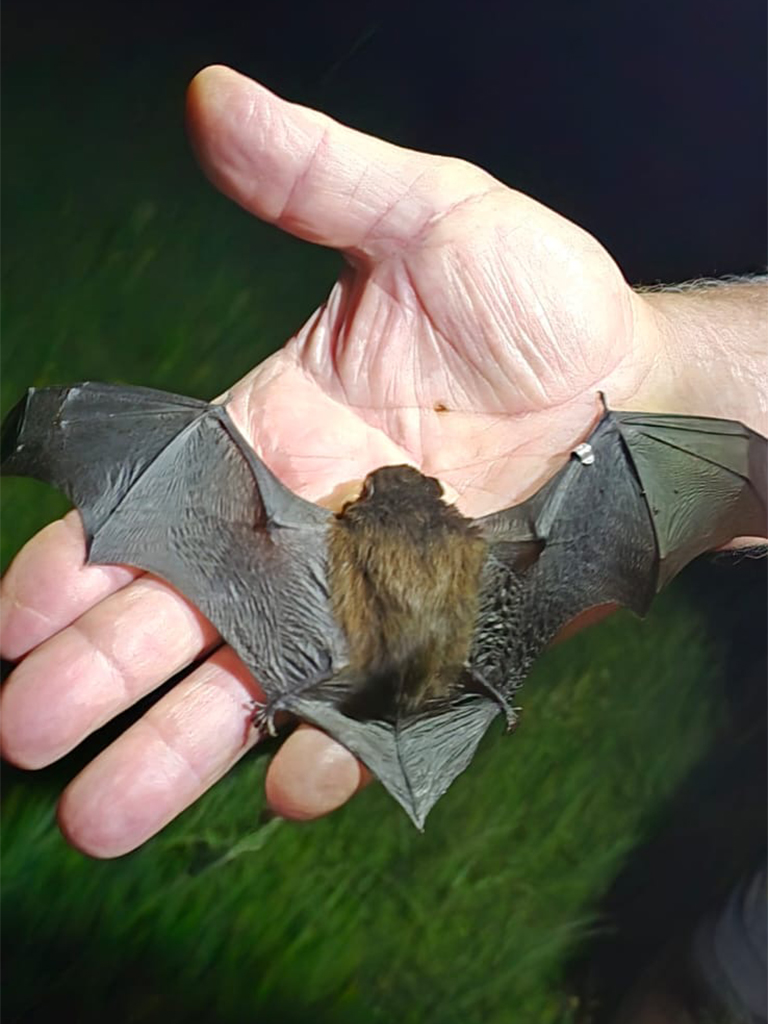
“There is very little research done on pekapeka,” said Grant Temporo, a senior research officer within the University of Waikato’s Environmental Research Institute. He told Mongabay over Zoom that the country’s Department of Conservation (DOC), which oversees much of the endangered species research, is limited in scope and funding outside of the national parks it manages.
“So you have all these small, fragmented [bat] populations that are hanging on, but no one studies,” Temporo said. For that reason, the overarching state of New Zealand’s bats “is just a big unknown.”
Outside of the DOC and universities’ research, private contractors have historically been the sole monitors of bats, primarily at the mandated request of developers prior to construction on public land. The results of their monitoring rarely make it back to the community, though, according to FFB members.
Altogether, this means bats are “just not on the radar for New Zealanders,” Paris said.
Finding Franklin Bats is working to change that.
When Auckland City Council members first expressed interest in doing an initial bat population survey in Franklin, Paris knew it would be very difficult because most bats live on private property.
“Auckland council isn’t very popular with rural landowners,” he said. “We’re seen as an authority that’s going to come and change things on their land.”
In 2022, Paris suggested an alternative: that the initial survey be spearheaded by volunteer community members and researchers from EcoQuest, a local field station for U.S. university students.
“Most landowners wouldn’t open their gate for the council,” Paris said. But “they would for the other community members.”
Thus began one of the country’s first community-led bat research groups, said Natasha Bansal, a local conservation biologist. Back then she was working at the EcoQuest field station, and today is the project’s research lead.
In January 2023, Paris helped Bansal organize the first Finding Franklin Bats meeting. She sat down with members of Ngāti te ata and some nearby landowners who were involved in Predator Free Franklin, a local invasive species control program.
Bansal asked if they wanted to expand their community work to pekapeka.
Billy Mclean was there , his neighbors had invited him because he was known for talking about bats. It was at the project’s first meeting “where I met Natasha, and my life path took this new direction,” Mclean said.
Meanwhile, Paris convinced Auckland City Council to adopt a new conservation model for Franklin. Instead of the government doing the work itself, or contracting it out to private consultants, he and Bansal convinced them to directly fund their local research, and have the “community approach the community”: a first for pekapeka research.
The following August, Bansal kicked the project off by leading “batwalks.” Her goal was to get community members “a little bit excited about the potential of having bats in their backyards,” she told Mongabay by phone. She taught community members how to recognize bat roosts, see bats at night, and track bat calls using detectors on their own property.
The project snowballed from there. Today, FFB hosts free training workshops on how to operate handheld radio telemetry equipment to detect bats. It continues hosting batwalks open to the public and teaches kids about bats at a dozen nearby primary schools.
The project has spread beyond Franklin and into neighboring communities. Over the past three years, volunteer numbers have swelled from 50 to more than 180. This year, the project received enough funding to employ seven people, six of them members of local Indigenous communities.
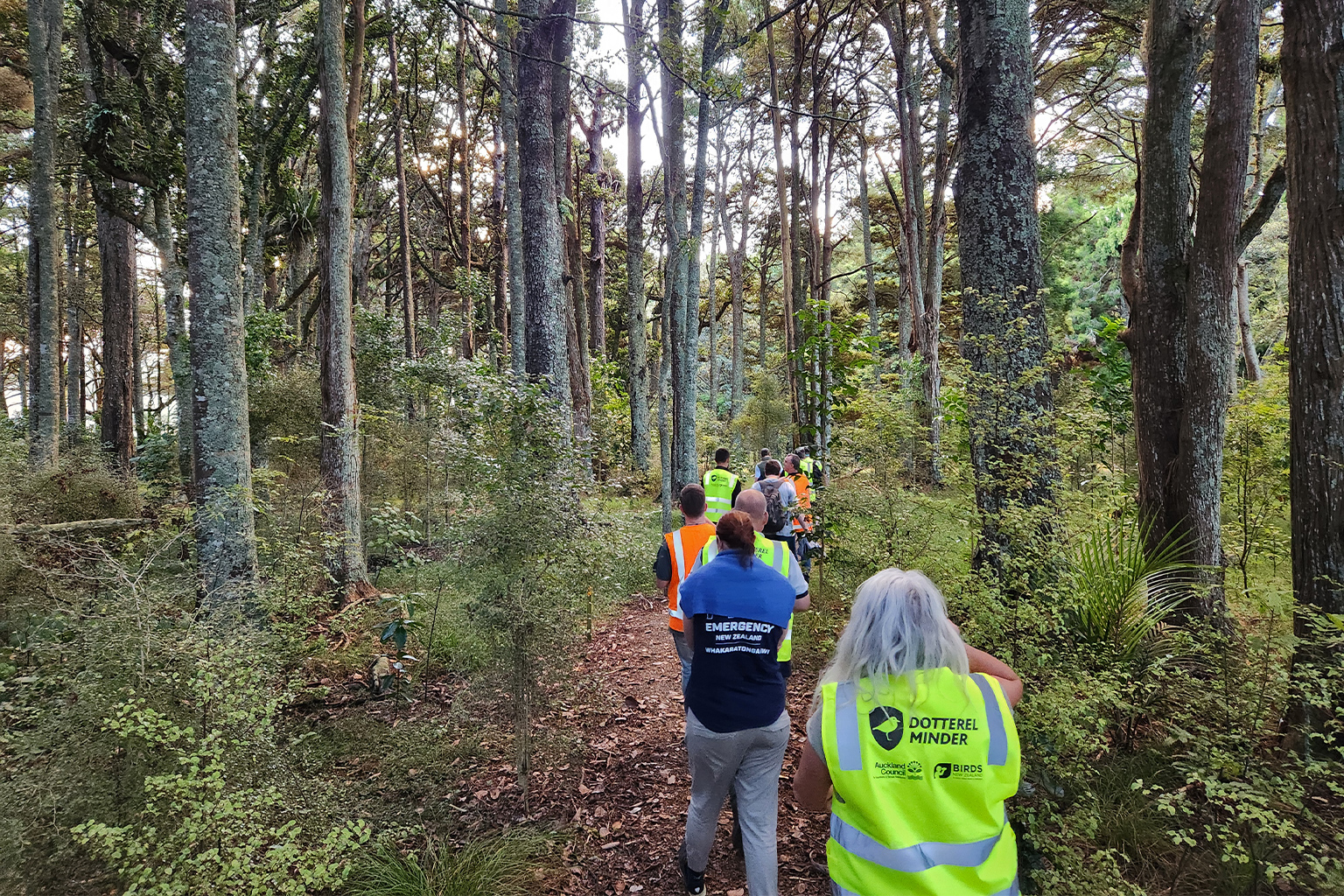
Together, they teach landowners how to operate automated bat monitors, lend them the equipment to gather their own data, and teach them how to log the information into the DOC-maintained bat observation database. When FFB conducts bat surveys on private property, Bansal sends reports to local landowners and connects them with local invasive species control initiatives, such as Predator Free Franklin, so they can learn how to implement different types of pest control to protect the pekapeka on their property.
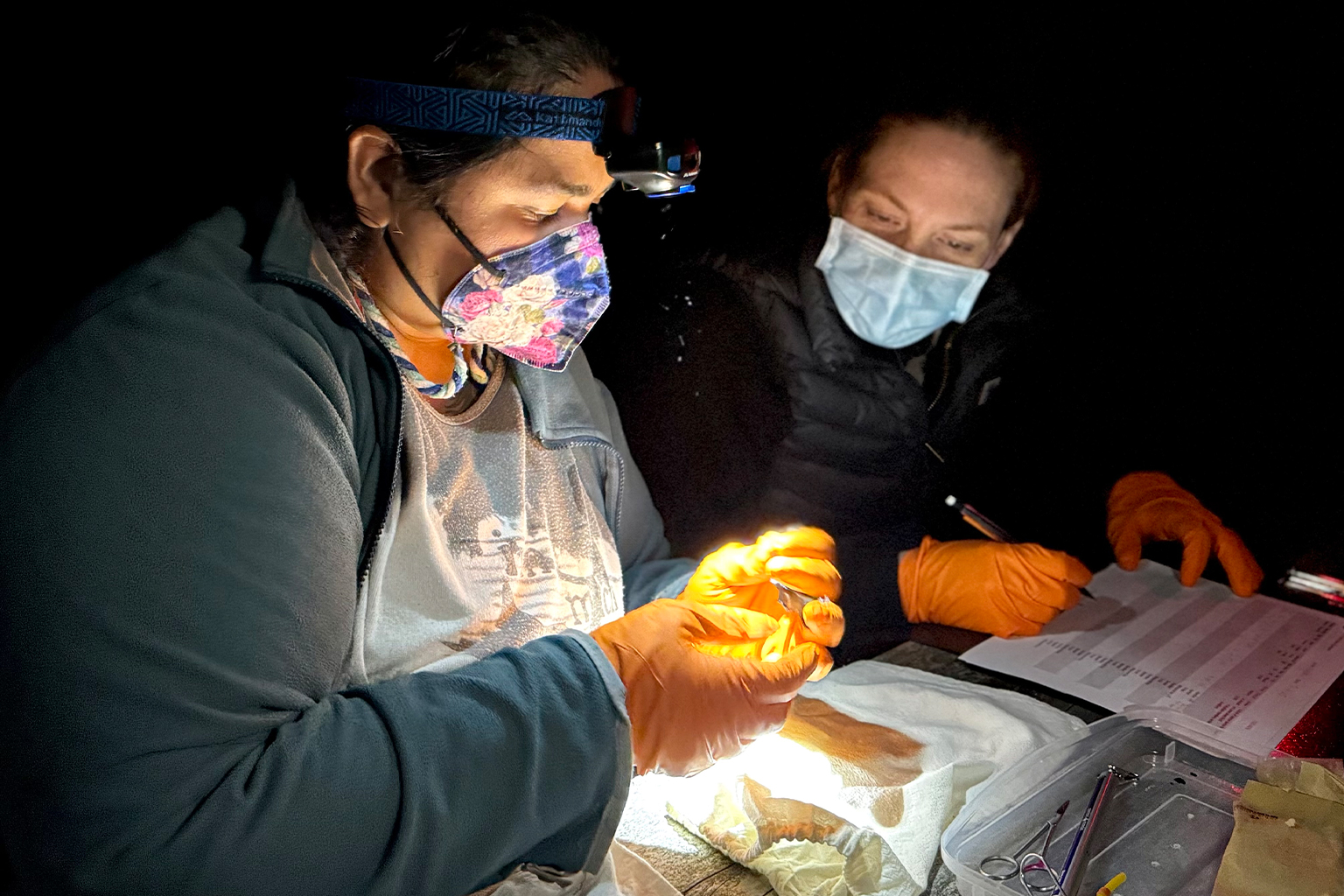
Twice a year, Bansal, with the help of student volunteers, sets up harp traps in the flight paths at four different local bat colonies. Interested community members watch as Bansal and the other certified bat handlers capture and quickly check on the bats’ general health, take measurements, and even affix miniature trackers to some.
This year, they caught and processed data on around 400 bats — a program record. Bansal said FFB is in its third year of an ongoing five-year study. While she can’t yet draw definitive conclusions about the state of local roosts, she said they’re catching a significantly higher proportion of juveniles: an indication that local predator control is protecting bat pups, who are most vulnerable to predation.
Within the next two years, Bansal said, they’re aiming to submit a paper including community-collected data for peer-reviewed publication.
In March, the Department of Conservation selected FFB to host a pekapeka hui — a conference — in Franklin, bringing together bat researchers and enthusiasts from across the country and Australia, and solidifying the group as one of the most active voices of bat education in New Zealand.
“I just think community conservation work is the way forward,” Colin O’Donnell, the DOC’s principal science adviser, told Mongabay over a Zoom call.
He said research models like FFB’s represent an important way forward in alignment with the recently released national biodiversity plan, which emphasizes the importance of community involvement in conservation strategies.
“I think where Franklin’s different is they’re really embracing getting people trained,” O’Donnell said.
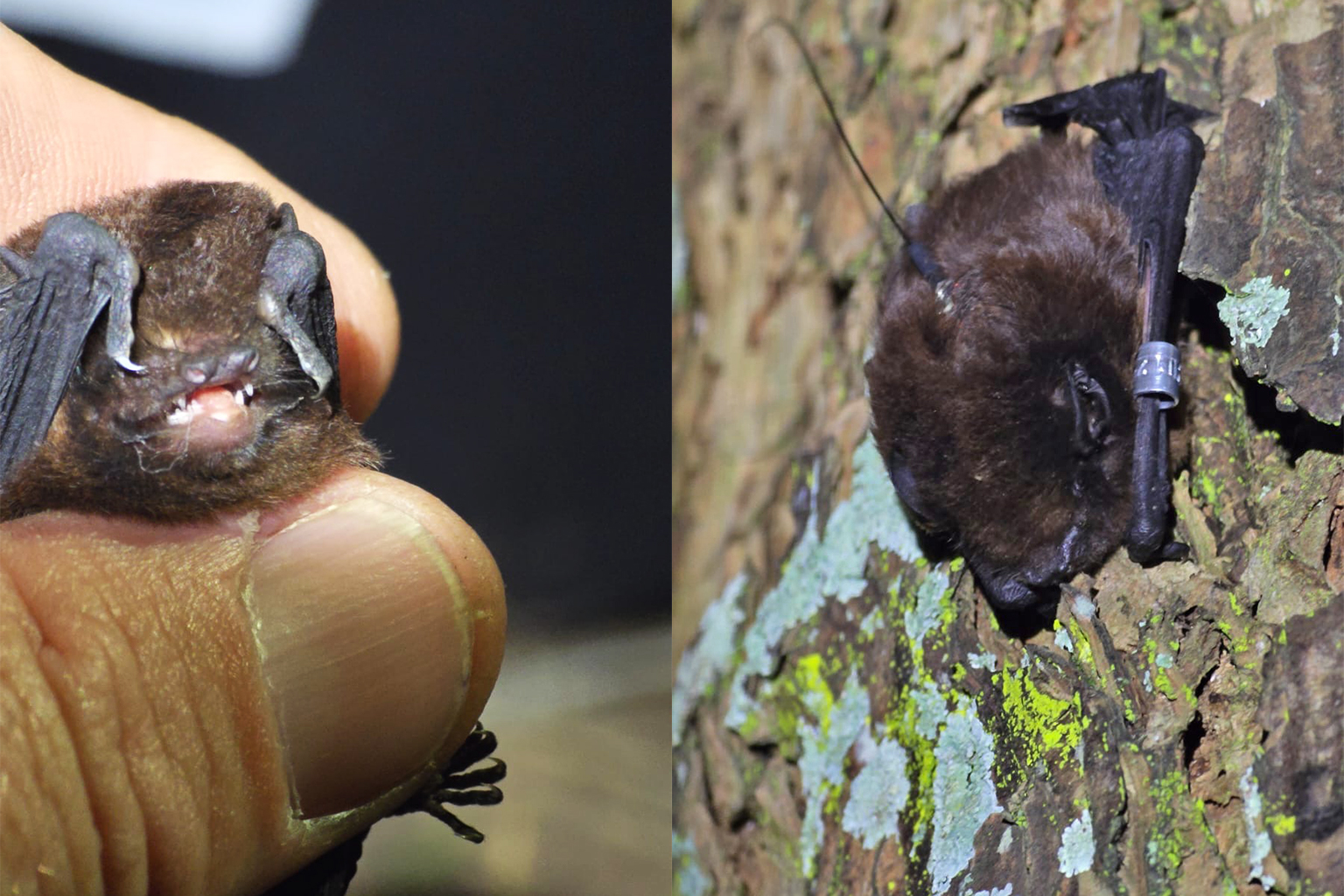
One of the most rewarding parts of the program’s success, said Billy Mclean, is the local community’s shift in attitude about the bats. Like Mclean, more people have begun to take ownership of “their bats,” as Paris puts it. They teach others about them, and celebrate them.
“I feel massively proud of what we have achieved as a group,” Bansal said.
For Zion Flavell, FFB represents an opportunity to practice kaitiakitanga in his local community — the Māori practice of guardianship over natural resources and sacred taonga species.
Through this project, Flavell has become certified in bat handling: a certification very few people in New Zealand have. Now, he said, he wants to be able to independently help Ngāti te ata conduct their own research.
This way, FFB is “creating little pockets of the bat community that can help each other,” Flavell said.
“I think they’re doing what we all set out to achieve as researchers,” said Grant Temporo, who advises master’s students’ pekapeka research projects at the University of Waikato and does volunteer work with bat populations in Hamilton. “Once the community is involved, that’s a huge resource you can then tap into.”
Banner image: A New Zealand long-tailed bat (Mystacina tuberculata). Image © hrubbo via iNaturalist (CC BY-NC 4.0).
Editor’s note: The author of this article worked with Finding Franklin Bats in a temporary volunteer capacity in 2024.
Correction (May 20, 2026): A previous version of this article stated FFB caught and processed data on 100 bats in 2026. That figure has been updated to 400.
FEEDBACK: Use this form to send a message to the editor of this post. If you want to post a public comment, you can do that at the bottom of the page.
