

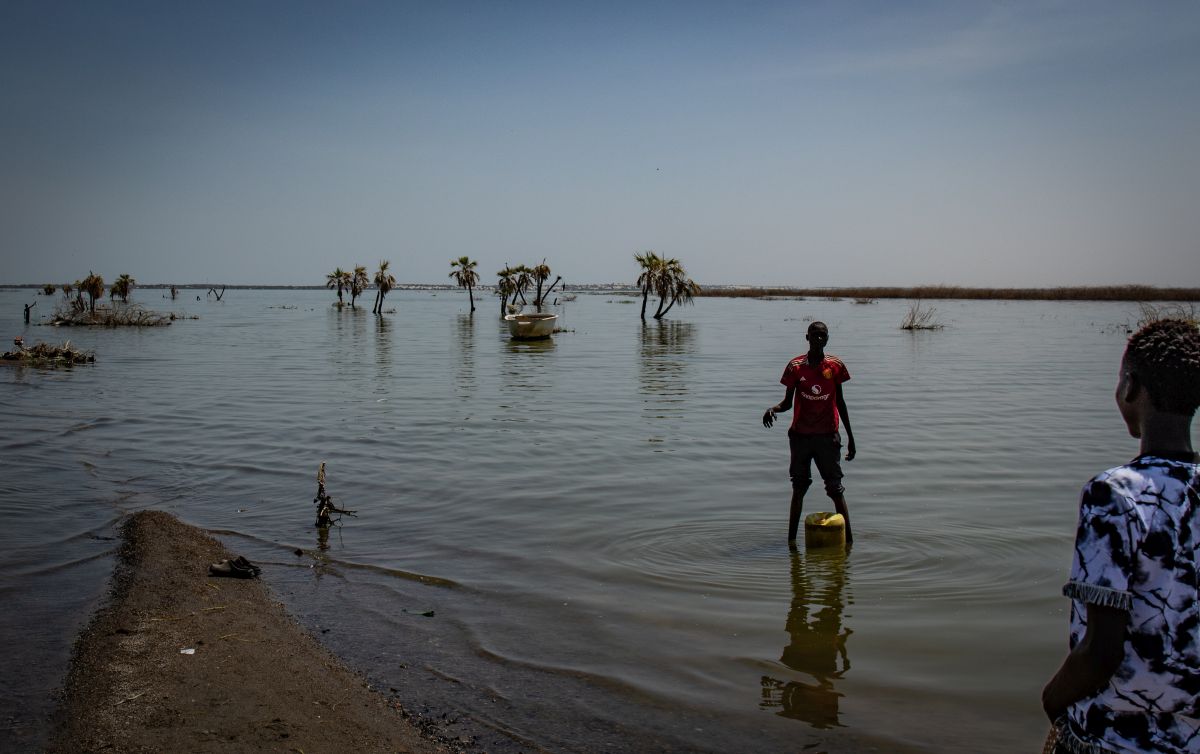
- Lake Turkana in northern Kenya has risen by as much as 10 meters (33 feet) over the past 15 years, displacing communities, flooding infrastructure and reshaping fisheries in one of the country’s most climate-vulnerable regions.
- Scientists and local residents are still debating the causes of the lake’s expansion, with theories ranging from heavier rainfall linked to climate change, to tectonic and groundwater shifts, while researchers say Ethiopia’s Gibe III Dam upstream has also altered the lake’s ecological dynamics.
- Fishers around the lake say catches have declined sharply in recent years as changing water levels alter breeding grounds and fish distribution, while drought drives more pastoralists to rely on fishing for survival.
- Researchers and local advocates say Lake Turkana suffers from decades of poorly planned development and limited scientific monitoring, though new efforts are underway to improve data collection and guide more sustainable management of the lake and its fisheries.
KALOKOL, Kenya — Rake-thin with teeth stained a deep brown from decades of drinking untreated lake water high in fluoride, 62-year-old John Esirite sits in the shade outside the small office of Kalokol’s Beach Management Unit, or BMU, the community-run body that oversees local fisheries.
“The old office used to be down there,” the fisherman says, pointing toward the western shoreline of Lake Turkana, the world’s largest permanent desert lake, just visible a couple of kilometers away. “But now it’s underwater.”
Over the last 15 years, Lake Turkana has risen by about 8-10 meters (26-33 feet). That’s increased its surface area by around 10%. In and around the fishing hub of Kalokol, hundreds of people have been displaced by this steady advance.
In Esirite’s case, the village where he grew up, Natole, has long since been abandoned. The fisherman has had to relocate three times since 2014, pushed ever farther from his ancestral land and the nearshore breeding grounds he has fished for most of his life.
“We are suffering, but no one is helping us,” he says. “We can only pray to God for assistance.” But even the church where Esirite used to pray is underwater.
What is happening in Kalokol is part of a wider trend. Since the early 2010s, many lakes across Kenya’s Rift Valley have flooded, their expansion accelerating after particularly heavy rains in 2020, forcing tens of thousands from their homes.
But here, in this long-neglected northern corner of the country, the human and environmental impacts are particularly acute in a region also facing repeated severe droughts.
The systems meant to understand and manage this changing landscape have struggled to keep up.
Ebbs and flows
Ikal Angelei, 44, grew up 50 kilometers (30 miles) from the lake’s shore, in Lodwar, now the regional capital of Turkana county. As a child in the 1980s, she often spent weekends swimming and relaxing with her family at a small resort in Longech, just north of Kalokol, which at the time was only accessible by boat due to high water levels.
But over the following decades, Angelei watched the lake steadily recede and settlements and fishing infrastructure spring up along the newly exposed western shoreline.
In 2008, Angelei caught wind of a project she feared could dry up the lake altogether, with devastating consequences for the growing number of people who depended on it. Two years earlier, neighboring Ethiopia had begun construction of the Gibe III Dam along the Omo River, the source of 90% of Lake Turkana’s water. Hydrologists predicted the completed dam would cause the lake’s water level to drop by as much as 10 m (33 ft) within the first five years alone.
Outraged, Angelei founded an NGO, Friends of Lake Turkana, to organize local communities who’d been left out of the consultation process to fight the dam. In 2012, she was awarded the prestigious Goldman Environmental Prize for her advocacy.
Yet construction of the dam continued, and in 2015, Ethiopia began filling the vast Gibe III reservoir, temporarily reducing inflows into Lake Turkana. But contrary to early predictions, the lake did not recede permanently. Instead, water levels began to rise again.
Why that is remains a matter of debate.
“I think there are really two schools of thought,” says Kevin Obiero, a center director and researcher at the Kenya Marine and Fisheries Research Institute (KMFRI).
“The first one is the influence of heavy rains upstream in the catchment, as well as in northern Kenya. Then the second school of thought is about underground water and tectonic shifts, but this has not really been looked into much.”
The rising waters present a broad threat to the lake’s ecology, adds Kamazima Lwiza, a marine physicist at Stony Brook University in the U.S., who has conducted extensive fieldwork on Lake Turkana. He also maintains that the Gibe III project has significantly altered the lake’s fragile ecosystems.
“After the dam, the flow from the Omo River is controlled — it doesn’t have the flood-drought cycle it used to have,” Lwiza says. “You’re also cutting off the suspended sediment, which carries most of the nutrients into the lake. And it also doesn’t have the pulse most of the fish have evolved to follow.”
This is just one of several ways in which the lake’s dynamics today differ from those of past fluctuations. Another, Obiero says, is the growing population along the lakeshore. “Any small increase in water levels now really has a huge impact on displacement,” he says, “and the number of people facing these challenges is ever increasing.”
Such pressures are likely to intensify. Recent climate projection models suggest that the lake’s key river inflows will continue to see heavier rainfall over the next 15 years or so, leading to a further rise in water levels and greater expansion of the lake’s surface area.
‘Different altogether’
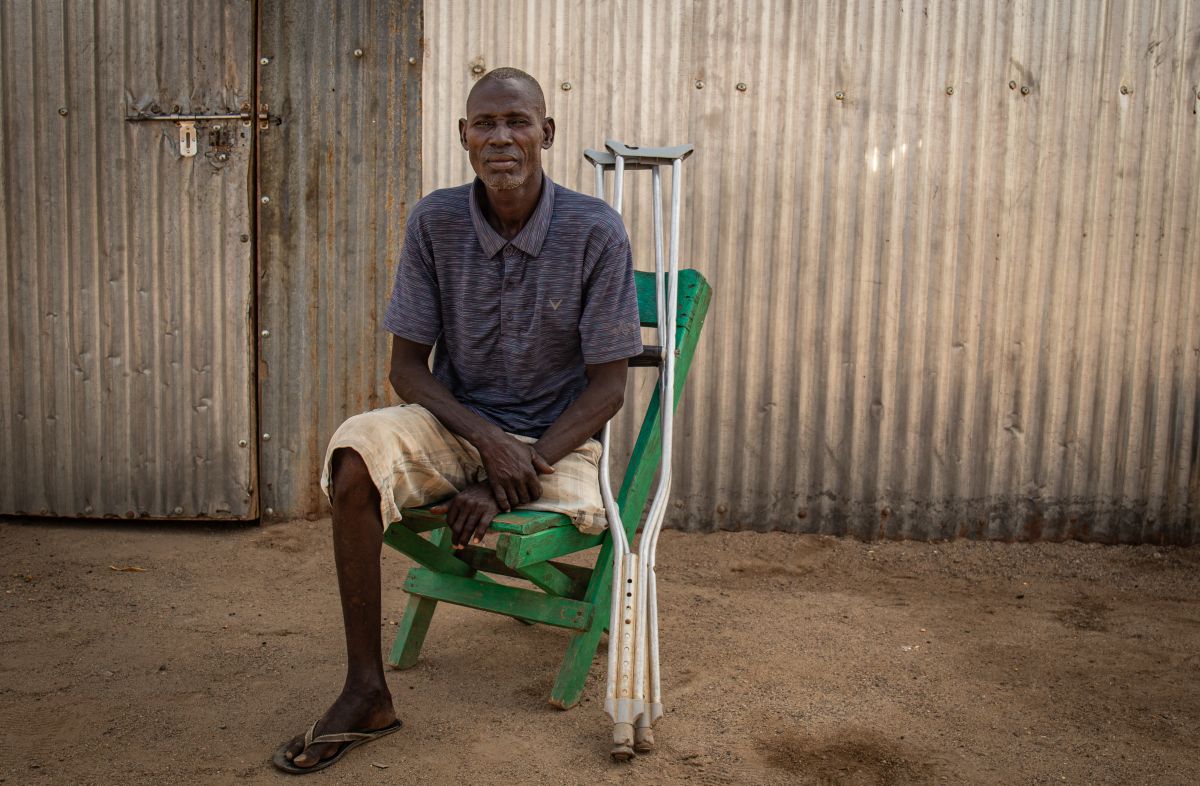
As the lake’s waters have risen, fishers all along the lake’s western shoreline say their catches have fallen significantly. They say they’re catching fewer large species, such as tilapia and Nile perch, Turkana’s traditional commercial staples.
Catch data from the Kenya Fisheries Service appears to corroborate this, showing fish production on Lake Turkana rising steadily from 6,430 metric tons in 2010 to 17,251 metric tons in 2022, before falling to around 15,600 metric tons in 2023, the most recent year for which full data are available.
Researchers say the lake’s changing conditions are reshaping fisheries in ways that are still not fully understood. Rising water levels are thought to be altering breeding grounds and fish distribution patterns, particularly in nearshore areas such as Ferguson’s Gulf, a shallow inlet just north of Kalokol.
Lwiza recalls visiting Ferguson’s Gulf in 2019, and there being so many fishing boats on the water that “you could barely navigate your way out onto the lake.”
“I come from Lake Victoria, and it’s known to be very rich in fisheries, but I’d never seen anything like that. It was bumper to bumper, and everyone was getting some fish,” he adds. When Lwiza returned in January 2024, the contrast was stark: “It was a different thing altogether. There were barely a dozen boats on the water, because there were no fish.”
At the same time, Turkana county has once again been gripped by severe drought, which has decimated livestock and driven an increasing number of pastoralists to the lake to fish instead.
“There are more and more of them coming here every day,” says 28-year-old Joseph Edapal, who has fished the waters around Kalokol since he was 7 years old. “But there are not enough fish.”
‘Ruins of Turkana’
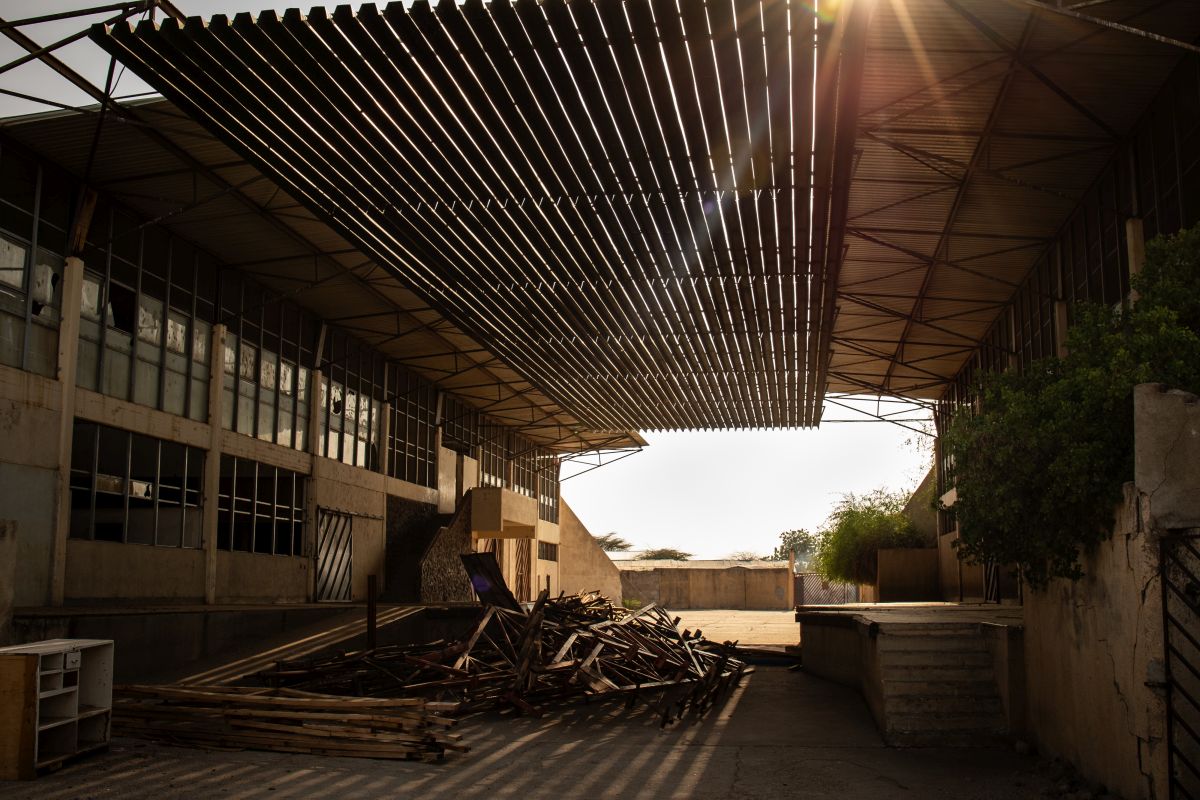
Just behind the Kalokol BMU office sits the hulking shell of a fish-drying and freezing factory built in the early 1970s by Norad, the Norwegian government’s overseas development agency, in an ambitious bid to develop a commercial fishing industry in the region.
Just a few years later, however, the facility had already been abandoned. Freezing fish proved financially unviable in such a remote location, while the complex system designed to move catches from lakeshore to market was inefficient and prone to corruption. A drought that reduced inflows from the Omo River delivered the final blow, lowering lake levels and collapsing the fishery at Ferguson’s Gulf.
Today, the site is perhaps the most prominent example of what Samuel Derbyshire, an anthropologist at the International Livestock Research Institute, has called the “ruins of Turkana”: a series of ill-conceived development projects that, as Derbyshire notes, were designed around fixed assumptions — about stable communities, predictable environments, and permanent infrastructure — in a region where mobility and variability have long been central to how people live.
Derbyshire says the more recent development projects, from dams across the border in Ethiopia to oil extraction in Turkana county’s Lokichar Basin, have compounded a strong feeling among local communities that “this kind of transformative agenda is not really oriented towards local livelihoods.”
Angelei goes a step further, arguing that Turkana faces a climate crisis compounded by a development model that prioritizes extraction over the wider ecosystem.
But according to Obiero, efforts to better understand and manage that ecosystem have been constrained by limited data and patchy research. “Turkana is a data-deficient region,” he says, noting that until recently, even basic fisheries surveys had not been conducted since the 1980s.
That’s now beginning to change. Working with partners including UNESCO, the World Food Programme and local county governments, and with funding from the Dutch government, Obiero and colleagues are leading a multiyear effort to build a more consistent evidence base around the lake to guide policy and more sustainable management. The project combines acoustic surveys, catch monitoring, and community-led data collection to better understand fish stocks, fishing pressure, and how the system responds to shifting water levels.
Yet even as these efforts gather momentum, the fundamentals remain fragile. Across much of the lakeshore, access to basic infrastructure is still severely limited. “Around 2% of the landing sites are covered by electricity,” Obiero said. “Potable water is around 5%.”
‘A lot of stress’
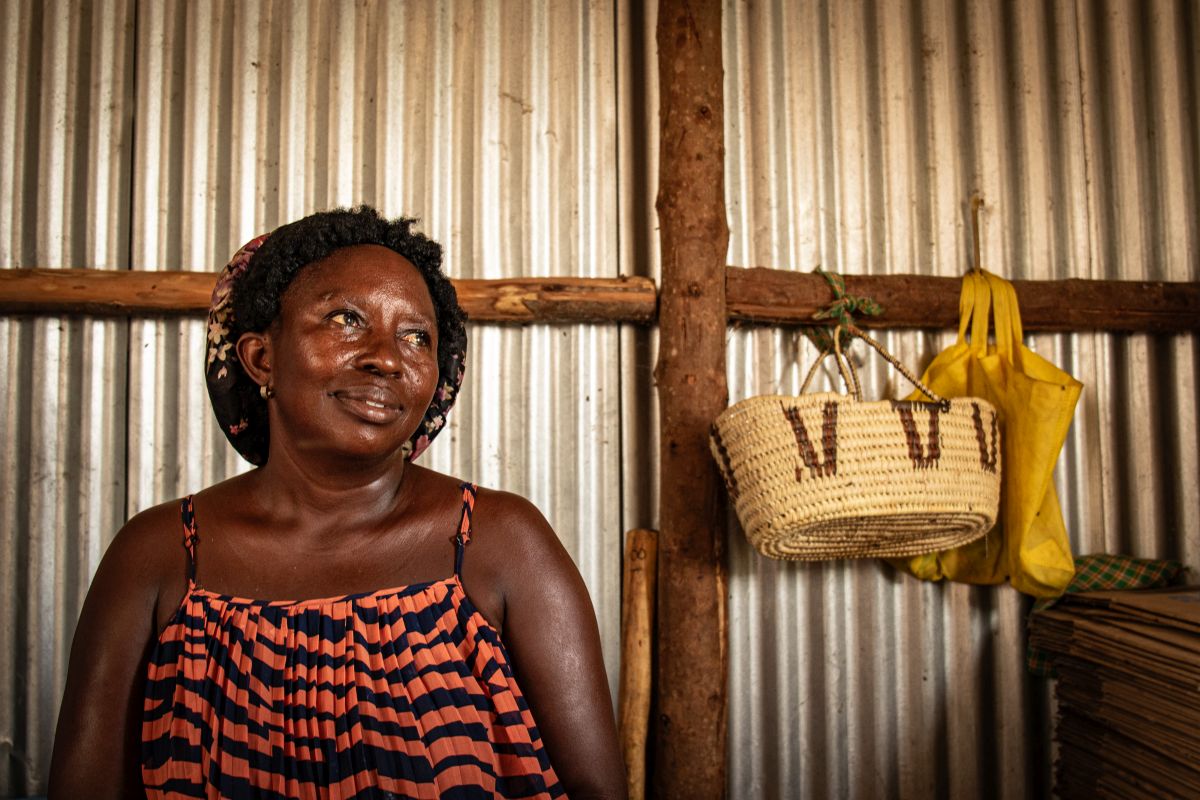
Back in Kalokol, those constraints shape daily life. At a makeshift fish-processing site just behind the main landing site, 49-year-old Gisele Masambi fries small fish known locally as omena in a cast-iron pot full of boiling oil. Nearby, a few rows of tilapia are spread across a rusty wire-mesh rack, drying in the sun.
Originally from the small town of Kakuma about two hours inland from Kalokol, Masambi, who is a single mother of 10, has been doing this work since 2012. With no cold storage and unreliable transport links between the lakeshore and the inland markets she mostly depends upon, she has a narrow window in which to process and sell fish.
In recent years, Masambi says, it’s become harder to make ends meet. “There are fewer fish now,” she says, and what is caught is often smaller. She often pays fishermen in advance, but if they return with little, the loss is hers to absorb.
“It’s a lot of stress,” she says. Behind her, the steady thud of wood on wood carries across the shoreline as new fishing boats are assembled. Masambi scoops up another batch of fish and lowers them into the pot.
Banner image: A boy gathers water in Kalokol, with submerged palm trees behind. Image by Christopher Clark for Mongabay.
‘Turkana has always adapted to change’: Interview with environmentalist Ikal Angelei
Feedback: Use this form to send a message to the author of this post. If you want to post a public comment, you can do that at the bottom of the page.
