

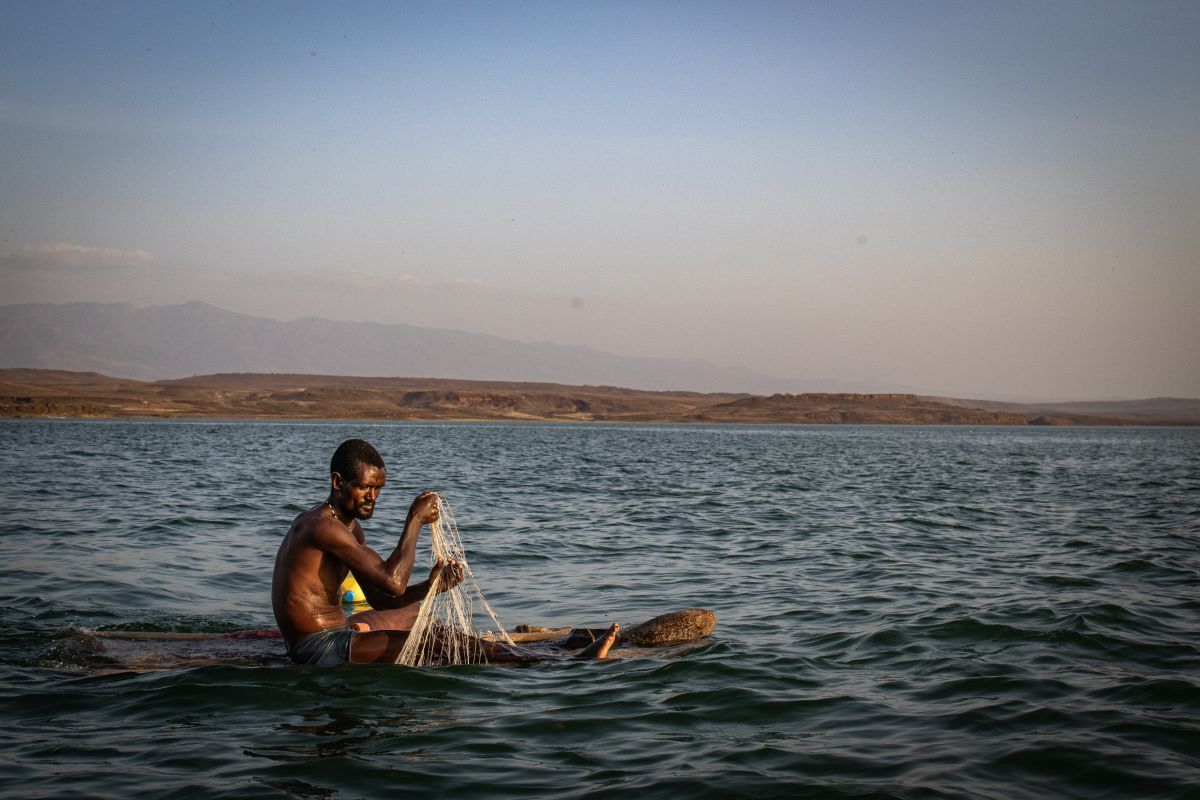
- Local livelihoods around Kenya’s Lake Turkana have long shifted between pastoralism, fishing, farming and trade as people adapted to a landscape defined by fluctuation.
- But as the scale and intensity of erratic climate patterns, mounting pressure on its fisheries, and conflict over resources has increased, their space has shrunk.
- The lake has long been a place where the poorest could make a living, but as the economic value of resources here increases, there is a risk that they will be pushed out by those better placed to access infrastructure and opportunities.
Lake Turkana in northern Kenya is often portrayed as a region in perpetual crisis due to climate change. But for the Indigenous groups who have lived here for centuries, environmental change is not new. Local livelihoods have long shifted between pastoralism, fishing, farming and trade as people adapt to a landscape defined by fluctuation.
What has changed is the scale and intensity of pressures now converging on and around the lake — from increasingly erratic climate patterns and mounting strain on fisheries, to oil development, resource conflict, and the political decisions now shaping the lake’s future.
In 2008, Ikal Angelei was working as a program coordinator at the Turkana Basin Institute, a pioneering research center focused on human origins and the environment, when she first heard from visiting scientists about a huge hydroelectric dam being built across the border in Ethiopia.
Concerned about the Gibe III Dam’s potentially devastating impact downstream, on Lake Turkana and the communities that depend on it, Angelei founded a grassroots organization called Friends of Lake Turkana to amplify the voices of people who had been excluded from the consultation process and fight the project. In 2012, Angelei was awarded the Goldman Environmental Prize for her advocacy.
Her organization continues to work with and on behalf of communities within the greater Turkana Basin to demand collective social, economic, cultural, environmental and territorial justice.
Mongabay spoke with Angelei about resilience, reductive narratives, and what Turkana’s history might reveal about its future. This interview has been lightly edited for clarity.
Mongabay: People often describe northern Kenya as being pushed into crisis by climate change. Does that reflect the reality you see around Lake Turkana?
Ikal Angelei: I’d see it as a buildup — it’s a layered context. The climate crisis is happening against the backdrop of years of neglect. At the same time, northern Kenya has become a frontier for infrastructure and extraction — whether LAPSSET [a transport and infrastructure corridor], oil or wind farms. So there’s this rush where capital comes in from outside, and some of the locals also try to plug into that.
It is not just a place of crisis, but a place where that crisis has been built up over time. Even when it rains, because the ground is so bare, it just floods off. So you can have floods and still have famine.
It’s a mixture of a climate crisis, human neglect, and a development model that extracts more than it sustains.
Mongabay: Turkana has long been a region of movement and change. How would you describe that history?
Ikal Angelei: Mobility has always been critical. People moved across large areas, and that was how they coped. There were cultural and economic systems that helped people rebuild after loss. What has changed is that mobility has been constrained. Migration routes are shorter, grazing lands have been reduced, and resources are more depleted. At the same time, some coping mechanisms have been lost, like drying meat and storing food, especially as dependency built up around the humanitarian sector.
So the flux has always been there, but how people respond to it has changed.
Mongabay: You’ve just been speaking about coping mechanisms. People often use the word resilience. What does that look like in practice around the lake today?
Ikal Angelei: I always ask: resilience for whom? People have always had coping mechanisms. But now you have internal pressures — flooding, fish moving, breeding zones being destroyed — and external ones, where programs don’t necessarily speak to people’s needs. So people adapt to the programs rather than the other way around. They take what they can, and their lives go on. That’s how you see overfishing or catching undersized fish, because people need to eat.
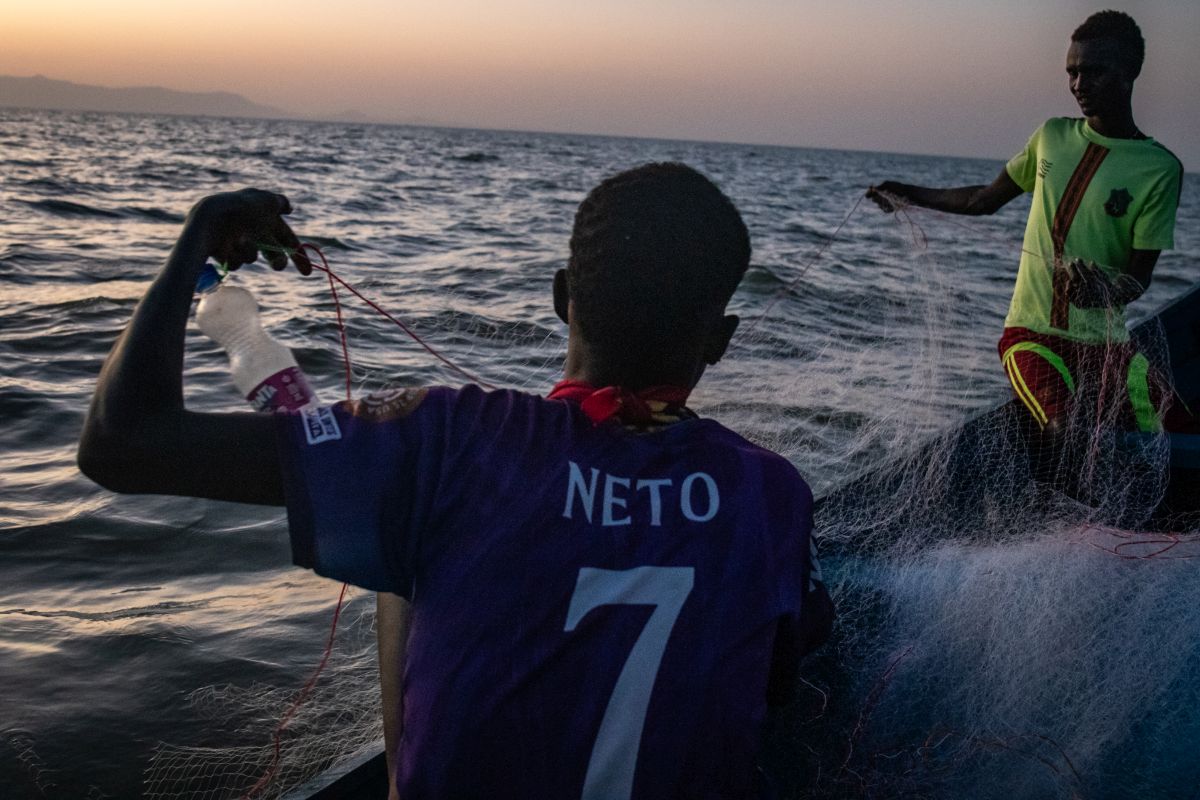
Mongabay: We often hear that drought is pushing pastoralists into fishing, but historically, people have moved between pastoralism and fishing, depending on conditions. How should we understand those shifts today, and are they different from previous periods?
Ikal Angelei: It’s not new. People have always moved between pastoralism, fishing and even farming, depending on the season or to adapt to changing conditions. In places like the Omo Valley, they formed a kind of three-legged stool.
What is different now is the scale. More people are entering fishing, including young people, and there are more pressures around access and regulation.
So these shifts have always existed, but they are now happening in a more constrained environment.
Mongabay: There’s been a lot of attention on rising water levels in Lake Turkana, often framed without much historical context. How do you see it?
Ikal Angelei: When we were young, there were times when the lake came much further inland than it does now. What has happened is that people moved into those areas when the lake receded. So when it rises again, it feels like a new crisis. But the lake has always fluctuated.
Mongabay: Turkana sits at the intersection of many pressures — climate variability, dams, fisheries, oil, politics. What is really at stake?
Ikal Angelei: It is a layered situation. This [the lake] has been a place where those at the bottom — the poorest — get their livelihoods. But as the economic value of the lake increases, there is a risk that they will be pushed out in favor of those who can access infrastructure and opportunities.
At the same time, these communities are constantly in survival mode. They are constantly on the back foot, constantly fighting to survive. Without agency, whatever is thrown at them, they will take it — and everything is being thrown at them. The environment will always reinvent itself. We, the people who depend on it, are the ones at its mercy.
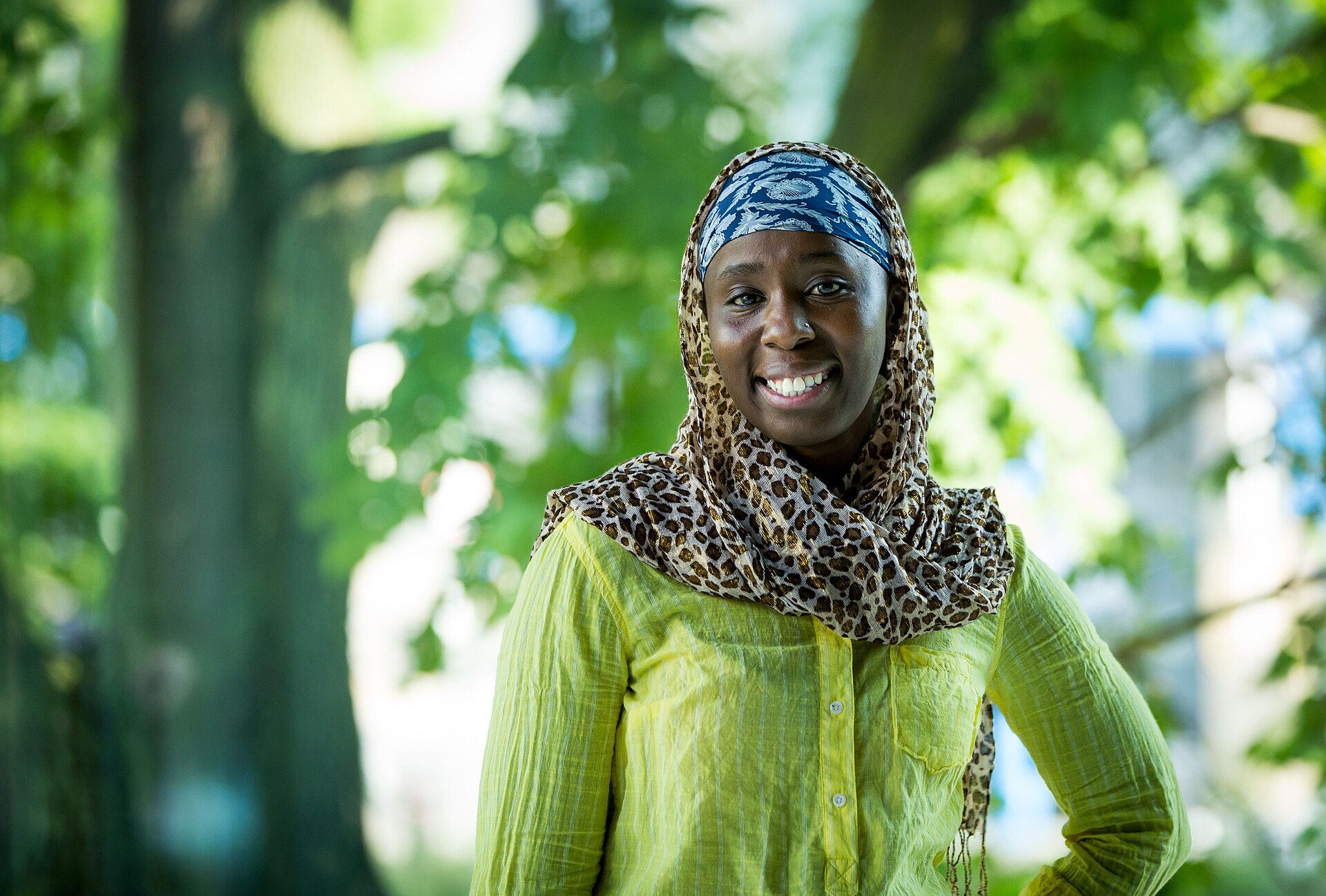
Mongabay: What role does Friends of Lake Turkana play in all of this?
Ikal Angelei: Initially, it was about informing communities and making sure they could engage, especially around the dam and oil. But now it is more complex. Many organizations are working in the region, and a lot of that work is depoliticized, focused on projects rather than agency.
Our work has always been about helping people see their agency and engage in decisions. But people are also struggling to survive, so balancing immediate needs with long-term agency is difficult.
Mongabay: We’re seeing shifts in global funding and political priorities. Is that affecting work around the lake?
Ikal Angelei: Yes. Many organizations have had to scale back. It also raises questions about the role of the state. When external funding fills gaps, it can hide government responsibility. Now that funding is declining, communities are facing both the loss of services and the need to engage more with governance systems.
Mongabay: Looking ahead, are you hopeful about the future of Lake Turkana?
Ikal Angelei: I am, I’m extremely hopeful. In fact, I think I work best under crisis. But I also believe we are starting to think more in terms of protecting the commons — not just the lake or land separately, but the system as a whole. There is also growing awareness among communities of their rights. If we can connect these struggles, there is real potential to shape a different future.
Banner image: Fisherman James Lekubo on Lake Turkana. Image by Christopher Clark for Mongabay.
Rising waters and mounting pressures collide on Kenya’s Lake Turkana
Feedback: Use this form to send a message to the author of this post. If you want to post a public comment, you can do that at the bottom of the page.
