

- A new analysis of global sand extraction indicates the industry is removing roughly 50 billion metric tons a year, a pace that far outstrips natural replenishment.
- Experts say the loss of sand from landscapes, river deltas, and coastal zones threatens ecosystems, livelihoods and many processes on which life depends.
- Although the sand mining industry is operating at unsustainable levels, experts say measures exist to lessen its impact.
- Solutions include coordinated governance, stronger monitoring and long-term, cross-border planning.
Sand is the most widely extracted solid material on Earth. The global sand mining industry removes roughly 50 billion metric tons of it a year, a pace that far outstrips the planet’s natural replenishment rates, according to a new report from the U.N. Environment Programme (UNEP).
Excessive sand extraction from landscapes, rivers and coastal zones threatens ecosystems, livelihoods and many processes on which life depends, the report says. Yet the current pace of removal — enough to build more than 19,000 Great Pyramids of Giza — is only set to grow, with demand for buildings alone expected to rise 45% by 2060.
Without coordinated governance, stronger monitoring and long-term planning to mitigate the risks of surging global demand, the industry will continue operating at an unsustainable level, the authors say.
The report, published by UNEP’s Global Resource Information Database Geneva (GRID-Geneva) team, calls on industry stakeholders to improve extraction practices to use sand more wisely by balancing meeting demand with environmental protection.
Sand is used to make concrete to build everything from homes and offices to roads and seawalls. It’s also used to manufacture glass and silicon-based components like electronic chips and solar panels.
“Sand is sometimes referred as the unrecognized hero of development,” Pascal Peduzzi, director of UNEP’s GRID-Geneva program, said in a press release. However, its role in sustaining biodiversity and coastal communities already vulnerable to the impacts of environmental change is too often overlooked, he added. “Sand is our first line of defence against sea level rise, storm surges, and salination of coastal aquifers — all hazards exacerbated by climate change.”
While the impacts of unsustainable sand extraction are widespread, Southeast Asia is an epicenter of supply and demand. The report highlights how large-scale land reclamations, urban megadevelopment projects and booming sand exports are driving irreversible river erosion, coastal degradation and impacts on local livelihoods across the region.
In the Philippines, the dredging of 155 million cubic meters (5.47 billion cubic feet) of sand for a 1,700-hectare (4,200-acre) land reclamation area to house Manila Bay’s new airport has displaced 700 families and irreversibly damaged one of the country’s most productive fishing grounds. In Indonesia, 22 million m3 (777 million ft3) of sand removal for an urban megadevelopment in South Sulawesi province also decimated a prime fishing area. Local fishers reported incomes slashed by 80% and scientists documented harm to coral reefs and mangroves.
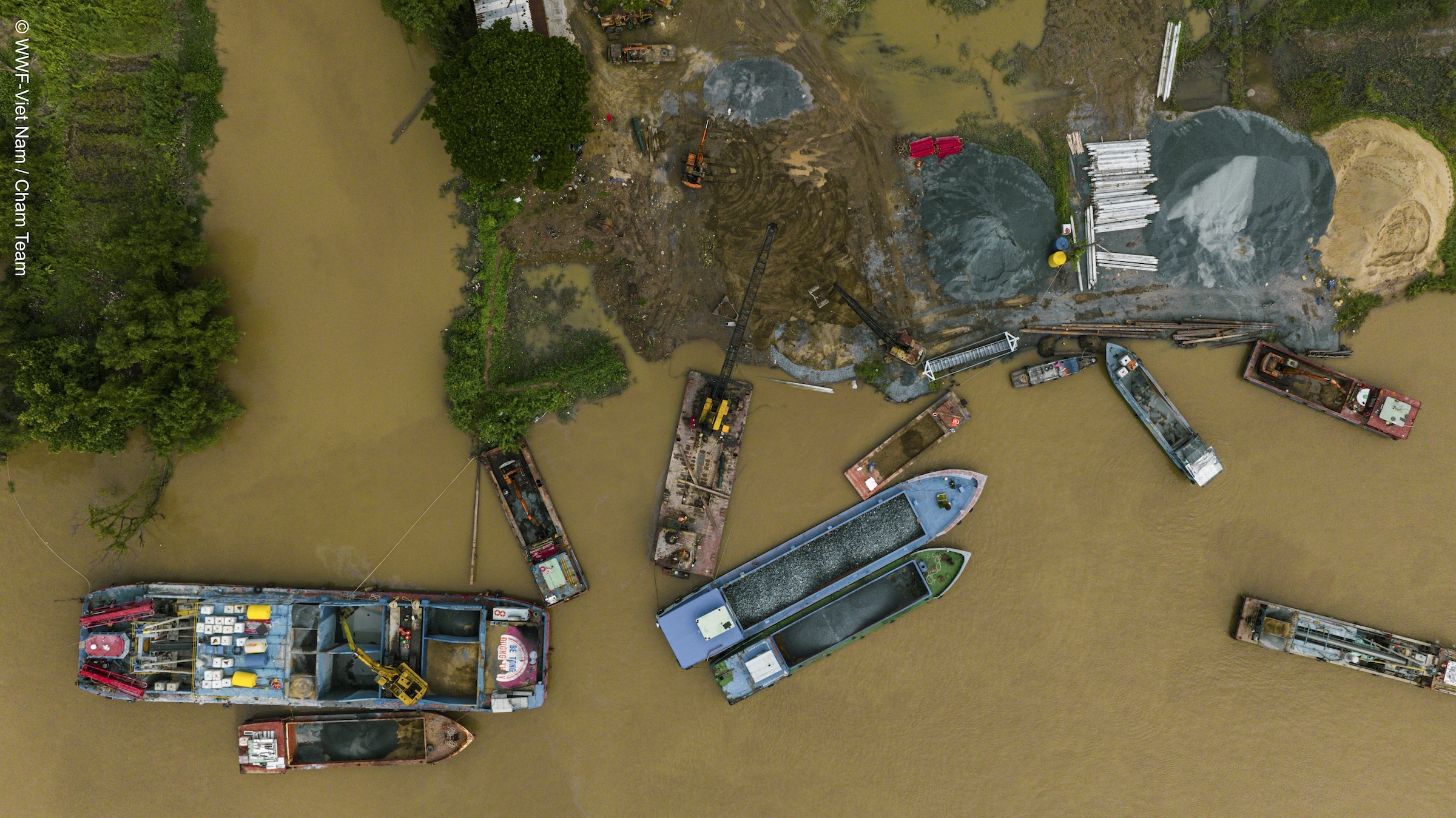
In mainland Southeast Asia, sand mining in the Mekong River, particularly in Cambodia and Vietnam, has deepened the river channel and reduced wet season flows into Tonle Sap Lake, undermining crucial seasonal regulation of flows downstream to the delta in Vietnam. Communities living along the river and in the delta are facing riverbank collapse, loss of property, and increased flooding and salinity that threaten fishing and farming livelihoods.
In the Vietnam delta, the impacts of river and delta erosion are compounded by sea level rise, prompting authorities to protect coastlines and riverbanks and raise highways above the delta plain. These additional infrastructure projects only deepen the thirst for sand, stone and gravel, driving further extraction.

Keeping sand in its natural place might offer be a more economical option in the long term, particularly in locations where it provides key ecosystem services, the UNEP report says. “Sand is more than a mere resource — it is a strategic natural asset, indispensable to both human prosperity and planetary health,” the report says.
Despite growing understanding of the impacts of unsustainable sand extraction, the UNEP report says governance of sand resources remains fragmented and little has been done to improve extraction practices. “Extraction is often driven by short-term logic, with actors pursuing immediate economic gains while environmental, social, and long-term economic costs accumulate,” the report says.
The report calls for an overhaul of the processes governing the industry. It recommends that governments and industry stakeholders pay greater attention to sand’s role in biodiversity and ecosystem stability by adopting a “strategic approach” of coordinated governance and long-term planning through “national and sectoral roadmaps for responsible sand management.”
Planners also need to be able to make better decisions on whether it’s better to take sand from potential extraction sites or leave it in place. This will require better data, mapping and monitoring to identify areas of high ecological value and assess the impact of extraction, the report says.
The authors suggest decision-makers use resources like UNEP’s Marine Sand Watch and Sand Assessment Tool platforms to better integrate biodiversity considerations into sand governance. They also say the industry must be bound by greater transparency requirements in licensing and funding flows, and more closely adhere to environmental regulations.
Banner image: Sand extraction along the Mekong River. Image courtesy of WWF-Viet Nam.
Carolyn Cowan is a staff writer for Mongabay.
See related story:
Mekong sand mining risks collapse of SE Asia’s largest freshwater lake, study finds
FEEDBACK: Use this form to send a message to the author of this post. If you want to post a public comment, you can do that at the bottom of the page.
