

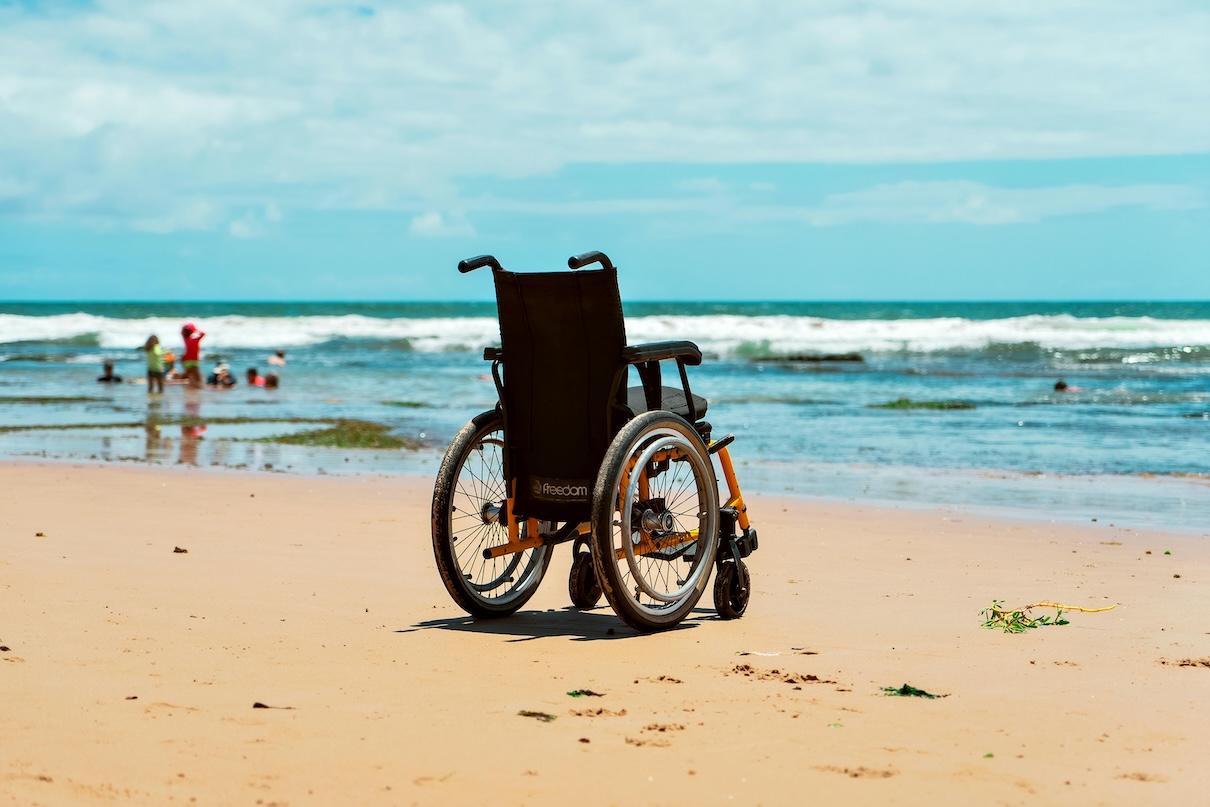
- Coastal and marine systems across much of the world remain structurally inaccessible to persons with disabilities, older populations, and marginalized communities.
- If people protect what they value, and they value what they can experience, then marine conservation will be a low priority for these people, a new op-ed argues.
- “If the ocean is to be protected, it must first be experienced, but for millions of people, it remains fundamentally out of reach,” the author writes.
- This article is a commentary. The views expressed are those of the author, not necessarily of Mongabay.
The global push to protect oceans is gaining momentum, from coral reef restoration to ambitious targets under the United Nations Decade of Ocean Science for Sustainable Development. Yet one critical dimension remains largely overlooked: accessibility. If the ocean is to be protected, it must first be experienced. Today, for millions of people, it remains fundamentally out of reach.
This is not just a social gap. It is a conservation failure.
Ocean conservation depends on connection. People protect what they value, and they value what they can experience. Research shows that direct interaction with natural environments strengthens long-term environmental stewardship. Yet coastal and marine systems across much of the world remain structurally inaccessible to persons with disabilities, older populations, and marginalized communities.
Beaches lack barrier-free access. Transport systems remain exclusionary. Marine experiences such as snorkeling and diving are rarely adapted. The result is a quiet but widespread exclusion from the ecosystems conservation seeks to protect.
Globally, governments have committed to ensuring that no one is left behind under the Sustainable Development Goals. Yet in ocean spaces, exclusion persists. Accessibility is still treated as an afterthought, added through isolated initiatives rather than embedded into planning and conservation systems.
This has direct consequences. When access to the ocean is limited, ocean literacy declines, while public understanding of marine ecosystems is a key driver of conservation outcomes. Communities that cannot engage with the ocean are less likely to participate in citizen science, conservation dialogue, or local stewardship. Conservation becomes something done for people, rather than with them.
Nowhere is this more visible than in remote island ecosystems. Regions such as Lakshadweep and the Andaman and Nicobar Islands in India are globally recognized for their biodiversity, coral reefs, seagrass beds, and fragile marine habitats. Yet these same regions face some of the most severe accessibility barriers, with limited infrastructure, fragmented transport, and conservation frameworks that rarely incorporate inclusive design.
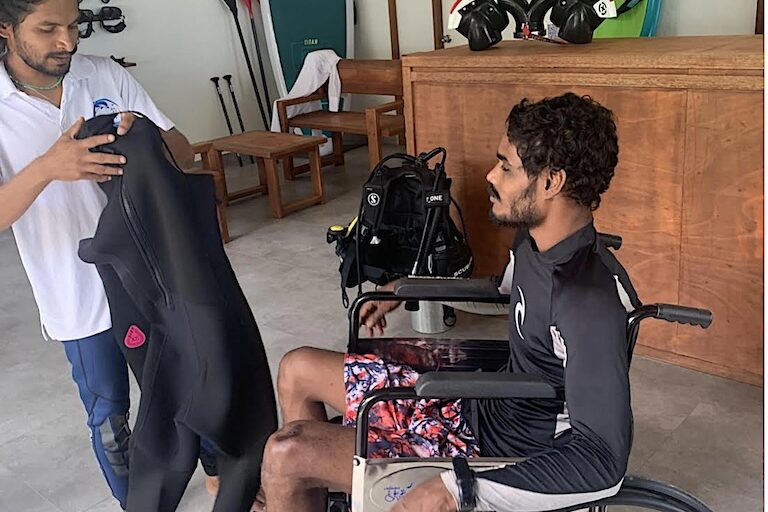
This represents a missed opportunity. Expanding inclusive ocean access especially among youth, women, and persons with disabilities could significantly strengthen local stewardship. In fragile ecosystems where human engagement is critical, broader participation is not optional , it is essential.
Accessibility and conservation are not competing priorities. With careful planning, they can reinforce each other. Controlled pathways, adaptive diving programs, and guided marine experiences can expand access while minimizing ecological impact.
Some global frameworks on inclusive tourism show that this balance is possible. But such approaches remain limited in remote and island contexts. The challenge is not innovation, it is prioritization.
Policy frameworks increasingly acknowledge inclusion, yet implementation remains weak. Accessibility is rarely enforced, funded, or monitored at scale. In many cases, it exists only as a stated commitment without measurable outcomes. Reframing accessibility as a core component of ocean conservation offers a way forward. It requires integrating accessibility into infrastructure, governance, education, and community engagement not as an add-on, but as a foundation.
The ocean cannot remain an exclusive space. The mission of organizations like Accessible Ocean Tourism, which I founded, must be implemented not only in small island developing states (SIDS) but also those remote islands that do not come under their jurisdiction. If conservation is to be effective and equitable, it must ensure that all people, not just a few, can connect with marine ecosystems.
Until accessibility is recognized as essential, not optional, the vision of truly inclusive ocean conservation will remain incomplete.
Elsie Gabriel is an author and researcher whose interdisciplinary work bridges marine conservation, inclusive travel, and community engagement.
Banner image: Wheelchair on a beach. Image courtesy of Lucas Andrade via Pexels.
See related coverage:
Conservation education is about people too: Interview with Gabon’s Léa Moussavou
Rising seas won’t reduce ocean borders of small island nations, UN court rules
