

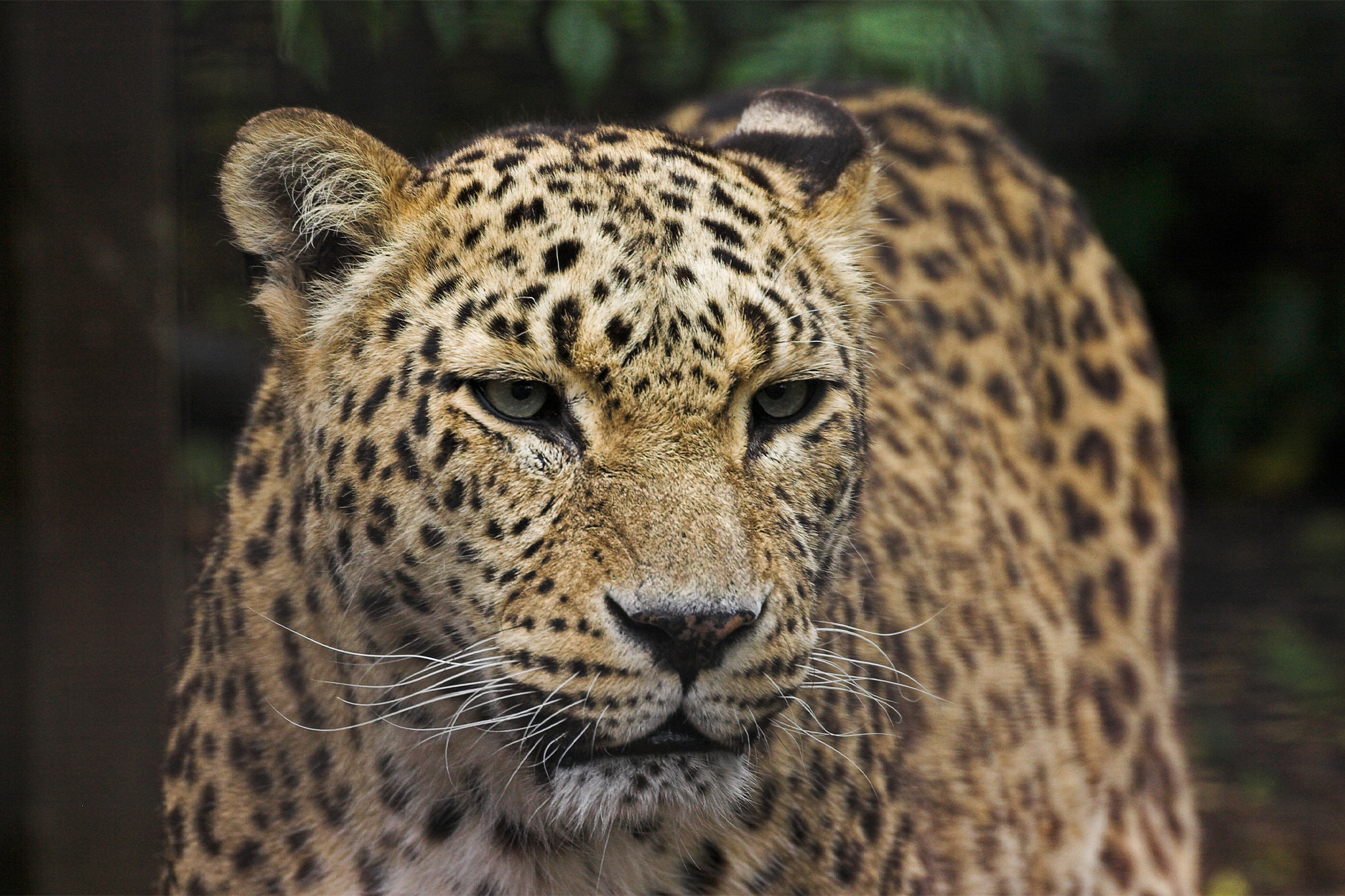
- There are fewer than 1,100 Persian leopards left in the wild, with 80% — perhaps 732 individuals — concentrated in Iran. A handful remain in Russia, the Caucasus and countries across Central Asia.
- This leopard subspecies is endangered and declining, driven to the brink of extinction in habitats across its range across southwestern and Central Asia.
- More than half of all recorded leopard deaths are from retaliatory killings by local communities, who poison, trap or shoot leopards in response to livestock predation. They can also be maimed or killed by snares and traps intended for other, smaller prey.
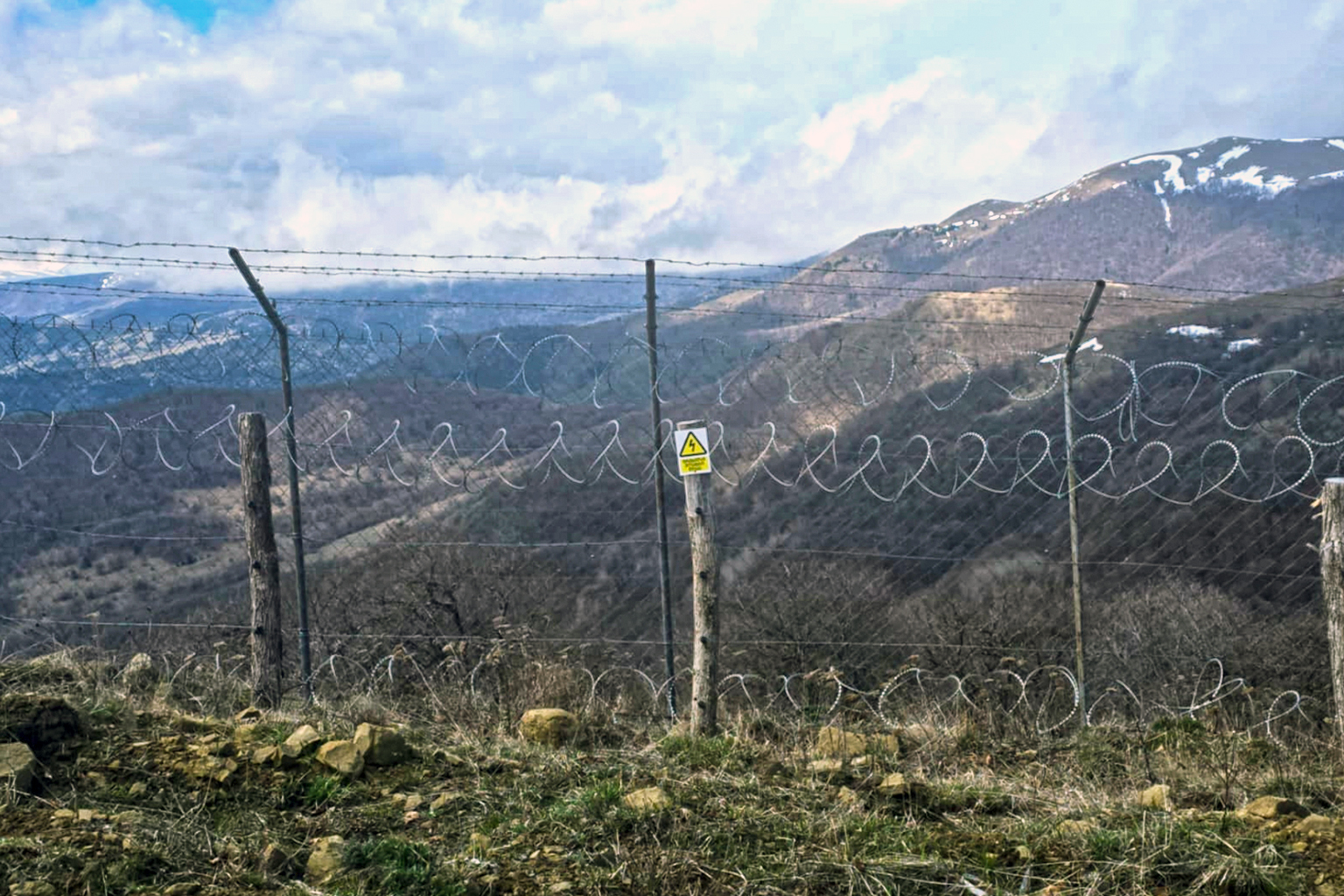
- The Persian leopard now occupies around one-quarter of its historical range. Their habitat is fragmented and crisscrossed by dangerous roadways and broken by international borders that are fenced or laced with landmines.
Last September, zoologist and conservationist Bejan Lortkipanidze received a video file from a collaborator, Zurab Gurielidze, the head of Georgia’s Tbilisi Zoo. Gurielidze offered no details, but told his friend to “just watch.”
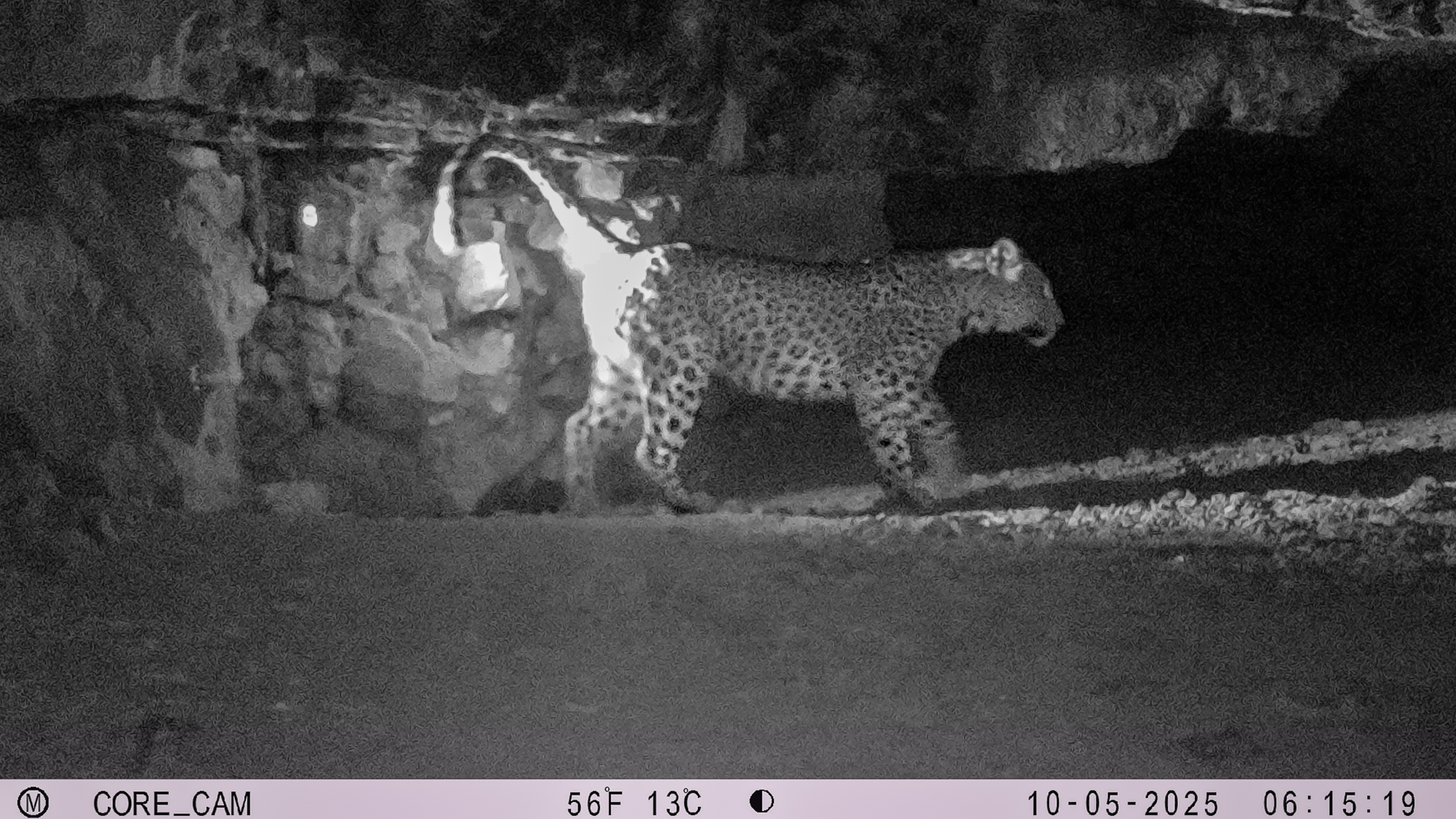
For several moments, Lortkipanidze saw nothing remarkable — just nighttime footage of a high fence topped with razor wire. Then a leopard entered the frame.
Lortkipanidze, who heads the Georgian conservation NGO NACRES, was stunned: It was just the third sighting of a Persian leopard (Panthera pardus tulliana) in the south Caucasus nation in 20 years.
The footage wasn’t from a wildlife camera trap. It came from a standard CCTV camera that surveilled the perimeter of a new breeding enclosure for endangered Caucasian red deer (Cervus elaphus maral) in Algeti National Park, situated an hour west of Tbilisi.
The video quickly circulated around the conservation community. Vazha Kochiashvili, a biologist with WWF Caucasus, saw it: It was sent to him by the man tasked with checking the deer enclosure footage for Georgia’s National Agency of Wildlife, Sergo Tabagari, who called him immediately after he saw the cat while reviewing footage.
Kochiashvili said he had a hunch and asked his friend: “Does the leopard have three legs?”
It did.
The male leopard’s name is Aren and, over the last few years, he’s roamed across at least two international borders. Persian leopards once traversed a vast territory that lies between Russia, the Middle East and the Caspian and Black seas.
They’re wide-ranging animals, and Aren’s journey underscores the myriad threats that imperil this endangered subspecies’ survival. Between 750 and 1,044 remain, according to IUCN.
Like all big cats, these leopards are killed by poachers and farmers, along with their prey. Their homelands are shrinking, fragmented and impacted by climate change. But their range also transcends borders in a war-torn region, and those crossings are often fenced or laced with landmines.
Aren’s story offers a vision of how prioritizing conservation, restoring habitat connectivity and addressing existential threats could allow leopards — and other species — to thrive.
An intrepid leopard
This three-legged leopard that appeared on camera is something of a celebrity in big cat conservation circles. His name is a nod to the place he was first spotted, Areni village, which sits near the entrance to the Arpa Protected Landscape in south-central Armenia. That sighting was in the spring of 2019. He was filmed by rangers and, at the time, had all four limbs.
Later that year he was seen again, minus the bottom part of his left foreleg. While it’s impossible to say for sure what happened, Arpa rangers attribute the injury to a landmine.
Across the ridge from Arpa, which is a community-managed protected area, is Nakhchivan, a strip of Azerbaijani territory. There are rich conservation zones there — but between these two sites is a border that’s been strewn with anti-personnel landmines for decades.
Despite his disability, Aren was healthy and thrived in this Armenian landscape. In a conversation with Mongabay at the Arpa office, head ranger Samvel Karapetyan went so far as to describe him as “fat.”
Panthera pardus tulliana is the largest leopard subspecies: An adult male can weigh up to 90 kilograms (198 pounds).
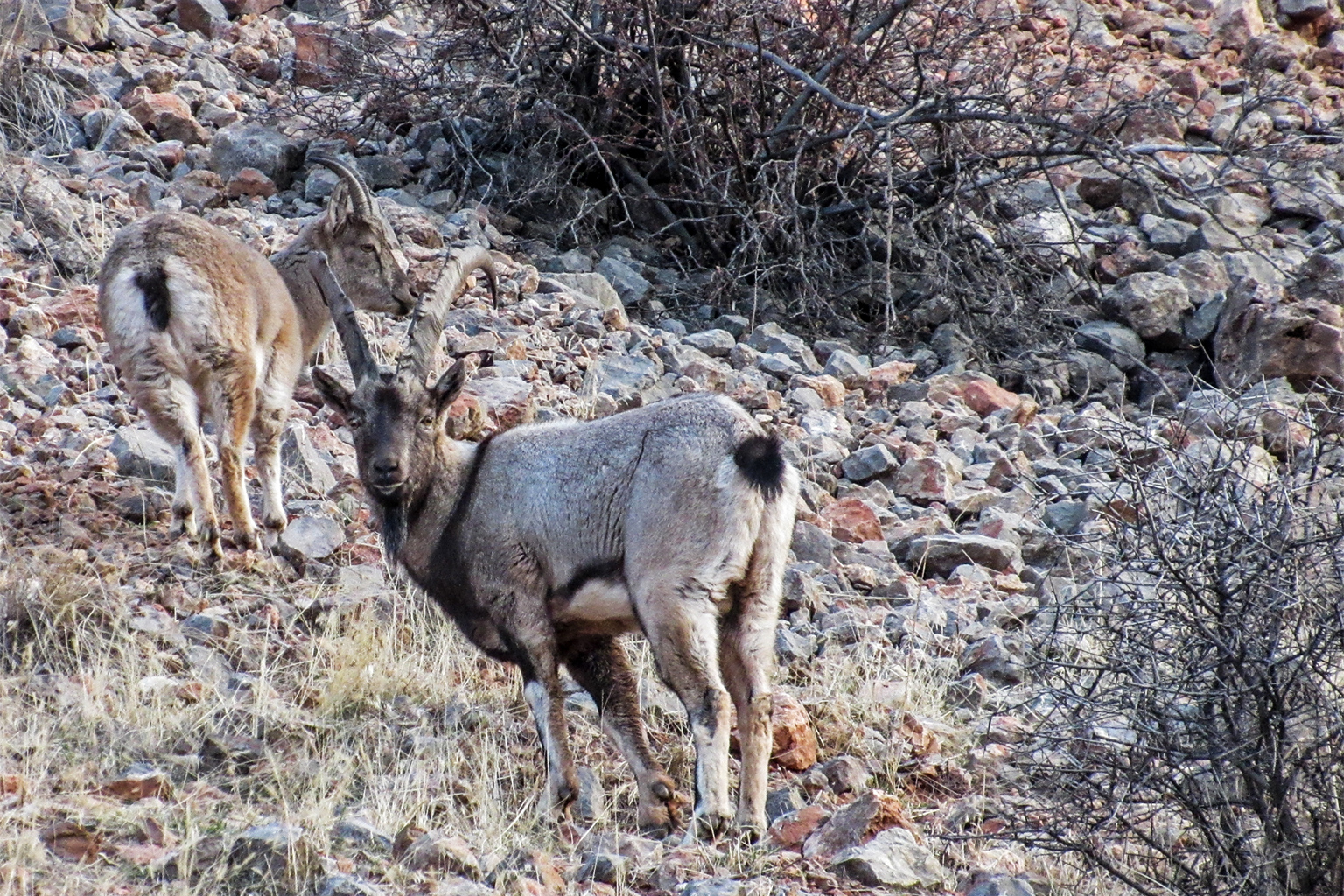
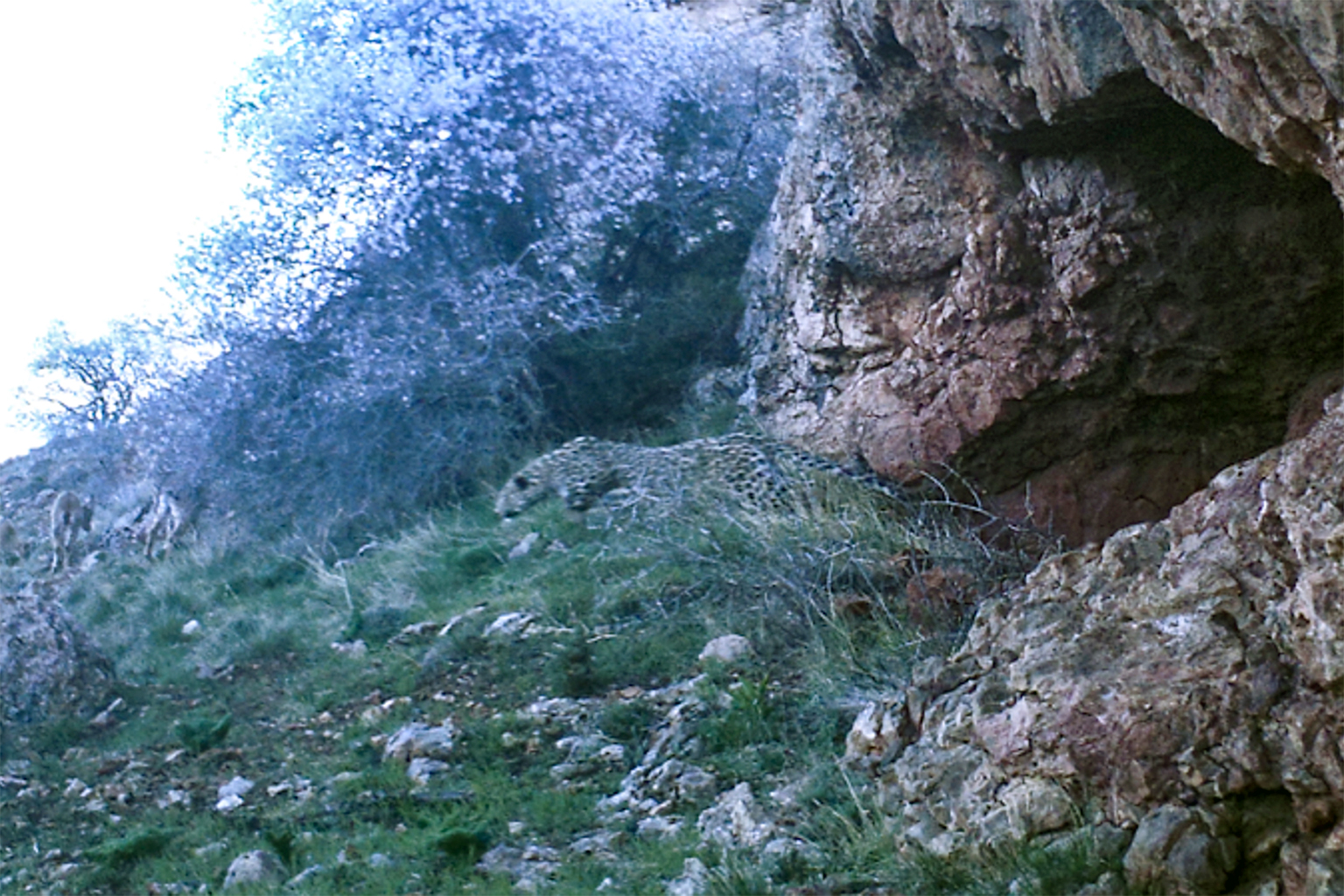
Karapetyan said Aren adapted his hunting technique to work around his impediment. He was caught on camera hiding in the mouth of a cave before launching himself at unsuspecting Bezoar goats (Capra aegagrus aegagrus) and other ungulates.
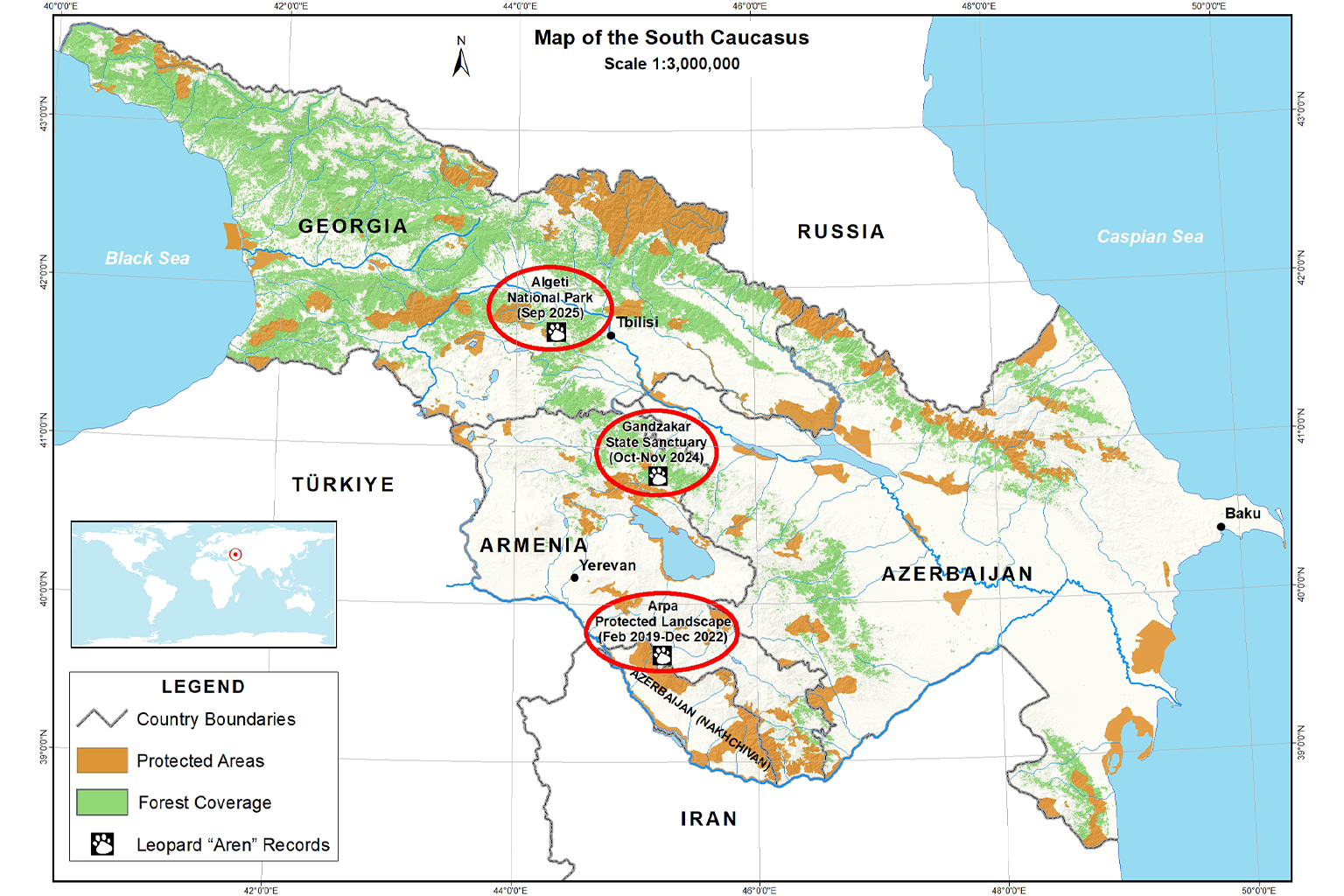
In 2022, Aren disappeared, resurfacing unexpectedly in 2024 in the lush Ijevan Forest, some 130 kilometers (80 miles) to the north. His reason for leaving the area, a veritable leopard paradise, isn’t clear. It’s possible that a dominant male drove him out.
By the time Aren crossed the border into Georgia and reached Algeti in September 2025, he’d travelled at least 250 km (more than 155 mi), which is a significant undertaking for any big cat, let alone one with three legs.
Leopards are, by nature, a mobile and highly adaptable species, said Hana Raza, founder of the nonprofit Leopards Beyond Borders, which works to protect these cats and other wildlife in northern Iraq’s Kurdistan Region. She noted that adult leopards typically occupy defined home ranges, but dispersing individuals — often young males — can travel “extraordinary distances.”
“There are documented cases of leopards moving over 300 km (roughly 190 mi) across multiple countries during dispersal,” she told Mongabay over email. “These movements are essential for finding new territories and maintaining genetic connectivity between populations, which again underscores the importance of keeping landscapes connected.”
Return of the leopards
Until Aren appeared, there had been no reason for camera-trapping in Algeti National Park.
NACRES founder Lortkipanidze explained that before the 2003 discovery of a pawprint in Vashlovani National Park, a dry and rugged region near the border with Azerbaijan, leopards had essentially been considered extinct in Georgia.
Following Tsarist Russia’s 19th century conquest of the Lesser Caucasus region — Azerbaijan, Armenia and Georgia — leopards were labeled a pest. They were intensely hunted, sometimes for their skins, and nearly exterminated as deforestation and other threats also increased.
The early 20th century saw rapid gains in the development and proliferation of small arms, which accelerated many species’ decline in the region. Ungulates and other key leopard food sources had already been massively depleted by poaching, a problem that ballooned during the hardship wrought by Georgia’s civil war during the 1990s.
But then in 2003, Lortkipanidze’s overseas colleagues determined that the pawprint in Vashlovani was from a leopard, rather than a large Eurasian lynx (Lynx lynx), a species known to live there. That launched an intensive camera-trapping effort.
Before the first images came in, however, Lortkipanidze had a fluke encounter. While giving chase to hare poachers one evening, he said, he crested a hill in his four-wheel drive in time to see a “huge” male leopard coolly crossing in front of him. He dubbed it Noah, a biblical reference that he hoped would stand for the survival of the species.
Noah appeared on camera traps periodically until 2009. “We didn’t know what happened with this individual,” Lortkipanidze said. “It might have gone somewhere, maybe somebody killed it … [Now] it would be getting old for a leopard in the wild.”
In 2021 and 2022, camera traps picked up a leopard in Georgia’s remote Tusheti region, in the Greater Caucasus mountains, confirming anecdotal reports from local villagers.
Lortkipanidze said that, tentatively, these sightings speak to the health of ecosystems and the resurgence in leopard prey species in Georgia.
Around Algeti, there’s plenty of food, including an abundance of stray dogs which may be part of a leopard’s diet. (In India, dogs account for as much as 40% of the dietary intake of Mumbai’s semi-urban leopard population that lives in Sanjay Gandhi National Park.)
WWF’s Kochiashvili noted that there’s plenty of leopard food in eastern Georgia’s Vashlovani National Park, which is home to a high number of porcupines, a delicacy for leopards — albeit one that can injure them if they don’t successfully navigate the quills.
Leopard mutilations and landmines
Unfortunately, three-legged leopards aren’t as rare as one might hope: Of the 10 cats recorded by WWF in Armenia since 2002, three had lost a limb.
Besides Aren, two “absolutely healthy” male leopards with all four legs intact were recorded by WWF in 2015, but later that year both were camera-trapped missing part of a limb.
Short of a forensic examination of a leopard’s bones, it’s impossible to make a conclusive determination about the cause of injuries such as Aren’s, WWF Armenia project coordinator Vasil Ananyan told Mongabay over email.
At the time Aren lost his paw, there was a rash of sightings of similarly mutilated animals, including a bear, according to Arpa’s head ranger, Karapetyan. Landmines and unexploded ordnance plague many of the borderlands that straddle remaining leopard habitats.
“All these mines should be taken out to protect these endangered species,” Karapetyan said.
Leopards Beyond Borders founder Raza noted that landmines can present “a real risk to wildlife, including large carnivores” in post-conflict landscapes.
“A leopard may survive the initial blast, but injuries such as limb loss significantly affect its ability to hunt, move efficiently, and defend territory,” Raza said. “Leopards are resilient animals, and there are documented cases of individuals surviving with amputations, but these injuries likely reduce long-term survival and reproductive success.”
For an endangered species, anything that impacts reproduction is a serious threat, especially in a rare animal like the Persian leopard that has a low survival rate for its offspring.
Raza cautioned against the idea that mined or militarized areas “protect” wildlife by keeping poachers out.
While reduced human access may sometimes lower immediate disturbance or poaching pressure, these areas remain dangerous, fragmented and unpredictable — and they can cause direct harm to wildlife and local communities alike,” she said.
They also impact conservation efforts, Raza added. “Landmines make it more difficult for us as conservationists to survey landscapes, monitor populations and conduct long-term research.”
The Persian leopard’s range encompasses fractious lands, where geopolitical tensions and occasional active armed conflict exacerbate cross-border conservation challenges. Wars in Iraq, Iran and Afghanistan have taken a serious toll.
In an open letter to mark World Environment Day in 2022, Jane Goodall called for “measures and actions to facilitate international cooperation beyond the political circumstances.”
‘Terrestrial bycatch’
Another threat lurks in many Persian leopard habitats: snares and “gin traps,” a type of steel jaw trap intended to catch an animal by its head or leg. Both injuries and deaths have been documented in northern Iran, the cat’s stronghold, home to about 83% of the population.
A 2018 study detailed the cases of six leopards caught accidentally in traps in northern Iran between 2012 and 2017, a phenomenon known as “terrestrial bycatch.” The snares were intended for wild boars (Sus scrofa) and jackals (Canis aureus).
To escape a gin trap, one leopard carried out a “delayed self-amputation of the foot,” the report said. It was one of three that were rescued. Two were released , one of those survived for under two months in the wild. Three of the others died — a fatality rate of 50%.
There’s no way to know how many leopards are ensnared in these vast landscapes. “The indiscriminate accidental trapping of leopards in northern Iran is probably underestimated, and because of its associated mortality level, it likely affects the long-term viability of the leopard population by removing mature individuals of both sexes,” the report’s authors wrote.
Experts note thataside from accidental killings, leopards are intentionally poisoned and killed in retaliation for preying on livestock.
Key activities — that fight poaching, foster coexistence with farmers and address snaring — require resources and funding that may not be available, particularly in Iran, where both war and sanctions impede conservation efforts.
On-the-ground protection is key: A 2025 study published in the journal Cell Press found that the presence of well-supported ranger stations in Iran helped with species monitoring and protection from poaching, noting a “direct correlation between effective patrolling and species conservation.”
A fractious landscape
At the WWF regional head office in Tbilisi, Kochiashvili showed Mongabay a recent video of a leopard slinking through a fence separating Iran and Azerbaijan. However, not all crossings are so smooth, and fences have been widely noted to prevent the movement of leopards, their prey and many other species. In one instance, a leopard fitted with a GPS collar in Iran was unable to cross into Turkmenistan because of border fencing.
Fencing can also endanger humans by directing the wild cats toward human settlements. In 2023, in southeastern Afghanistan’s Paktiya province, a leopard’s journey was hindered by the fence that marks the Durand Line, on the frontier with Pakistan. It was forced to change course, placing the cat in deadly proximity to a local man, who sustained injuries in the encounter before fleeing to seek treatment. The man’s brother returned to the site with a machine gun — he, too, was injured before killing the leopard.
“Border infrastructure such as fences, walls, roads, militarized zones and landmines can fragment habitats, restrict dispersal and isolate already small populations,” Raza said. “In regions like the Caucasus and the Zagros, where leopard populations are naturally low-density, this fragmentation can have serious implications for long-term genetic viability.” Genetic diversity is important for disease resistance as well as fertility.
Protecting the protectors
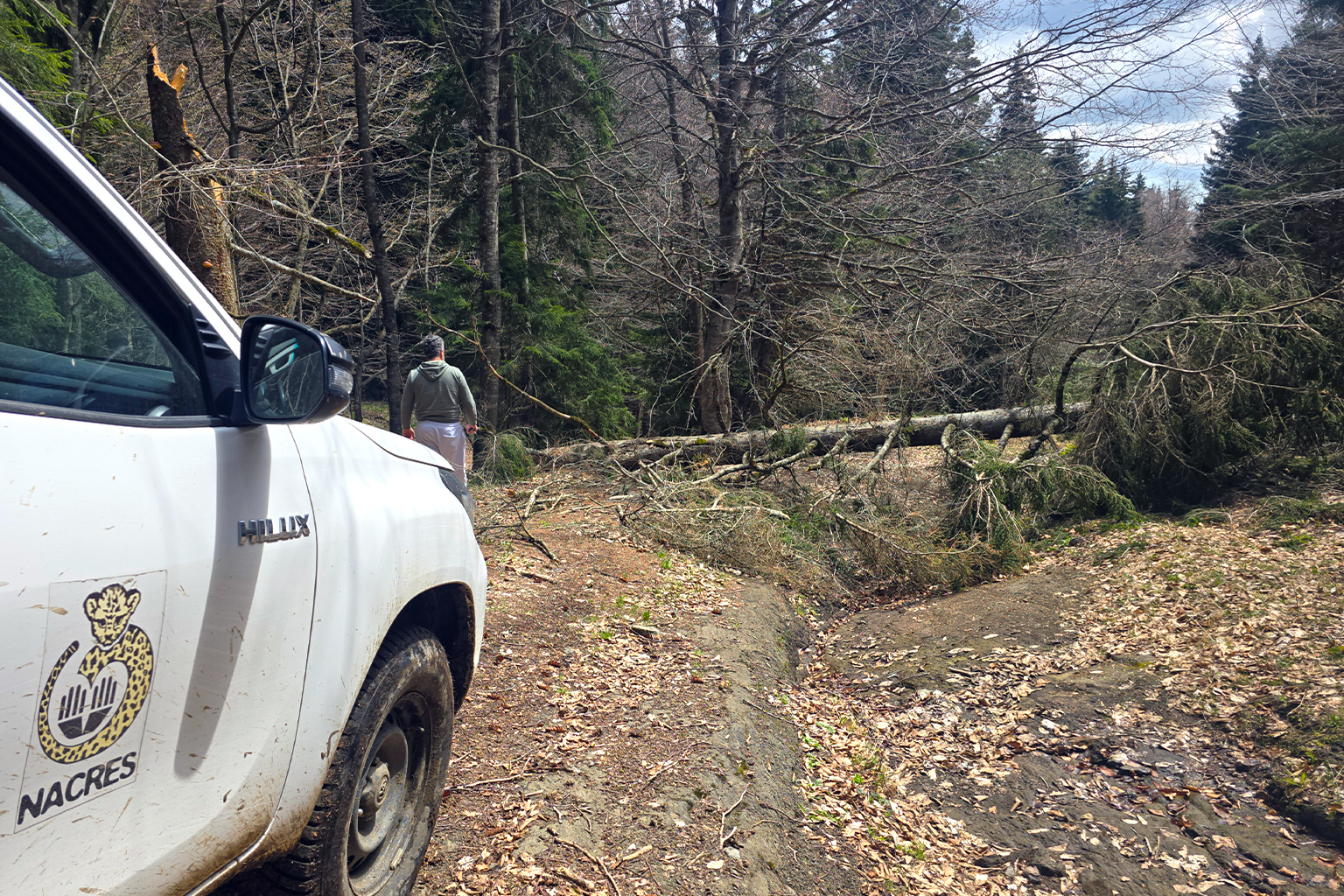
The logo for NACRES is a leopard, and Lortkipanidze — originally a bear specialist — said the leopard is “probably” his favorite animal. NACRES, an acronym for Noah’s Ark Centre for the Recovery of Endangered Species (now known as the Centre for Biodiversity Conservation & Research) is one of Georgia’s oldest and longest-standing environmental NGOs.
Like many civil society groups and NGOs worldwide, NACRES was affected by the sudden withdrawal of USAID funding in 2025. It lost support for a forest fire prevention program under the sweeping cuts.
Following the passage of a law in 2025 aimed at curbing foreign influence, international funding for NGOs in Georgia is subject to intense government scrutiny. Even if organizations like NACRES win a grant, it’s not a given that they’ll be permitted to receive it.
NACRES now operates on a skeleton crew, with just three permanent staff members, but they continue their work.
“You need funding to do fieldwork, to monitor individuals,” Lortkipanidze said. “We don’t have a program to monitor this three-legged leopard. It’s just our good will.”
He said he’s undeterred. He’s been setting up camera traps, using his knowledge of leopard habits to determine where to install them. “[The leopard] is a top predator, so it doesn’t need to hide,” he said. “If you know its patterns, you can put the cameras in the right areas, and you can easily predict where a leopard might go.”
“What we do know is that cat species, and especially leopards, like to travel on ridges. They like to have a good view so they can feel in control,” Lortkipanidze said, adding that “large mammals like to follow the same trails and paths as humans.”
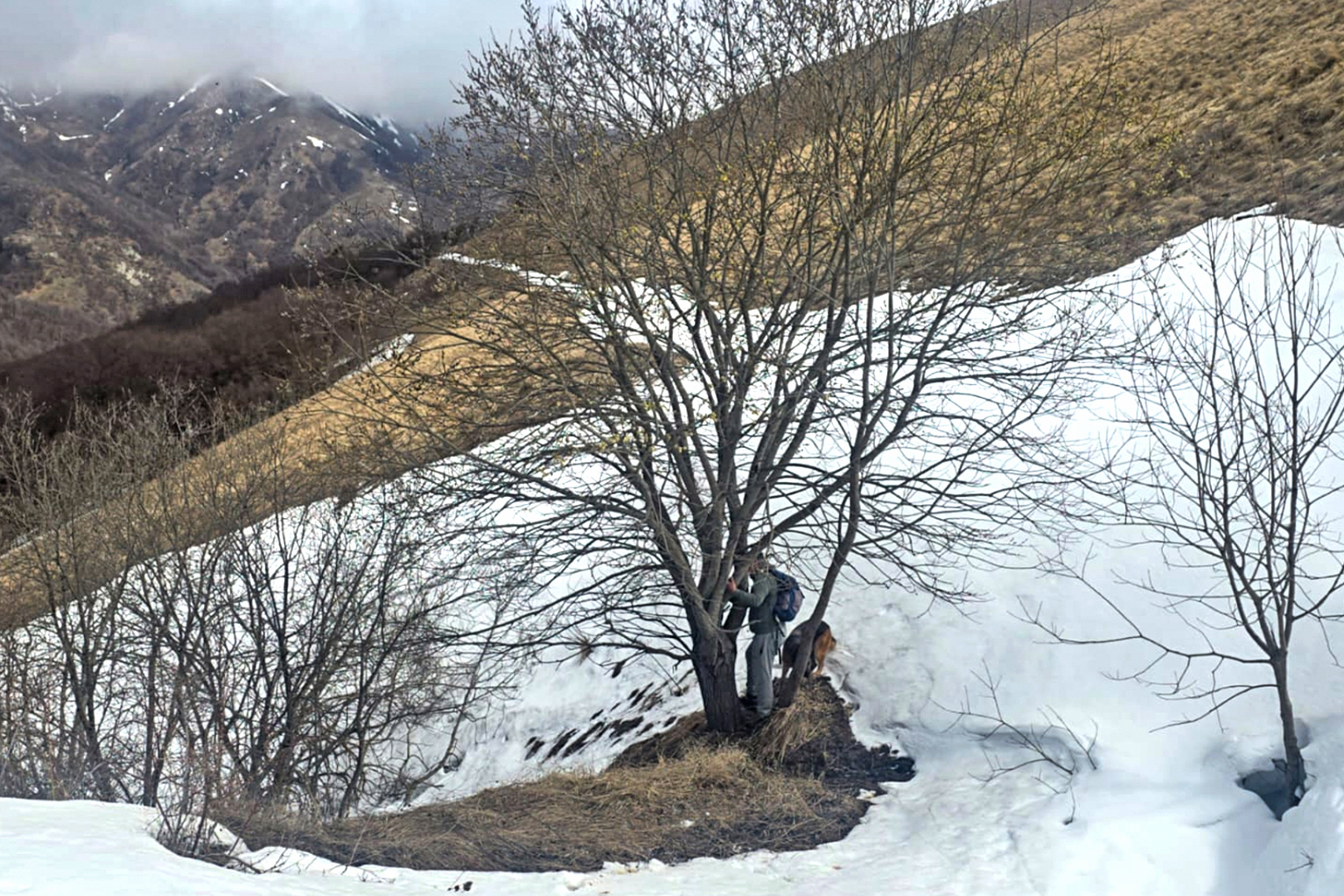
On two days in late April, Mongabay accompanied him to retrieve camera traps in Algeti, which had been inaccessible for some months because of deep winter snow.
Camera traps set up by NACRES and WWF had photographed a wealth of species, including deer, boar, lynx, wild cats and wolves.
But there’s been no sign of Aren. Lortkipanidze said he suspects the leopard may have continued towards Türkiye.
Only time will tell if this nomadic leopard will be seen or caught on camera again, but his case highlights the need for ecological connectivity, across landscapes and national borders.
“Leopards do not recognize political boundaries,” Raza said. “Their survival depends on connected habitats and the ability to move safely across landscapes.”
Banner image: A captive Persian leopard in a British zoo, 2005. Image by Paul Buxton via Flickr (CC BY-NC-ND 2.0).
Protect Persian leopards, and their defenders, for World Environment Day (commentary)
Citations:
Ashrafzadeh, M. R., Khosravi, R., Adibi, M. A., Taktehrani, A., Wan, H. Y., & Cushman, S. A. (2020). A multi-scale, multi-species approach for assessing effectiveness of habitat and connectivity conservation for endangered felids. Biological Conservation, 245, 108523. doi:10.1016/j.biocon.2020.108523
Braczkowski, A. R., O’Bryan, C. J., Stringer, M. J., Watson, J. E., Possingham, H. P., & Beyer, H. L. (2018). Leopards provide public health benefits in Mumbai, India. Frontiers in Ecology and the Environment, 16(3), 176-182. doi:10.1002/fee.1776
Sennett, C., Chambers, C. (2025). International border fences and walls negatively affect wildlife: A review Biological Conservation, doi:10.1016/j.biocon.2024.110957
Korsh, A.M., Nabaz, K., Soran, H.A. (2023) Predicting the geographical distribution of the Persian leopard, Panthera pardus tulliana, a rare and endangered species, Journal for Nature Conservation, doi:10.1016/j.jnc.2023.126505
Salmanpour, F., Shakoori, Z., Salmanpour, M., Tizrouyan, M., Kia, M., Eshaghi, R., … Ghaderi, M. (2025). The effect of ranger patrols on the sighting of large mammals by local herders in Northern Iran. Heliyon, 11(1), e41452. doi:10.1016/j.heliyon.2024.e41452
Farhadinia, M. S., Kaboli, M., Karami, M., & Farahmand, H. (2014). Patterns of sexual dimorphism in the Persian Leopard (Panthera pardus saxicolor) and implications for sex differentiation. Zoology in the Middle East, 60(3), 195-207. doi:10.1080/09397140.2014.939813
Naderi, M., Farashi, A., & Erdi, M. A. (2018). Persian Leopard’s (Panthera pardus saxicolor) unnatural mortality factors analysis in Iran. PLOS ONE, 13(4), e0195387. doi:10.1371/journal.pone.0195387
FEEDBACK: Use this form to send a message to the author of this post. If you want to post a public comment, you can do that at the bottom of the page.
