

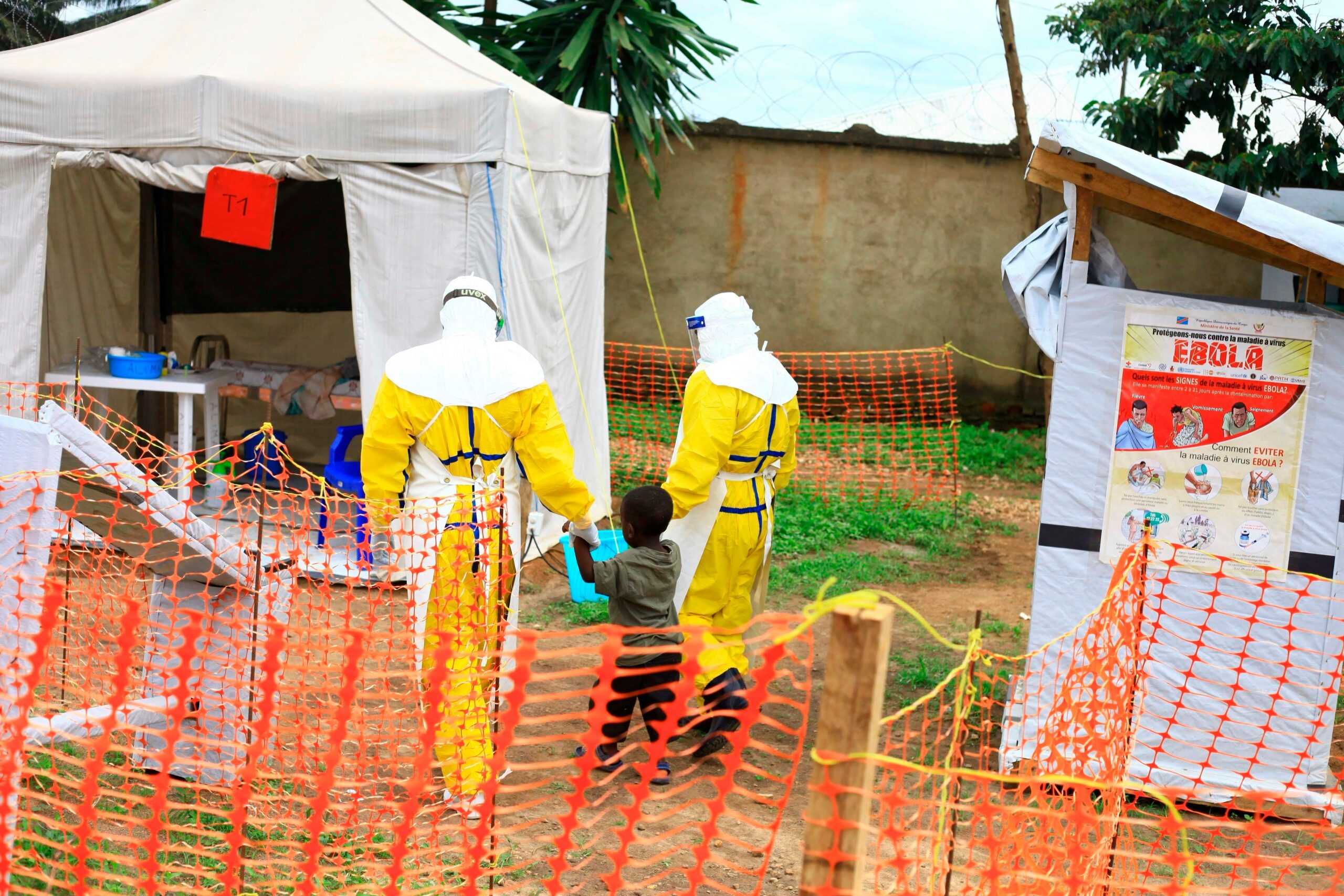
A new Ebola outbreak has been declared in the eastern Democratic Republic of the Congo, according to an announcement made by The Africa Centres for Disease Control and Prevention (Africa CDC) on May 15.
Sixty-five people have died and around 246 suspected cases have been identified so far, mainly in the Mongwalu and Rwampara health zones in Ituri province. Africa CDC said four of the deaths have been confirmed through laboratory testing.
Mongabay contacted military authorities in Ituri as well as several provincial lawmakers for comment but had not received a response at the time of publication.
The number of deaths and cases could rise rapidly. Suspected cases have also been reported in Bunia, the provincial capital located on the shores of Lake Albert near the border with Uganda. Due to its geographic and political position, the city is a major cultural, economic and social hub, making the presence of suspected cases particularly concerning for Africa CDC.
“Given the high population movement between affected areas and neighboring countries, rapid regional coordination is critical,” said Dr. Jean Kaseya, director general of Africa CDC, in a statement shared with Mongabay. “We are working with the DRC, Uganda, South Sudan and partners to strengthen surveillance, preparedness and response efforts, and to help contain the outbreak as quickly as possible.”
In response to the latest outbreak, the pan-African agency announced that an emergency meeting would be held May 15 “to strengthen cross-border surveillance, preparedness and outbreak response efforts.” Participants are expected to include health authorities from the DRC, Uganda and South Sudan, as well as international NGOs, U.N. agencies experienced in Ebola response, and pharmaceutical companies such as Johnson & Johnson Innovative Medicine and Regeneron Pharmaceuticals.
Ebola disease, transmitted by a virus, is a zoonotic disease, meaning it originates from wild animals, although the animal hosts are still unclear, according to the World Health Organization. Human transmission occurs through bodily fluids, the main symptoms include fever, vomiting, bleeding and diarrhea. Infected individuals only become contagious after symptoms appear, following an incubation period ranging from two to 21 days.
This is the 17th outbreak of the highly contagious hemorrhagic fever recorded in the DRC since 1976. Although vaccines and treatments now exist, mortality rates during previous outbreaks ranged from 25% to 90%, according to the WHO.
The most recent previous Ebola outbreak in the DRC was declared in August 2025 in the center of the country and killed at least 45 people before it was declared over in December. The deadliest Ebola outbreak in the DRC, which lasted from 2018 to 2020, caused nearly 2,300 deaths out of almost 3,500 recorded cases, according to the WHO.
Banner image: Health workers accompany a child suspected of having Ebola at the disease treatment center in eastern Democratic Republic of Congo, on September 9, 2018. For representation only. Image by Al-hadji Kudra Maliro, Associated Press.