

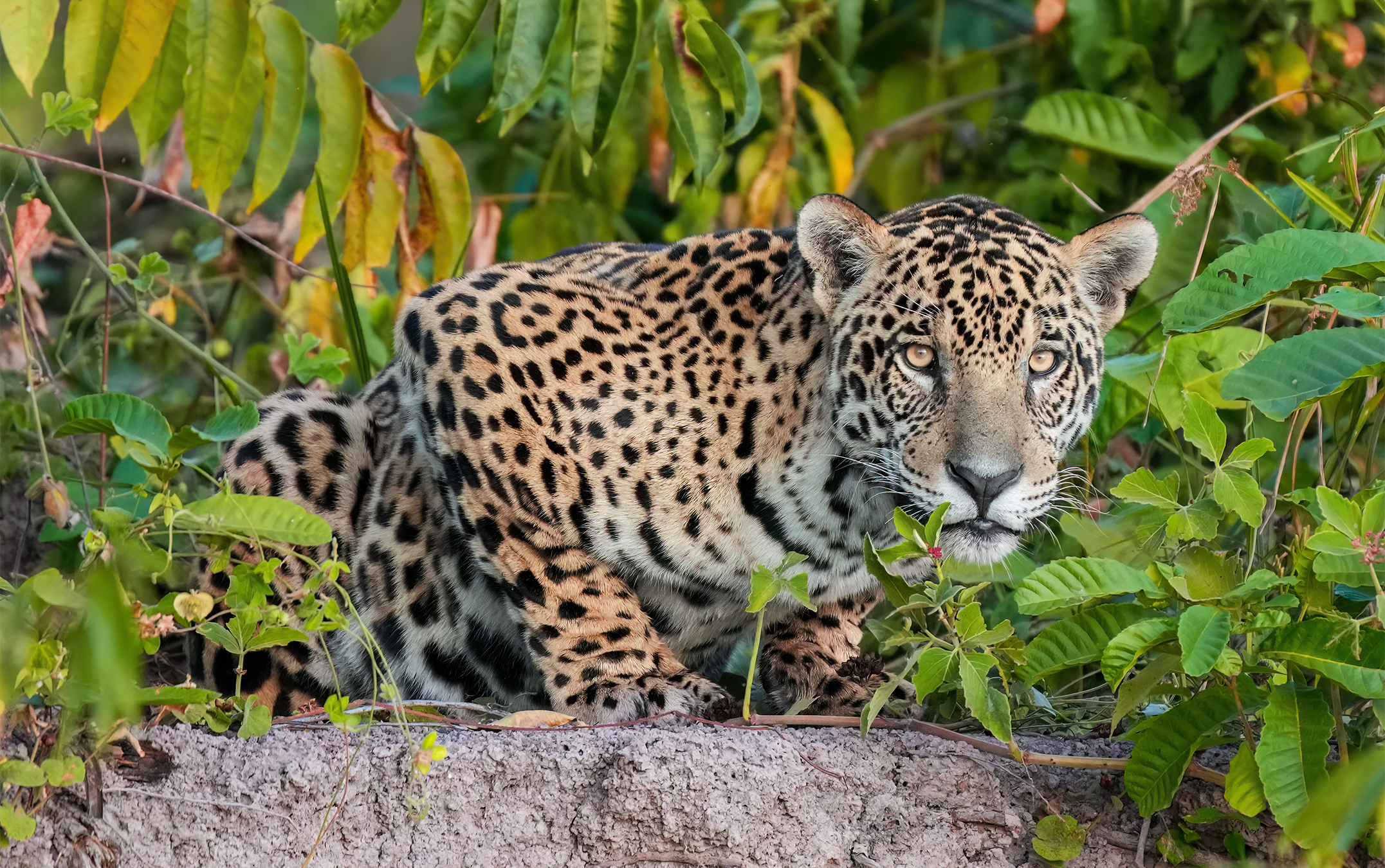
- Honduran authorities seized a live jaguar being kept as a pet, along with other wildlife, from the home of a businessman in the country’s east.
- Investigators say the jaguar is a young female, about a year old, likely captured in the Mosquitia region and traded on the black market.
- It’s illegal to trap jaguars or keep them as pets under Honduran law. However, with fines only amounting to around $6,500, the practice is common among the powerful, wealthy and those involved in drug and arms trafficking.
- The rescued jaguar has been sent to a rehabilitation center for possible release back into the wild, although rewilding a jaguar isn’t always possible or successful.
Authorities in Honduras have seized a jaguar kept as a pet by a businessman, in a high-profile raid that conservationists say should serve as a deterrent for others engaged in wildlife trafficking.
The May 6 raid at a home in Olancho department, in the country’s east, was two weeks in the planning and the first seizure of a live jaguar (Panthera onca) since 2018, said Marcio Martinez, head of the wildlife department at the Forest Conservation Institute (ICF), who was involved in the operation. He added it stemmed from a tip to the Special Environmental Prosecutor’s Office (FEMA) about a jaguar being kept in the residence of a local businessman in the El Pataste community.
The jaguar, a female believed to be about a year old, is thought to have been captured in the Mosquitia forests, a stronghold for the species.
The unnamed businessman had no prior criminal record, Martinez said. “He was not listed in our database as a person of interest in the matter of trafficking or illegal possession of wildlife.”
Nor has he been arrested. Martinez said FEMA will summon him in the next few days to answer charges of damage to endangered species, illegal capture of wildlife and other possible infractions. He could face fines of around 172,000 lempiras ($6,500) if convicted.
Since the seizure, authorities learned that the businessman previously owned wild animals, including big cats. “He will now be a person of interest to environmental government institutions,” Martinez said.
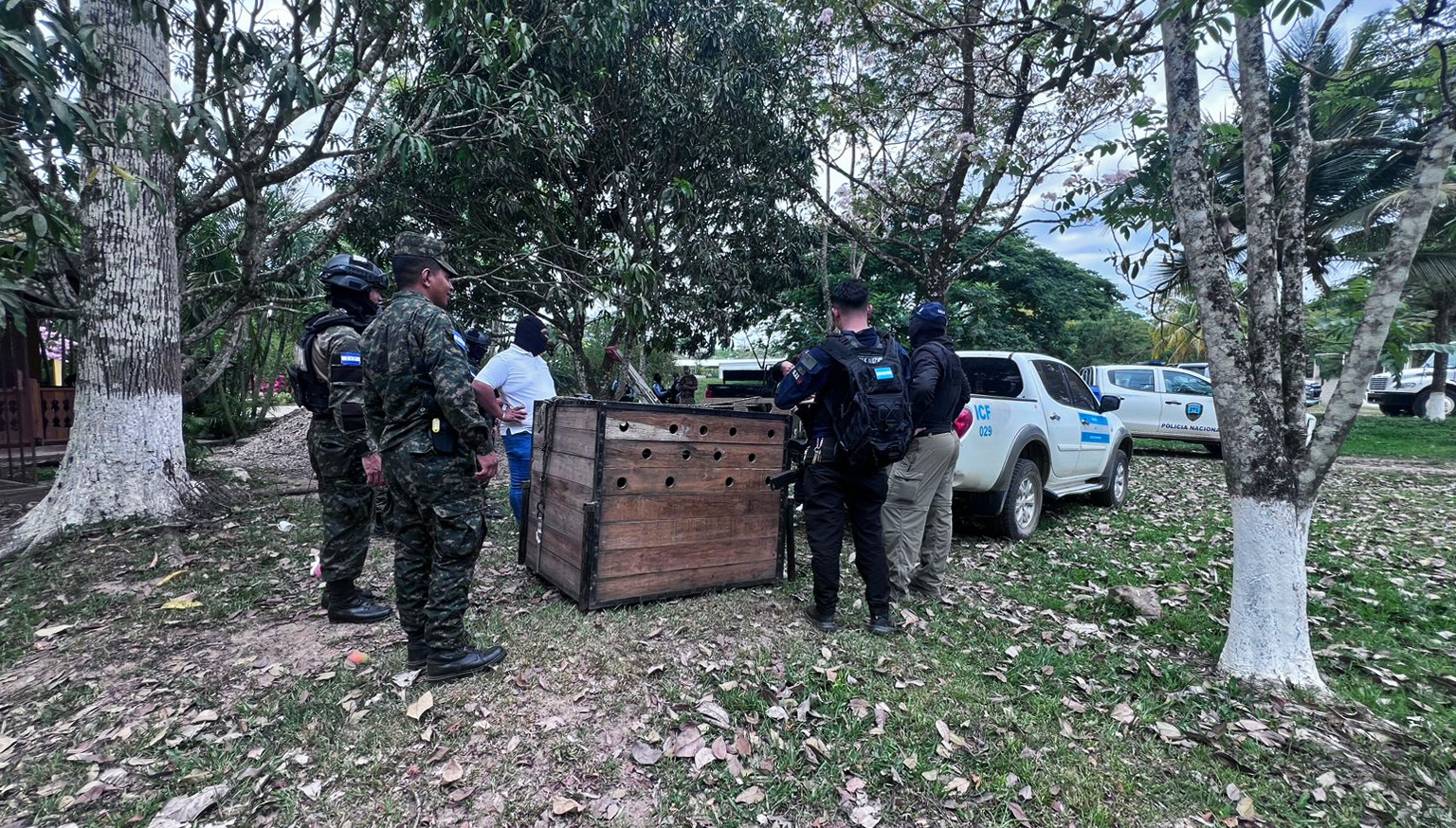
The raid was a coordinated effort between the Honduran police, FEMA, ICF and the Armed Forces Forestry Command, and was supported by a wildlife specialist from the consumer goods company Dinant. Investigators discovered and confiscated other wildlife as part of the bust: a Panamanian white-faced capuchin (Cebus imitator) , a red-lored parrot (Amazona autumnalis) , a southern mealy amazon (Amazona farinosa) , and a ball python (Python regius). The capuchin is a threatened species.
In Honduras, jaguars are protected under the law, and it is illegal to kill, capture or keep one as a pet. But it’s a relatively common practice in the region to have these charismatic cats as pets, kept as a status symbol among the powerful, wealthy and those involved in drug and arms trafficking. The animals are often captured from the wild, but some may also be captive-born, Martinez said.
Franklin Castañeda, Honduras director at the wildcat NGO Panthera, who was not involved in the seizure, said it “is very important in sending a message to traffickers” as a deterrent. Panthera works in the country to protect jaguars.
“Other wildlife traffickers watching the seizure story on TV, in newspapers and on social media may not be too worried about sentences regarding wildlife offenses, but they may be very worried that if they are involved in other illicit activities, as is usually the case,” he said. He added that wildlife trafficking charges trigger investigations for other crimes that could have much stronger legal consequences.
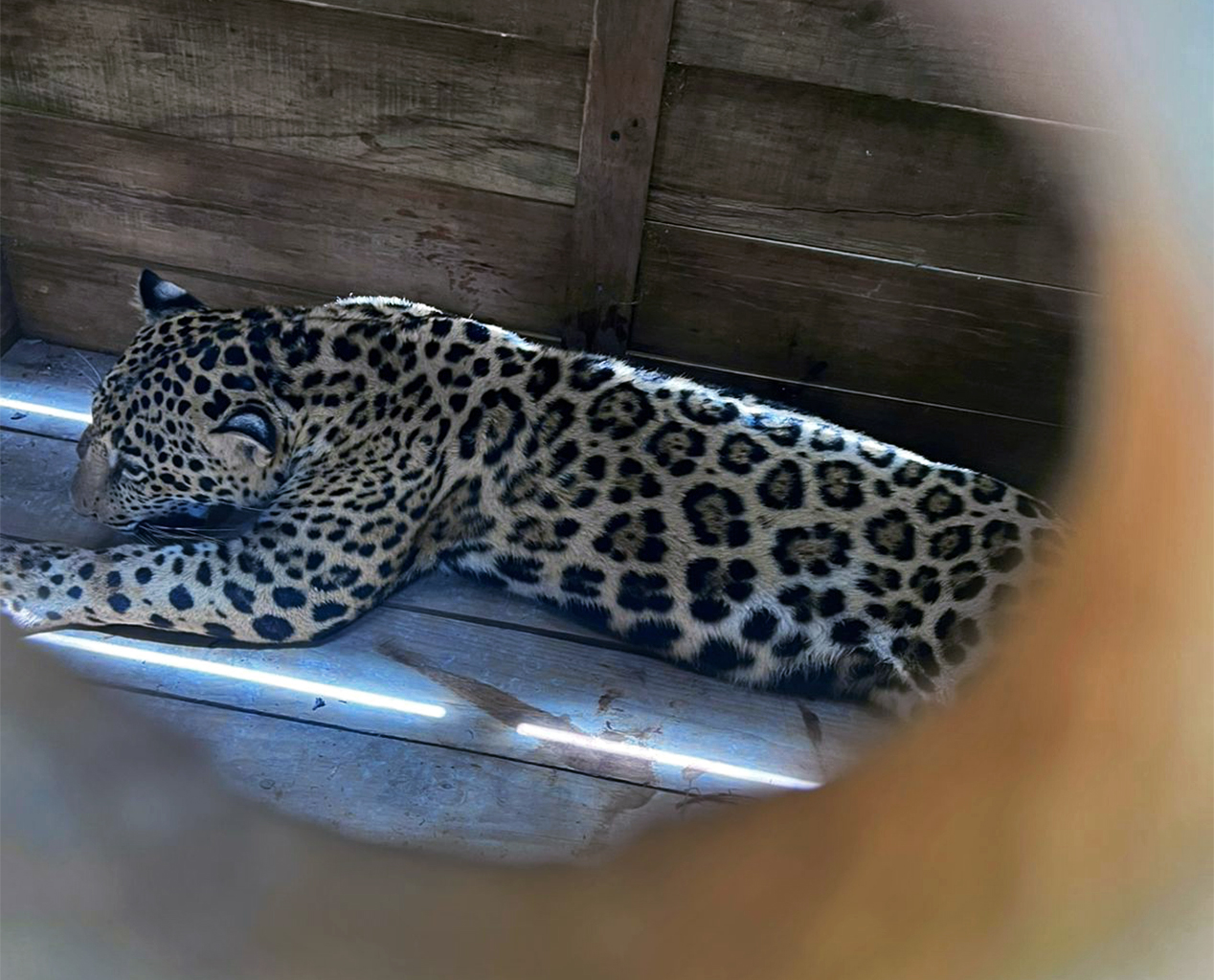
As for the rescued cat, she was taken to a rehabilitation center operated by the Honduran Armed Forces, where she’s being evaluated. If found fit, she’ll be released into a protected area.
But that’s no easy task, Castañeda said. “The reintroduction of jaguars is a very complex and ambitious project with a very high percentage of failures.” Still, he said it could be an “opportunity” to draft a rehabilitation plan in Honduras to reintroduce trafficked wildcats.
The jaguar seized by authorities is currently in a temporary enclosure at a wildlife rehabilitation center, where she will spend a few months. She could be released into the wild if she acquires the necessary survival skills. Video courtesy of Lizzi Cano/C9-FFAA (Forest Command of the Honduran Armed Forces).
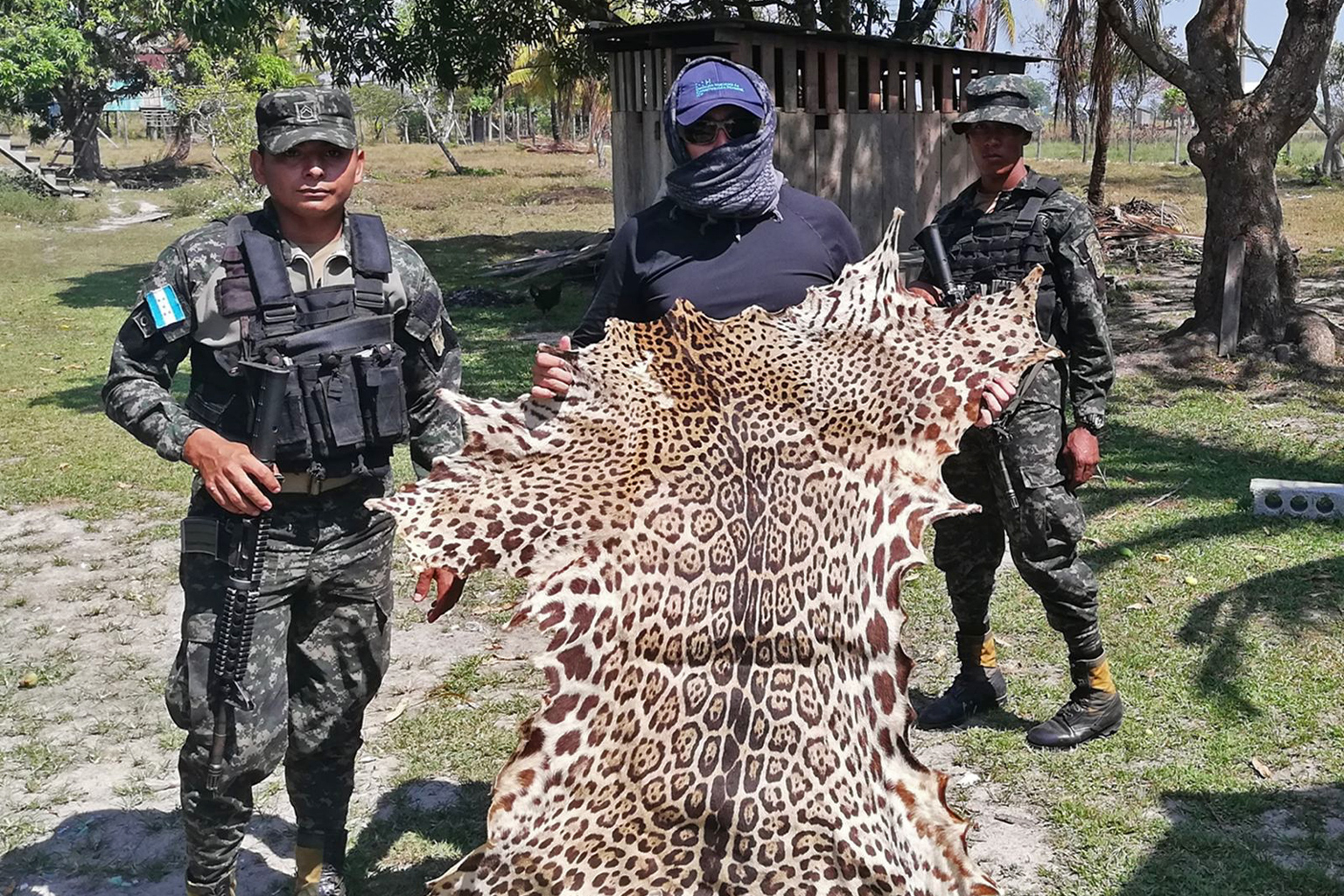
Jaguars face multiple threats across their range
Jaguar populations have dropped by 20-25% over the last three generations, which is about two decades, and continue to decline. The species is classified as near threatened on the IUCN Red List.
Like all wildcats, the largest feline in the Americas faces multiple threats. It has vanished from more than half of its historical range as human settlements, farms and other development encroach into its habitats. Droughts and wildfires are destroying and fragmenting its remaining refuges. The cats are also caught in the crossfire of the U.S.’s “war on drugs,” with drug-producing and -trafficking groups operating in more than two-thirds of their habitat. And as road networks expand, the cats are becoming victims of highway accidents.
Poaching and trafficking are on the rise across the feline’s range, including in Honduras. Jaguars are killed for their skins, skulls and teeth, or sold alive. A single jaguar carcass can fetch up to $3,000 on the local black market, with the cats’ parts often smuggled to China.
At least 431 jaguars were documented in the illegal trade globally between 2016 and 2025, according to an analysis by data specialists GoInsight, based on seizure and trade records. But seizures are the tip of the iceberg, and the real scale of trafficking remains unknown.
In Honduras, Martinez said there are no data quantifying how many of these cats are caught or slain each year. “We believe that the capture and possession of jaguars is not as big a problem as the killing of jaguars in Honduras,” he said.
With shrinking forests, their prey is also dwindling, and when the cats go after livestock, ranchers may kill them in retaliation. “We estimate that one jaguar is killed every month in the Mosquitia region,” Martinez said.
But there are some pockets of hope: Earlier this year, a jaguar was sighted for the first time in a decade, high in Honduras’s Sierra del Merendón mountains, raising optimism that the cats may be returning to their former territory. The sighting followed years of conservation work: deploying antipoaching patrols, working with private landowners to secure migratory corridors, and reintroducing prey species such as peccaries.
In 2022, Panthera and ICF reintroduced collared peccaries (Pecari tajacu), a favored jaguar prey that was extirpated by poachers, in Honduras’s Jeannette Kawas National Park. In the years since, jaguar numbers there have surged from zero to nearly 100, Castañeda said.
Martinez said his organization will continue to focus on preventing crimes against the country’s iconic wildcats. “Jaguars are one of the several species prioritized by our institution, and we will do everything possible to help their conservation and coordinate enforcement actions and environmental education to reduce the illegal possession and trafficking of these beautiful, enigmatic pantherids.”
Banner image: Jaguars are native to the Americas and are found in 18 countries. Image by Giles Laurent via Wikimedia Commons (CC BY-SA 4.0).
Spoorthy Raman is a staff writer at Mongabay, covering all things wild with a special focus on lesser-known wildlife, the wildlife trade, and environmental crime.
Rare, high-altitude jaguar sighting in Honduras raises hope for conservation
Citation:
Magliocca, N. R., Carter, N. H., Devine, J. A., Nielsen, E. A., & Sesnie, S. E. (2024b). Jaguar conservation is caught in the crossfire of America’s “War on Drugs.” Biological Conservation, 296, 110687. doi:10.1016/j.biocon.2024.110687
FEEDBACK: Use this form to send a message to the author of this post. If you want to post a public comment, you can do that at the bottom of the page.
Editor’s note: This article was updated on 15 May, 2026 to add that Honduran consumer goods company Dinant supported the seizure operation with a specialist who sedated the jaguar and supplied medications for anesthesia.
