

“Off to the races” on storage and grid use
The Virginia Clean Economy Act could also get a refresh when it comes to batteries. The law was first written to require utilities Dominion Energy and Appalachian Power Co. to deploy a little over 3 gigawatts of short-duration batteries, a mature technology that is widely available. A measure sponsored by Democrat Del. Rip Sullivan of Fairfax would raise the target to nearly 17 gigawatts by 2045, with most coming in data center–heavy Dominion territory. By that same year, the bill requires the utilities to deploy a total of 4.5 gigawatts of long-duration storage , such batteries can discharge energy for 10 hours or more but are still nascent in the commercial sector.
“Storage is really a critical affordability component, especially over the long term,” said Nate Benforado, senior attorney at the Southern Environmental Law Center. “If we can build storage, that is going to obviate the need for a lot of this gas, which is expensive and risky for customers.” Noting the war in the Middle East as the latest global conflict to impact fossil fuel prices, Benforado added, “If we continue to invest in gas infrastructure, expect your bills to go up and up.”
Lawmakers also passed bills to better utilize the state’s existing network of poles, wires, and other electricity delivery infrastructure. Because the grid is built to accommodate the maximum amount of electrons that might ever flow through it — such as on a particularly cold winter morning when people crank up heating systems — about half of it goes unused 99% of the time.
One measure would require Dominion and Appalachian Power to quantify grid utilization across their systems, a first step toward the deployment of batteries, line sensors, and other grid-enhancing technologies to increase energy generation on the system.
Another bill, dubbed the Fast Access to Surplus Transmission, or FAST, Act, would spur the same companies to identify sites where batteries or other technologies could be added to existing solar projects, taking advantage of extra room on the grid at the point of interconnection. Under a first-of-its-kind trial program, the utilities could add a total of 600 megawatts of generation using the surplus capacity.
“We’ve started to see a drastic reduction in costs around energy storage,” said Jim Purekal, a director at Advanced Energy United who heads the group’s legislative work in Virginia. “The more we install these, especially if we use existing grid capacity, the more we’re saving everybody money. And if we’re able to install these projects in tandem with solar and wind, which are your cheapest forms of energy generation, now we’re off to the races.”
“1,000 great ideas”
Hernandez was a sponsor of the FAST Act, and he is especially proud of its novelty. “Sometimes Virginia is not great at being first to move on a concept,” he said, “but in this case, it worked out.”
He also championed legislation requiring Dominion and Appalachian Power to invest millions in energy-efficiency upgrades for low-income, elderly, and disabled households. Another of his bills would streamline the permitting process for home rooftop solar.
“There were a whole lot more from other members,” Hernandez said. “This moment that we’re in is all about having 1,000 great ideas, because there’s no one thing you can do to fix every problem.”
To wit, over 50 energy and climate bills tracked and supported by the Virginia Conservation Network passed during the two-month session — including those setting the state up to rejoin the Regional Greenhouse Gas Initiative, adopt more community solar farms, study ratemaking reforms, and many others.
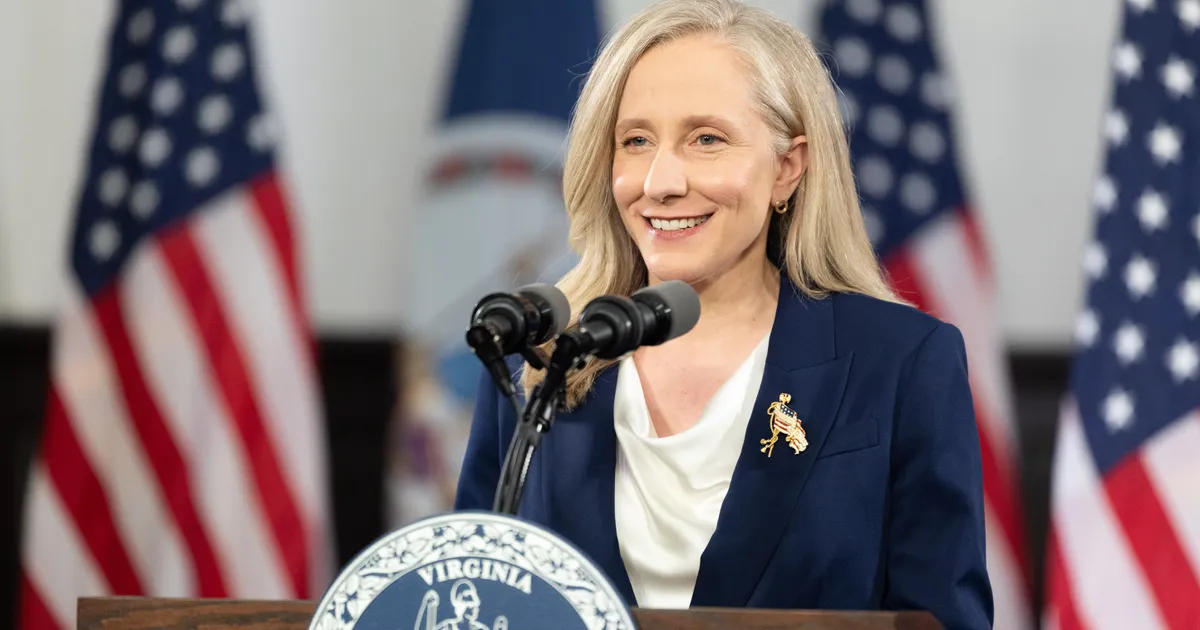
Spanberger has yet to sign any of the measures, and many passed with little help from Republicans. But the vast majority of these bills are almost certain to become law, and VanValkenburg is hopeful that they’ll endure with bipartisan support. That’s because the economics of clean energy — especially solar and storage — just keep improving.
“I think these laws are going to be durable from a free-market capitalism perspective,” VanValkenburg said. “But I also just think that those are also the only ways that you’re gonna keep energy bills down.”