

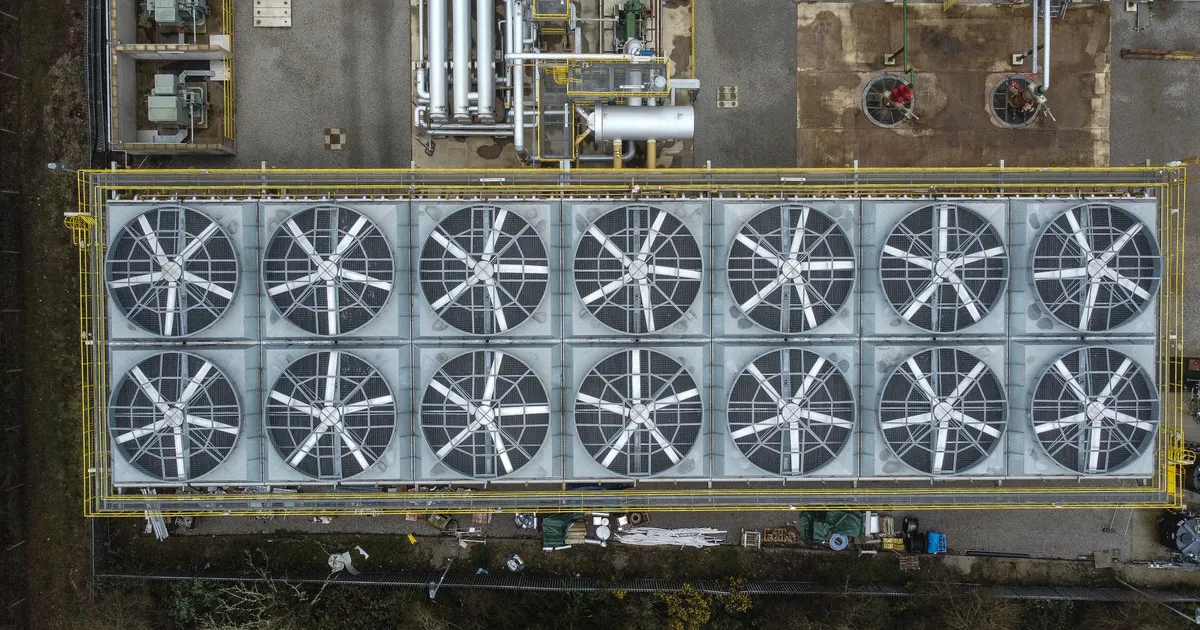
Geothermal energy is rapidly advancing in the U.S. and globally, thanks to the arrival of next-generation technologies and skyrocketing power demand from data centers. Yet as more companies drill down deep to harness Earth’s heat, the industry is poised to hit a major snag on the surface.
Geothermal power plants rely on “turbomachinery” — turbines, heat exchangers, and other components — to generate and deliver electricity. But the limited supply chain and high cost of that equipment threaten to delay the industry’s efforts to supply huge amounts of clean electricity around the clock, according to Project InnerSpace, a geothermal research and advocacy organization.
On Tuesday, the group announced a new initiative with the nonprofit foundation XPrize to tackle that above-the-crust challenge.
XPrize will run a global competition to incentivize researchers and companies to design power-plant systems that not only require less time and money to produce than today’s, but that also can be more readily installed across a wider range of geothermal projects.
Project InnerSpace will fund initial efforts to design the competition, though the full prize amount won’t be announced until it officially launches this summer. The partners said they’re talking with industry players at the ongoing CERAWeek energy conference in Houston to develop key criteria for the contest.
The idea is to “unlock innovation that markets alone are too slow or too constrained to deliver,” David Babson, XPrize’s executive vice president of energy, climate, and nature, said in a news release. XPrize has spearheaded nine climate-related competitions to date, including a $100 million challenge for carbon-removal technologies that was funded by Elon Musk’s charitable foundation.
In the U.S., geothermal energy produces just 0.4% of total utility-scale electricity generation. Conventional geothermal technologies rely on naturally occurring reservoirs of hot water and steam that are found in only a handful of places, like California’s Geysers area and Nevada’s Great Basin.
“The subsurface solutions that will drive scaled development of next-generation geothermal energy are well on their way,” said Jamie Beard, executive director of Project InnerSpace. “We now need to match that momentum aboveground.”
That includes developing more “modular, integrated, and high-performance” geothermal surface plants than currently exist, according to the prize announcement.
Today, the global market for organic Rankine cycle technology and other equipment that geothermal plants use is concentrated among a small set of manufacturers based in Israel, Turkey, and parts of Europe. Until very recently, those companies had little reason to scale production or revamp designs, owing to the sector’s limited growth. Most geothermal equipment is highly customized, and in the U.S., it can take over 18 months to bring it stateside.