

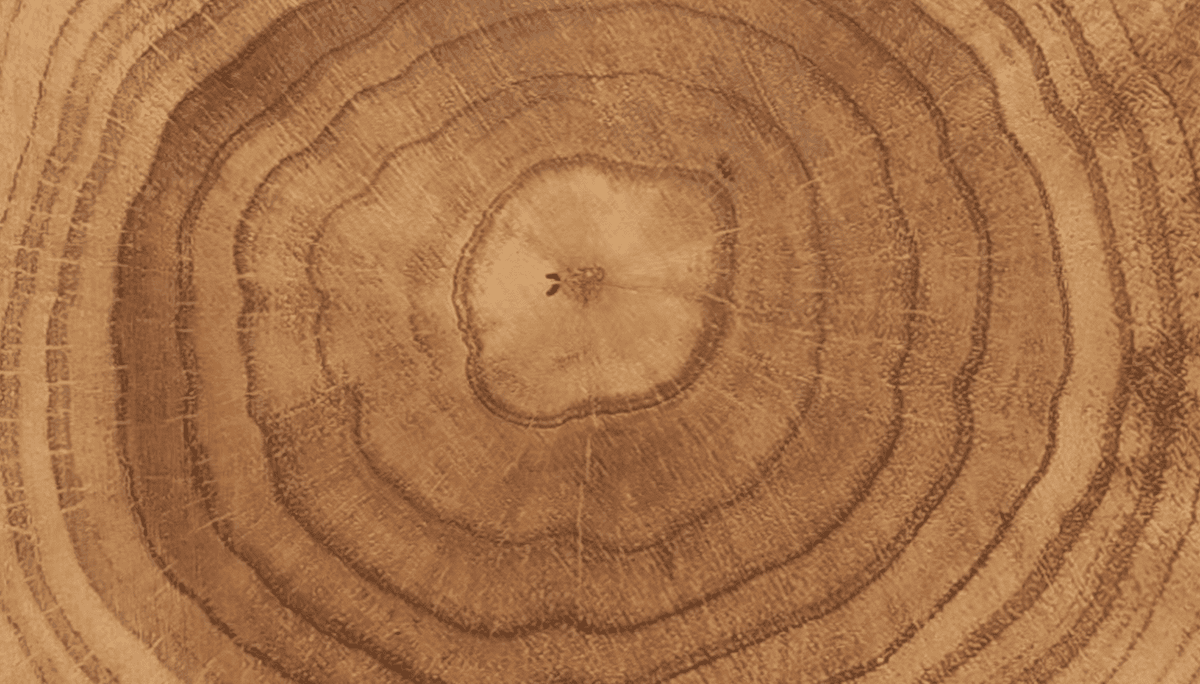
- Scientists analyzed tree growth rings to investigate whether the Amazon Basin is indeed drying up, as shown by extreme droughts in 2023 and 2024.
- Their study revealed that over the past four decades, rainfall has become more intense during the wet season and scarcer during the dry season, indicating unprecedented extension of climate seasonality.
- Researchers point out that such intensification of extremes results from a combination of natural environmental variability, deforestation and climate change, with direct impacts on the forest and the carbon cycle.
In 2024, the Amazon region felt the effects of one of the worst droughts in its recorded history — if not the worst. At the port of Manaus, the largest city along the course of the Amazon River, the water level reached 12.68 meters (41.60 feet), the lowest level since measurements began there in 1902. It was even worse than in 2023, when high temperatures in Lake Tefé, upstream of Manaus, killed river dolphins.
Successive years of record heat and drought have left scientists asking whether the whole Amazon Basin drying up as a result of more intense cycles of El Niño and La Niña, which alter ocean surface temperatures and interfere with atmospheric circulation, compounded by persistent deforestation.
With little data available on the region, scientists from the universities in the U.K. and from Brazil’s National Institute for Amazonian Research (INPA) sought answers that could be provided by the very trees in the Amazon Rainforest.
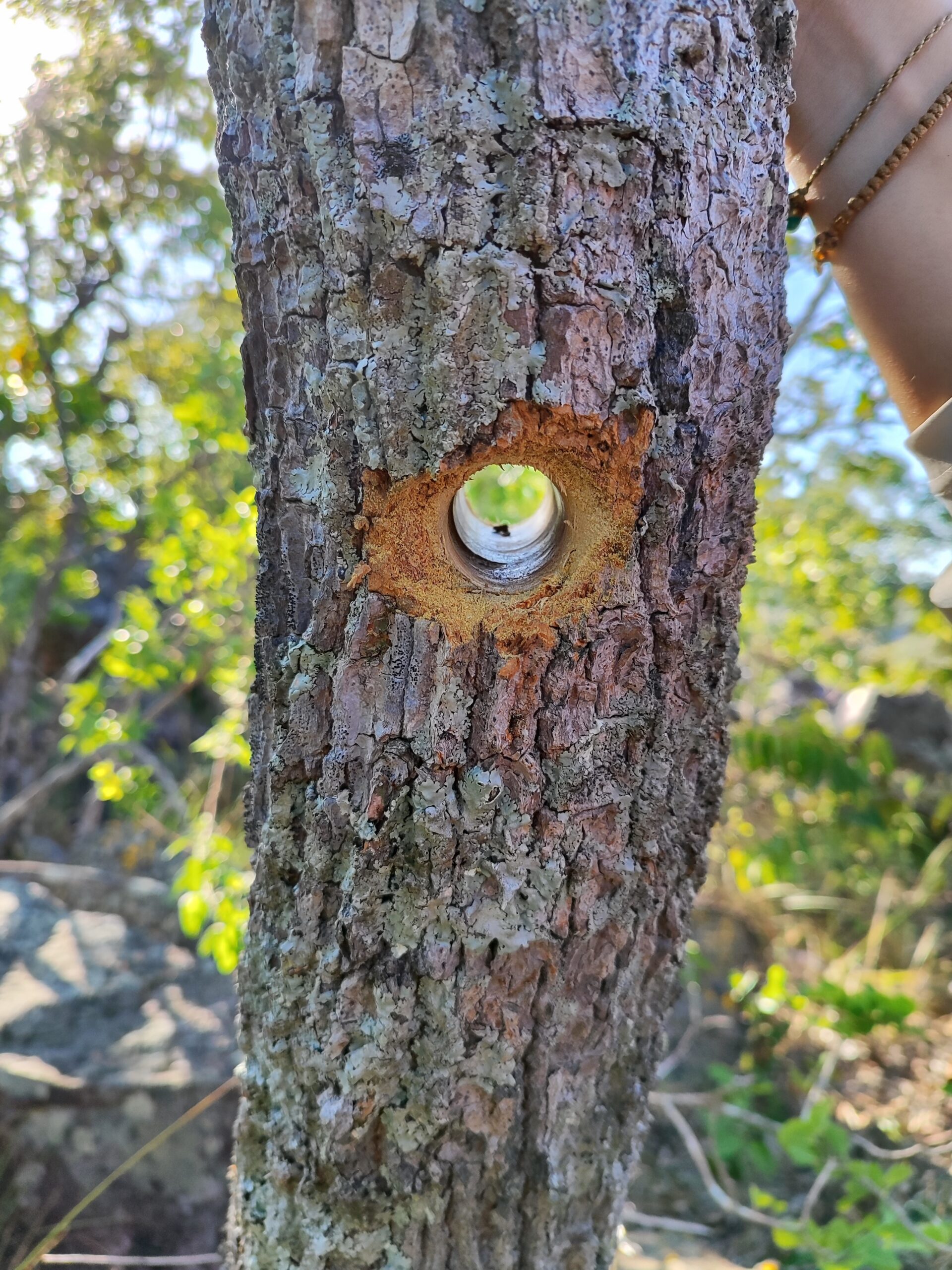
They focused on the chronology of growth rings formed annually in tree trunks, using a method known as dendrochronology. In addition to determining the age of a tree, it can reconstruct past climate conditions, and in this case it revealed an even more complex problem.
Their findings highlighted the extreme variations in rainfall seasonality over the last four decades, with the hydrological cycle disrupted by increasingly rainy wet seasons and increasingly severe dry seasons.
“The idea for our paper comes from a long-standing question, which is to understand what is happening to the Amazon’s climate through a data set with large-scale spatial representativeness and a good time range,” said lead author Bruno Cintra, a biologist at the University of Birmingham.
“For a long time, there has been talk that it will dry up, and climate models created in the 1990s and early 2000s did indeed show that the Amazon was following that path. But when we observe how the climate has developed over the last 40 or 50 years, what we see is that there is no clear pattern indicating that the biome as a whole is drying up.”
The work was based on oxygen isotope signals in growth rings of ish cedar (Cedrela odorata) and arapari (Macrolobium acaciifolium) trees. The proportion of these isotopes found in the wood is related to the amount of rain the tree has received. In this study, the signals indicated that rainfall has increased by 15-22% in the Amazonian wet season since 1980, and decreased by 5.8-13.5% in the dry season.
Wetter wet seasons, drier dry seasons
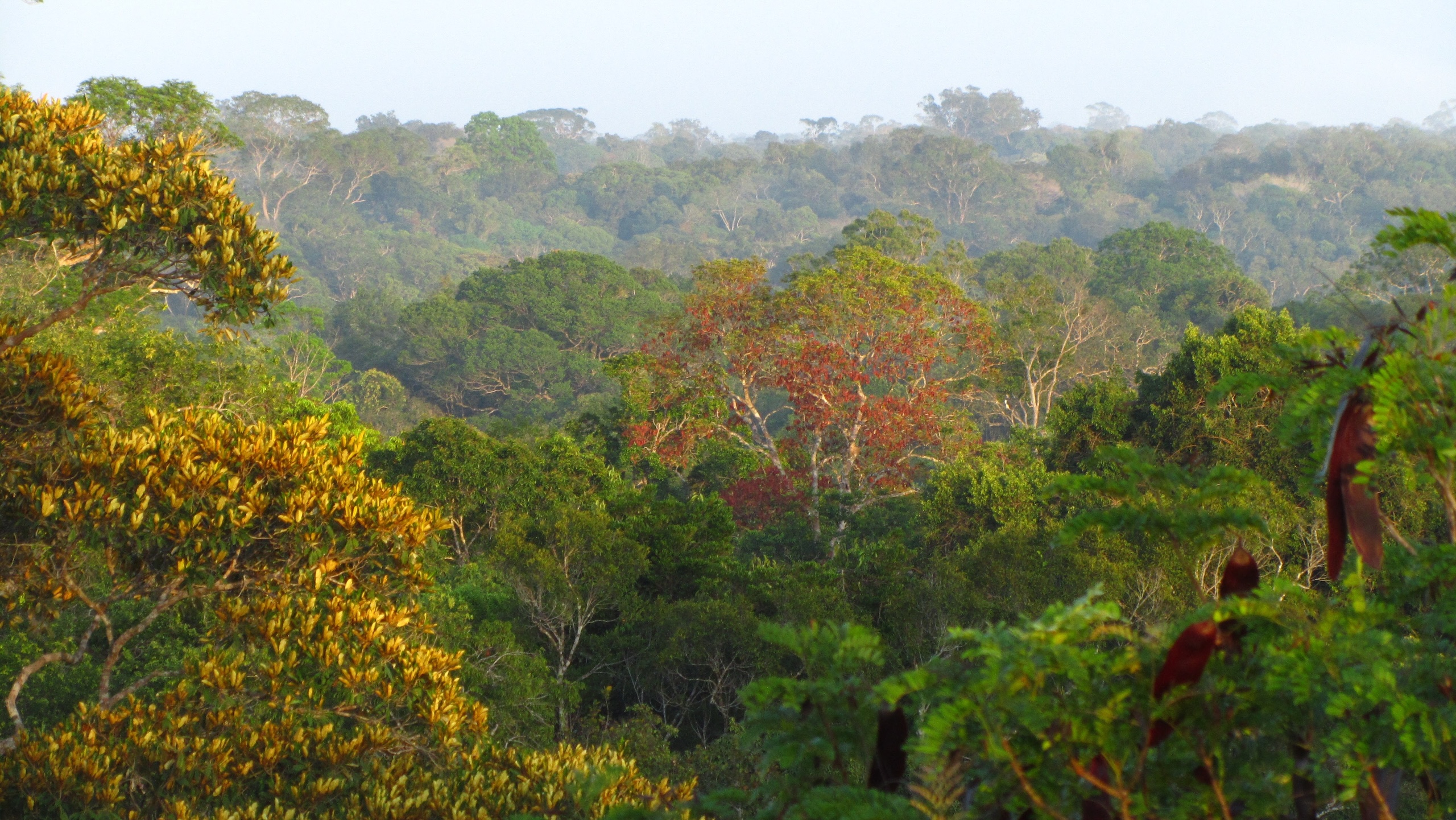
According to Cintra, the study’s novelty lies in the assessment of two different types of forests. They collected tree samples from floodplains known as várzeas and igapós — from trees that grow when they are out of the water, during their terrestrial phase — and from dryland trees that grow during the wet season.
In addition, the researchers pointed to their focus on oxygen isotopes formed in the trunks, which reflect a physical process that occurs in the atmosphere, related to water condensation and evaporation.
“Every time water changes state, it leaves a chemical mark on the tree,” Cintra said. “Based on these two approaches [dendrochronology and isotopes], we analyzed the time series obtained from growth rings and were able to determine how much the amount of rainfall has changed in the last 40 years, indicating unprecedented extension of the seasonal rainfall cycle in the Amazon.”
Co-author Jochen Schöngart, a researcher at INPA in Manaus, noted examples of extreme events that confirm the study’s thesis of intensified rainfall seasonality.
“The four most intense floods in the history of the central Amazon — in 2021, followed by 2012, 2009 and 2022 – occurred during the last 16 years,” he said. “In parallel, the three most intense hydrological droughts in the region took place in 2024, 2023 and 2010, respectively.”
According to Schöngart, observations over the last 40 years paint a picture of the formation of a climate hub expressed as a wetter wet season — particularly in the northern part of the Amazon — and a drier dry season, which is becoming longer, in the south. The central area, in turn, is affected by the increase of both extremes simultaneously.
Schöngart also said that current science has difficulty separating what is caused by natural climate variability and what is caused by humans in those more intense hydrological cycles.
“These are complex mechanisms involved in synergies. The southern Amazon, where longer dry seasons are related to higher ocean surface temperatures, mainly in the north tropical Atlantic, also suffers from major changes in land use: deforestation, forest degradation, forest fragmentation. And, in years of extreme drought, large-scale fires have occurred,” Schöngart said.
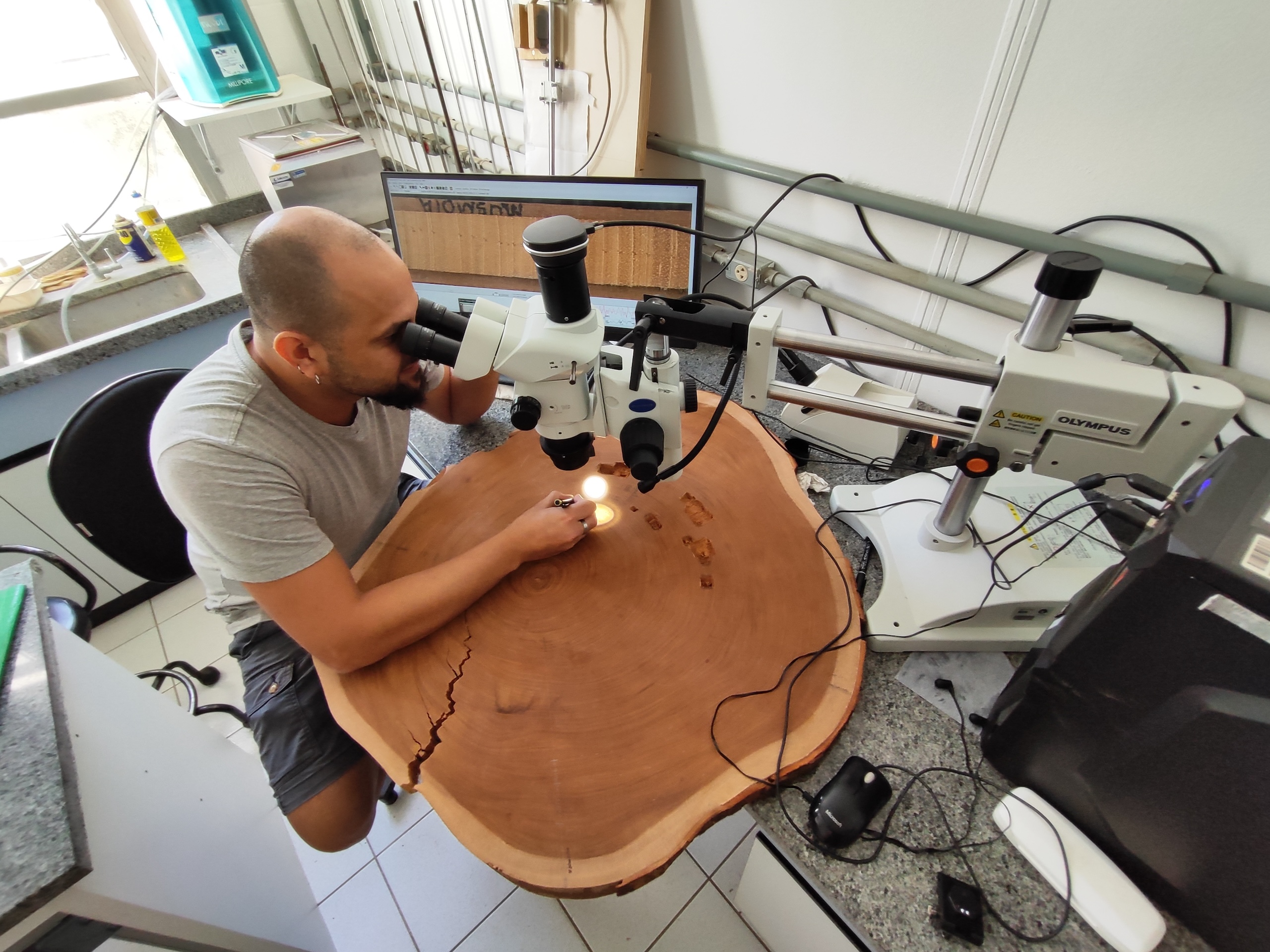
Schöngart is the co-author of another study on climate reconstruction based on Spanish cedar growth rings, which managed to look back to what the Amazonian climate was like 256 years ago. He stressed the importance of dendrochronology in understanding the climate variability of centuries ago, when Earth was not yet influenced by human-driven climate disruption.
“This study showed that, in the past, mainly in the 18-year period between 1861 and 1879, severe droughts occurred in the northeast of the Amazon Basin, where there is now increased rainfall. And this shows that what we have been observing in the last 40 years is unprecedented,” he said.
Daniela Granato, the first author of that study, currently at the University of Arkansas in the U.S., also investigated historical records from that time to validate what the trees — some of them more than 300 years old — were saying through their growth rings.
In her search for evidence of extreme climate events before 1900, Granato found newspaper articles and accounts about droughts, sections of the river drying up into lakes, fish kills, and large fires along the Madeira River, the main tributary of the Amazon. She also found news stories describing major floods in the 19th century, such as those that occurred in 1859 and 1892 in Rio Negro and Santarém.
“In terms of hydroclimate variability, the Amazonian complex is very large, so each region has its own natural variability, its own wet season and its own dry season,” Granato said. “And one of the main factors influencing the current changes in certain regions is deforestation, which prevents moisture from returning to the air.”
Correcting misconceptions from the Global North
The proliferation of dendrochronology studies conducted in the tropics, which has provided valuable information about tree health and climate in the Amazon, is relatively recent.
The reason for the delay was a misconception perpetuated by scientists from the Global North. For decades, they claimed that, unlike trees in temperate zones, which stop growing due to cold winters and strong temperature seasonality, forming distinct growth rings, in the tropics, where the temperature is more stable, trees would grow without hindrance, and hence the ring effect wouldn’t be as distinct.
But the reality is that, in the tropics, rings form in other seasonal contexts, such as water shortage in the dry season, which causes some species to stop growing, or when forests experience prolonged flooding and the roots are unable to obtain water and nutrients from the soil, forcing trees to stop their development.
“This belief that tropical trees do not form growth rings has been published in every biology textbook around the world,” said Peter Groenendijk, a biology professor at the State University of Campinas (Unicamp), where he leads research in dendrology and ecology of tropical forests. (Groenendijk wasn’t involved in the research on oxygen isotopes.)
“But, after the myth started to dissolve in the early 2000s, dendrochronology in the tropics began to grow,” he said.
Groenendijk is also a co-founder of the Tropical Tree-Ring Network, created to give greater visibility to the research being carried out in the tropics and to share knowledge, where he works on important dendrochronology studies in the Global South, focused on large spatial and time-scale climatology.
One of his studies, conducted with 150 other researchers from 124 institutions under the Tropical Tree-Ring Network, examined more than 10,000 trees from Brazil and other tropical regions to understand the effects of extreme droughts and global warming over the last 100 years.
Recently published in the journal Science, the study revealed how severe drought episodes reduced tree diameter growth slightly, but enough to increase the mortality rate by 10%.
“Trees are resilient and they recover quickly,” Groenendijk said. “However, droughts have been getting stronger over time, and predicted climate change will increasingly reduce growth. Although small at present, these reductions lead to significantly higher mortality. And, since tropical forests are very extensive, this ends up releasing a lot of carbon back into the atmosphere.”
Banner image: Growth rings in a specimen of tachi-branco (Tachigali vulgaris). Image by Elvissant via Wikimedia Commons (CC BY-SA 4.0).
This story was first published here in Portuguese on Jan. 6, 2026.
Citations:
Cintra, B. B. L., Gloor, E., Baker, J. C. A., Boom, A., Schöngart, J., Clerici, S., … Brienen, R. J. W. (2025). Tree ring isotopes reveal an intensification of the hydrological cycle in the Amazon. Communications Earth & Environment, 6(1), 453. doi:10.1038/s43247-025-02408-9
Granato‐Souza, D., Stahle, D. W., Torbenson, M. C. A., Howard, I. M., Barbosa, A. C., Feng, S., … Schöngart, J. (2020). Multidecadal changes in wet season precipitation totals over the eastern Amazon. Geophysical Research Letters, 47(8), e2020GL087478. doi:10.1029/2020gl087478
Zuidema, P. A., Groenendijk, P., Rahman, M., Trouet, V., Abiyu, A., Acuña-Soto, R., … Babst, F. (2025). Pantropical tree rings show small effects of drought on stem growth. Science, 389(6759), 532-538. doi:10.1126/science.adq6607
