

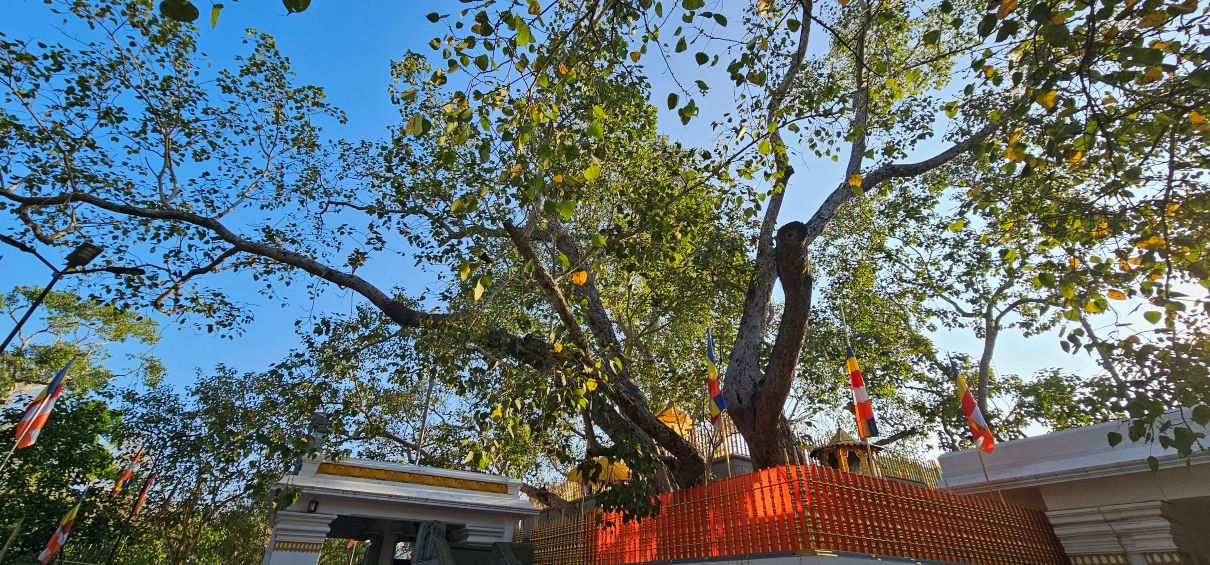
- Visiting Buddhist monks from Texas who completed a fresh leg of the “Walk for Peace” initiative have carried a sapling of the Jaya Sri Maha Bodhi tree lineage from Sri Lanka to the United States.
- The Jaya Sri Maha Bodhi or the holy fig tree (Ficus religiosa), rooted in Sri Lanka for over two millennia, is not only a symbol of Buddha’s enlightenment but also a keystone species that sustains biodiversity, linking Buddhist tradition with ecological resilience.
- Unlike ancient times, the movement of plants today is governed by strict international quarantine regulations, requiring soil removal, root sterilization, certification, and post-arrival inspections to prevent deceases and accidental pest introduction.
- Experts describe the sapling exchange as a continuation of “Buddhist diplomacy,” where spiritual heritage, environmental ethics, and international relations converge, raising broader questions about how ancient reverence for nature can inform today’s conservation challenges.
ANURADHAPURA, Sri Lanka – Buddhist monks associated with the “Walk for Peace” initiative have carried a sapling of the sacred pipal or “bodhi” tree to the United States, more than 2000 years since the Indian Emperor Ashoka’s daughter, Sanghamitta, a Buddhist nun, carried a sapling of that same lineage from India to Sri Lanka. . In both narratives, the pipal tree became more than a plant but a living bridge across cultures and faith, rooting itself in new lands while carrying the same timeless message of compassion and mind’s awakening.
Over 2,500 years ago (around 528 BCE), in the tranquil groves of Bodh Gaya in India, prince Siddhartha Gautama attained enlightenment beneath the shade of a pipal tree (Ficus religiosa) and became known as the Buddha. In the days that followed his awakening, he is said to have observed a week-long meditative silence as an expression of gratitude for the tree that provided him shelter until he attained enlightenment. From that moment onward, the pipal tree ceased to be treated as an ordinary organism, but as a living witness to enlightenment or a symbol of spiritual reverence across the Buddhist world, and the tree became known as the ‘Jaya Sri Maha Bodhi’ – the great bodhi tree.
The tree’s historical journey to Sri Lanka is deeply rooted in devotion and early ecological consciousness. In the third century BCE (around 288 BCE), the sapling was ceremonially planted in the royal gardens in Anuradhapura, in North Central Sri Lanka. Since then, the tree has been continuously cared for and venerated for over two millennia and is estimated to be the oldest living tree in the world with a recorded planting date.
The survival of the sacred pipal tree also illustrates how early Buddhist traditions intertwined with faith, ecology, and diplomacy long before modern conservation language emerged, says Siril Wijesundara, a professor of plant taxonomy and conservation of the National Institute of Fundamental Studies (NIFS).
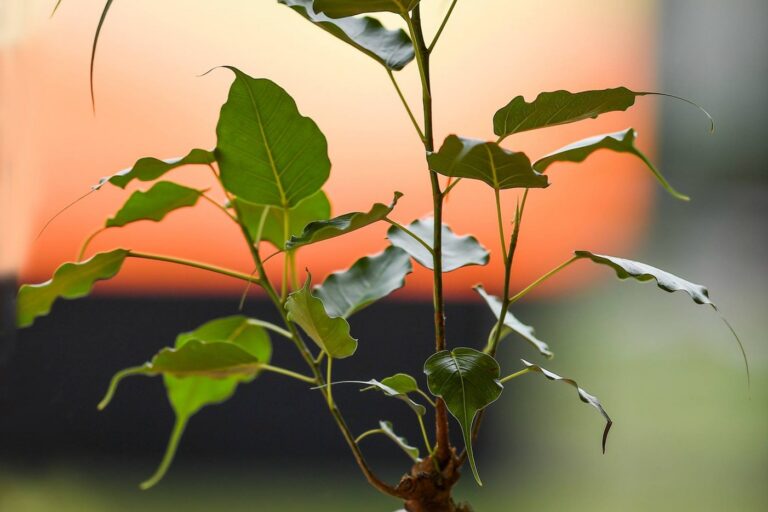
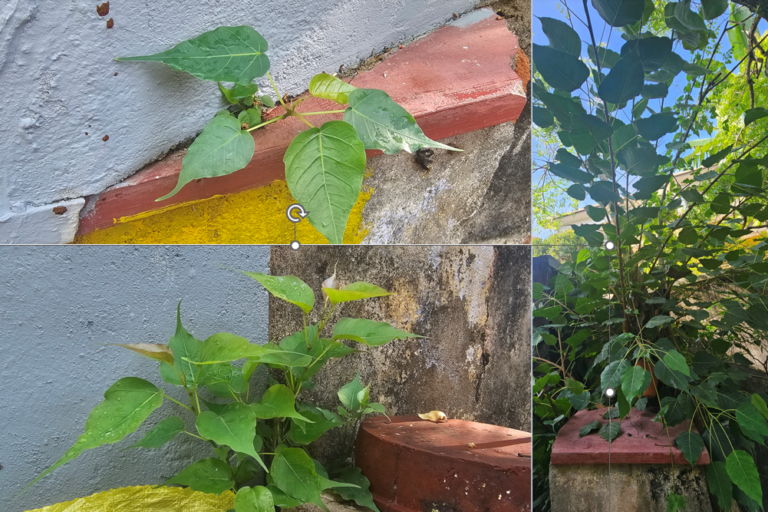
“The sacred pipal tree is commonly known as the Bo tree, bodhi tree, pipal tree or sacred fig. Native to the Indian subcontinent, it is now found across South and Southeast Asia with plants being found across Buddhist temples,” says Wijesundara. Ecologically, figs are keystone species as they produce fruit throughout the year and sustain birds, bats, and other wildlife during periods of food scarcity. With its distinctive heart-shaped leaves and elongated tips, the species is also well adapted to tropical climates, adds Wijesundara.

Propagation and custodianship
The care of the sacred pipal tree has been under Sri Lankan state protection since colonial times and is now managed through the Department of National Botanic Gardens, with scientific oversight continuing as part of national heritage management. Botanists conduct annual inspections to assess the tree’s health and ensure its long-term survival. “The original Jaya Sri Maha Bodhi is currently in good condition,” says H.C.P. Jayaweera, the director general of the Department of National Botanic Gardens (DNBG).
According to Buddhist chronicles such as the Mahavamsa – a historical record written in the Pali language – the Jaya Sri Maha Bodhi originated from a southern branch of the original bodhi tree at Bodh Gaya, India. According to the ancient text, this living branch was separated and planted to be sent to Sri Lanka.
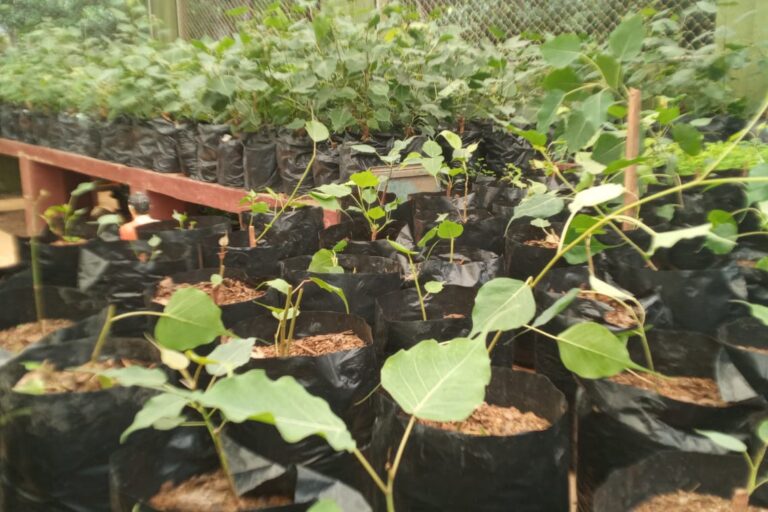
Today, propagation is carried out through seeds, explains Pallegama Hemarathana, the chief custodian of the Jaya Sri Maha Bodhi. “Requests for saplings are not granted casually as they must come through recognized temples, governments, or diplomatic missions and require formal approval. Receiving such a sapling carries both spiritual significance and diplomatic weight,” the monk told Mongabay.
The Department of National Botanic Gardens maintains a dedicated facility at the Royal Botanic Gardens, Peradeniya, where seeds are cultivated under controlled conditions. “We currently maintain nearly 1,000 saplings. The one selected to be sent to the United States is about 20 years old,” Jayaweera told Mongabay.
Walk for Peace
Prior to their arrival, the group of Buddhist monks from Texas who visited Sri Lanka under the Walk for Peace initiative, had requested a sapling from the care takers of the sacred bodhi tree. During the state ceremony that marked the conclusion of the “Walk for Peace” pilgrimage in Sri Lanka, President Anura Kumara Dissanayake handed over the sapling to the visiting monks led by Bhikkhu Paññākāra (also known as Thich Tuệ Nhân), highlighting the importance of the occasion.
The president described the initiative as a way of carrying Sri Lanka’s spiritual heritage and message of harmony to the wider world calling the sacred sapling an ambassador carrying religious values and diplomacy. The gifted sapling was caried to the U.S. by the vising monks and was expected to be planted in commemoration of Vesak, the full moon day in May, marking the birth, enlightenment, and passing of Gautama Buddha. Bhikku Paññākāra has announced the sapling will be planted at Hương Đạo Vipassana Bhavana Center in Fort Worth, Texas.
Quarantine and global regulation
Although Buddhist nun Sanghamitta transported the original sapling without any recorded hassle, international plant movement today is governed by strict biosecurity frameworks. The handing over of the sapling was only symbolically carried out, as it must first go through a rigorous quarantine process.
“Sri Lanka follows a rigorous plant quarantine system to prevent the spread of pests, diseases, and invasive species through international plant movement, and other countries operate similar systems,” says Thushara Wickramaarachchi, the director general of Sri Lanka’s Department of Agriculture, which oversees the National Plant Quarantine Service (NPQS).
All exported plant material from agricultural crops including the saplings of the sacred fig tree should be inspected and meet the phytosanitary requirements of the importing country. In some cases, such as shipments to Australia or Japan, saplings may be held under observation for weeks to monitor latent diseases. These procedures are governed internationally by the International Plant Protection Convention (IPPC), a treaty under the Food and Agriculture Organization (FAO).
In the U. S., imports are regulated by the Animal and Plant Health Inspection Service (APHIS). Live plants require import permits and inspection at designated quarantine stations upon arrival, Wickremaarachchi said.

From root ball to certification
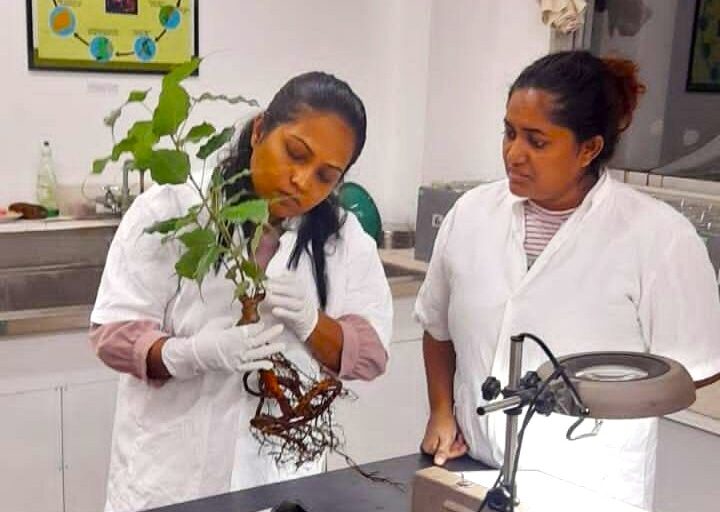
In preparation, the fig sapling was carefully uprooted with its root ball intact to preserve feeder roots. Due to international regulations restricting soil movement, soil was removed under quarantine supervision. The roots were washed to eliminate pests and pathogens, especially any knot-nematodes, and then wrapped in sterile, moisture-retaining material for transport, Wickremaarachchi told Mongabay.
“The sapling to Texas was found healthy, and a phytosanitary certificate was issued confirming it is pest-free. After it reaches the U.S., it will be re-inspected and may undergo further quarantine before final approval is granted for planting it.” Even a sacred sapling moves through a highly technical biosecurity system designed to prevent the accidental spread of invasive organisms across continents, explained Wickremaarachchi.
However, the sacred fig itself can be invasive as several species in the genus Ficus are already considered invasive because they grow quickly, tolerate disturbed habitats, and produce abundant fruit that is widely dispersed by birds and bats. In places like Florida and Hawaii, species such as Ficus microcarpa (Indian laurel fig) and Ficus altissima (Council tree) are already identified as invasive species. Ficus religiosa is also among the registry of list of invasive species of Texas, but is generally not considered invasive as stated in the Florida invasive species assessment.

Buddhist diplomacy with ecological value
The gifting of the sapling is part of Buddhist diplomacy, and Emperor Ashoka’s dispatching of a sapling of the bodhi tree many centuries ago marked the first recorded event, an important act of diplomacy even in the current context, said George Cooke, diplomatic historian and founder of the Awarelogue Asian Institute. “It is a symbol of the religious belief and a return to the values preached by the Buddha under the original pipal tree, Cooke noted.
According to Cooke, the presentation of bodhi saplings is a continuation of an age-old tradition and symbolizes the need to spread peace, tolerance and compassion. “Irrespective of whether Buddhist diplomacy is entrenched in our foreign policy, it is still relevant to many countries. It carries soft power. Whether we actively focus on such acts as part of our diplomacy however is open for discussion, “added Cooke.
Beyond its symbolism, the Sri Maha Bodhi also offers lessons in conservation. Historical records describe attempts to damage the tree as well as ongoing natural pressures from birds and monkeys. Nevertheless, it has survived for over two millennia under continuous human protection, says Wijesundara.
For more than 2,000 years, this tree has been safeguarded not only by policy but more by reverence. In an era marked by climate change and biodiversity loss, it raises a compelling question about the significance of ancient cultural values that treated nature as sacred and thus informing modern environmental stewardship, Wijesundara explained.
Banner Image: The sacred Jaya Sri Maha Bodhi was brought to Sri Lanka as a sapling by Sanghamitta, a Buddhist nun. The tree has been venerated in Sri Lanka for more than 2,300 years and remains a key attraction for visitors to the island. Image courtesy of Dulithi Nethumsa.
