

- Coffee is one of Honduras’s most important exports , half of it goes to the European Union, where stricter supply chain rules aimed at halting deforestation will come into place in 2027.
- The country’s fragile institutions, a fragmented coffee supply chain and competing traceability platforms could impede the coffee industry from complying in time to meet the EU Deforestation Regulation (EUDR).
- Some exporters see the EUDR as a chance to strengthen and reorganize their supply chain, with small farmers hoping to market their coffee quality successfully and obtain a better price.
- However, some critics say that while EUDR compliance imposts additional costs on producers, it doesn’t guarantee them a price premium, which could prompt many to turn to other markets with less onerous requirements.
Reinerio Zepeda is 88 and for almost a century has made his living from arabica coffee, grown in the shade at his finca, or ranch, near Minas de Oro in central Honduras.
“I love the peace up here, the trees and the birds,” he tells Mongabay by phone.
Zepeda is one of the 98,000 coffee growers registered in the country, most of whom, according to recent data, own less than 3 hectares (7 acres) of land. Zepeda, like many of his neighbors, has been selling his coffee to intermediaries and is wondering what the next year will bring as he will need to meet several requirements to make his supply chain traceable.
Starting January 2027, only farmers whose land wasn’t cleared after Dec. 31, 2020, will be able to send their commodities into the European Union, according to the EU Deforestation Regulation (EUDR).
“I have heard something on TV about Europe being concerned about deforestation, but nobody has showed up here to explain it to me,” says Zepeda, adding he’s more worried about falling prices than the bureaucracy in Brussels. “I haven’t cut trees , that would be crazy because I need them to produce my coffee. Everybody can come up here and check.”
More than half of Honduras’s coffee exports end up in the EU, representing about 5% of the national GDP. Domestically, the coffee industry generates more jobs than any other sector (1.1 million) and brings in more foreign exchange than any other economic activity.
Deforestation is a minor problem in Honduran coffee, experts tell Mongabay, as the sensitive arabica variety is traditionally harvested in the highlands under shade. Complying with the EUDR also means proving no deforestation, as well as respecting labor and human rights. And it’s on these latter points where Honduran coffee farmers are still struggling.
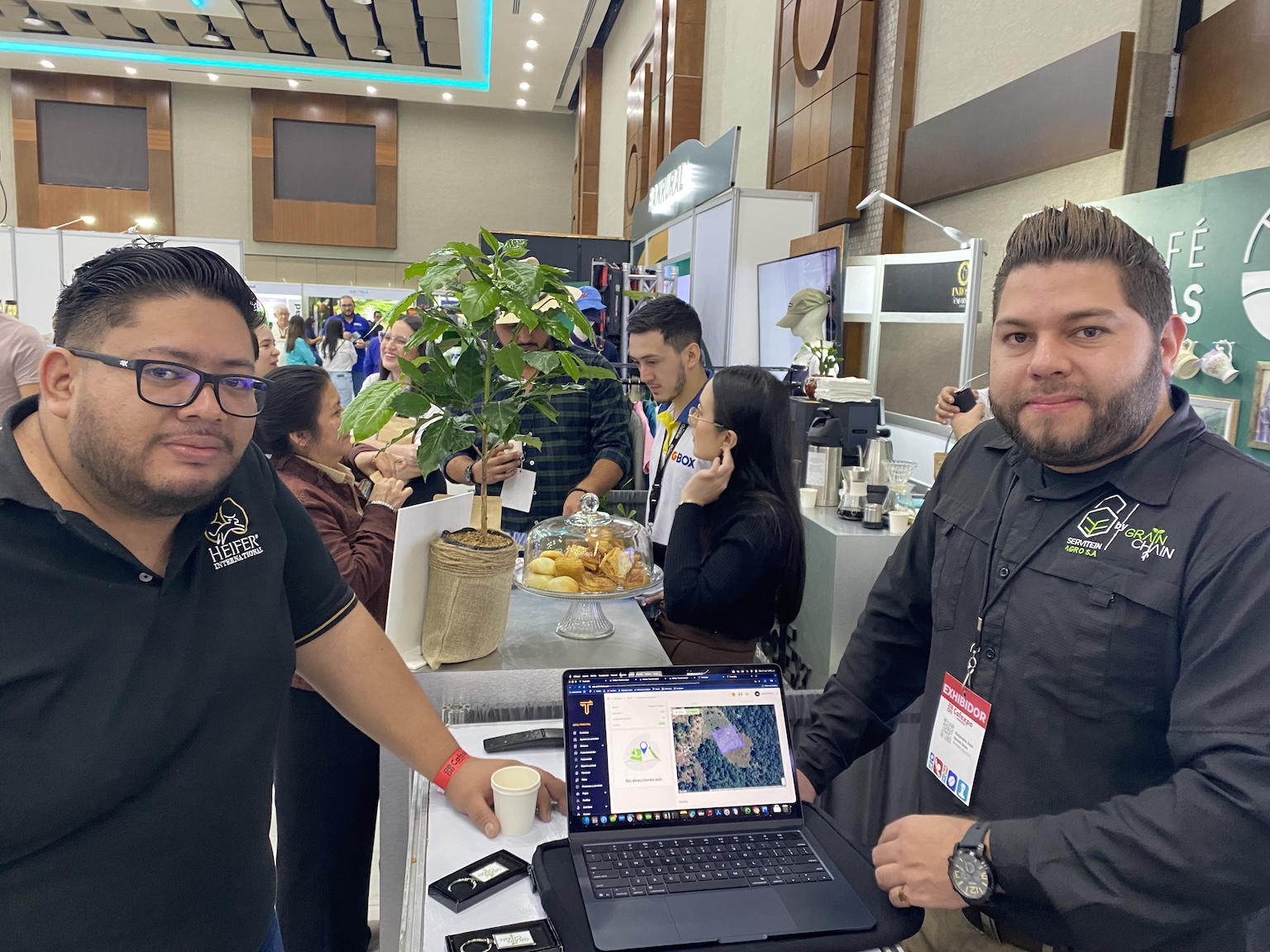
In March, Mongabay traveled to San Pedro Sula, in the Honduran department of Cortes, for Cafexpo, a major annual coffee event. Although many participants were talking on the sidelines about EUDR and some tech startups were presenting supply-chain traceability apps to help with compliance, there was no activity dedicated to the EUDR. And nobody was able to tell how many of the Honduran coffee farms had been georeferenced — or had its physical coordinates mapped so that the coffee can be traced back to its source — and were ready for EUDR-compliant exporting to the EU.
Fragmented data and the absence of coordination have been a challenge throughout the implementation process, says Francisco Ordoñez, who in January was named by the new president as deputy secretary of state for coffee production at the Ministry for Agriculture. The coffee supply chain in Honduras is composed of around 120,000 producers, most of them registered with the nonprofit Honduran Coffee Institute (IHCAFE), along with more than 500 intermediaries, and 81 exporters. The latter include big players but also smaller cooperatives.
“Everyone has done some work — exporters, cooperatives, the Honduran Coffee Institute — but we need to bring it all together,” Ordoñez says. He notes that the industry regulator, the National Coffee Council (CONCAFE), “has not met for four years, but now we will put efforts, political will, and, if necessary, funds to ensure that we will be ready.”
Ordoñez says he sees the EUDR as a chance to modernize and organize a sector that has been highly fragmented and nontransparent.
When the EUDR was adopted by the European Parliament in 2023, it encountered some resistance, says Daniel Dubon, executive director of Promecafe, a regional association that coordinates between producers, exporters and governments in Mexico, Central America and the Caribbean.
“Some actors thought the EU was imposing new rules that were not their business,” he says. But now, this has vanished. “Most actors see the EUDR as an opportunity, helping them to create a more solid, transparent, and sustainable supply chain.”
Dubon says the main issues for the coffee sector are land tenure and family labor, which are highly informal. Not everybody has a land title , sometimes ownership is collective and agreements are verbal. And child labor is common in coffee , many pickers tell Mongabay they were as young as 6 when they started helping their parents with the coffee crops.
“School vacations from November to January coincide with harvest season , the legal framework has some gaps, and enforcement is weak,” Dubon says.
Without a nationwide awareness campaign and measures such as childcare support during the harvest season, this is virtually impossible to tackle, he adds. And even if some exporters do have such due diligence programs, these are still very sporadic and difficult to supervise.
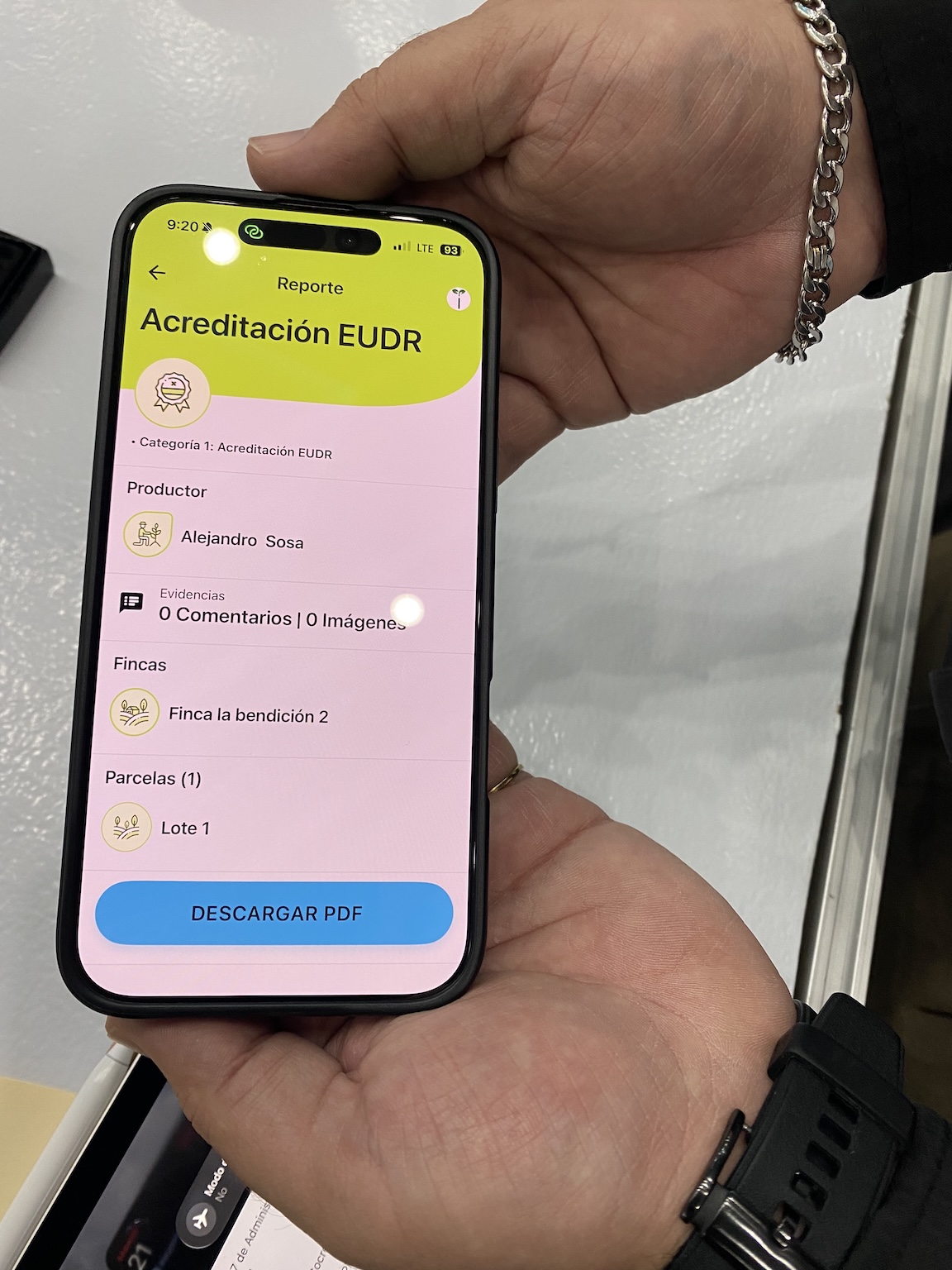
With the Honduran government slow to address the issue in recent years, the private sector has jumped in, especially exporters fearing losing one of their biggest and most lucrative markets, says Napoleón Matute, technical manager at IHCAFE. Some of them developed their own software and platforms.
“Everyone has his own traceability and due diligence system,” Matute says. “Some platforms such as CIAT and Inatrace are free, some have a cost, and in addition, every importer has different priorities that creates uncertainty.”
Becamo, a private exporter selling coffee from 9,800 producers, works with a platform developed by its biggest client in Germany, the Neumann Kaffee Gruppe (NKG). Comsa, based in the town of Marcala, sells organic coffee from more than 1,200 producers and uses a different platform. Both have already exported their first containers of “deforestation-free coffee” to test how well their systems comply with the EUDR requirements. Everything needs to be ready for when the law takes effect on Jan. 1, 2027, with heavy fines for violations looming: importers face fines of up to 4% of their annual EU turnover.
One the main technical challenges for importers has been analyzing satellite data with AI. Most AI models are trained on European and U.S. data and not adapted for local contexts. One of the most common systems to track deforestation is the Hansen Global Forest Change data set — highly accurate for the Amazon region, on which it was trained, but not for coffee farms in Central America.
“There were 90% false positives,” says Daniel Flores from Solidaridad, an international NGO that focuses on inclusive and sustainable supply chains.
In some cases, he says, the models misinterpreted the tree pruning required in agroforestry systems as deforestation. On some fincas that grow other crops besides coffee, incorrect measurements led to false deforestation alerts. In the eastern department of El Paraiso, a bark beetle destroyed many of the shade-providing trees. The rugged terrain and the tiny plots in the Honduran mountains have also proved difficult for the satellite-and-AI-powered software to capture data accurately.
Solidaridad now uses not one, but three different layers of satellite data, which have helped reduced the error rate from 90% to 22% , Becamo is also working with a three-layer system to obtain more accurate deforestation data. Both double-check their findings with the database of the National Institute for Forest Conservation, which has established the 2020 forest cover baseline.
But for other exporters, the costs and technical knowledge remain huge challenges. Only half of the 44,200 farms that belong to the Association of Honduran Coffee Exporters (ADECAFEH) have been georeferenced, according to Basilio Fuschich, the association president.
“Our clients are worried that Honduras won’t deliver enough coffee,” he tells Mongabay. Fuschich warns that the EUDR will split the coffee market: “Some exporters will comply, but many are not interested and prefer to sell to Asia and the U.S. without all this paperwork.”
According to Dubon, one of the problems with the EUDR is that it incurs costs in the country of origin, without offering producers any extra price premium on their coffee.
“Not everyone is willing to bear the costs and is looking for the cheapest solution,” Flores says. Accurately georeferencing a farm and then analyzing and double-checking the land and deforestation data costs $22.50 for a 7-hectare farm, according to Flores. Solidaridad has partnered with IHCAFE to enroll and train for free around 10,000 coffee farmers from associations or cooperatives in the upcoming months.
That’s just a drop in the ocean, though, as only a third of all coffee farmers are members of such groups. Those that aren’t or don’t have the support of an exporter risk being left behind. Only 44% of coffee farmers in Honduras are even aware of the EUDR, and only one in three has completed a training course, according to a study seen by Mongabay on the implementation of the EUDR.
“Although 70% believe they meet the criteria, this perception does not necessarily mean they fulfill the technical requirements,” the study adds.
Fredy Pastrana, a small, independent coffee producer from the town of Danlí, is one of the farmers who fears he’ll be left behind. He’s been asking exporters what he needs to do in order to comply, but their answers haven’t been encouraging.
“They say they will georeference your finca, but they don’t operate on an open platform , they own your data, which makes it difficult to switch during the harvest to another retailer who may be offering a better price,” he tells Mongabay. “I believe that the information must be handled by a public institution, in line with the law, not by retailers, to avoid misinterpretations or potential abuses in commercialization.”
Matute from IHCAFE says the institution has designed an application linked to the producers’ register. “It was an open-source app, so the quality wasn’t the best. We generated 30,000 data points, but only 10% were useful,” he says.
A similar attempt to create a shared public platform in cooperation with exporters also failed. “There‘s a reluctance to share information. Every organization says the information costs me money, and if I share it, my competitors will have access to it.”
However, exporters tell Mongabay they see things differently. According to them, IHCAFE has been unable to guarantee the security and confidentiality of the data. Distrust of institutions is widespread in Honduras, where corruption is a major problem.
While Dubon at Promecafe says he welcomes the EUDR’s goal to make farmers more visible, he says it’s not enough as long as there are no guarantees that it will also address the injustices of commercialization, where little of the profit goes to the producer.
“If we fail to involve small-scale producers and improve their living conditions,” he says, “they will migrate or switch to other crops.”
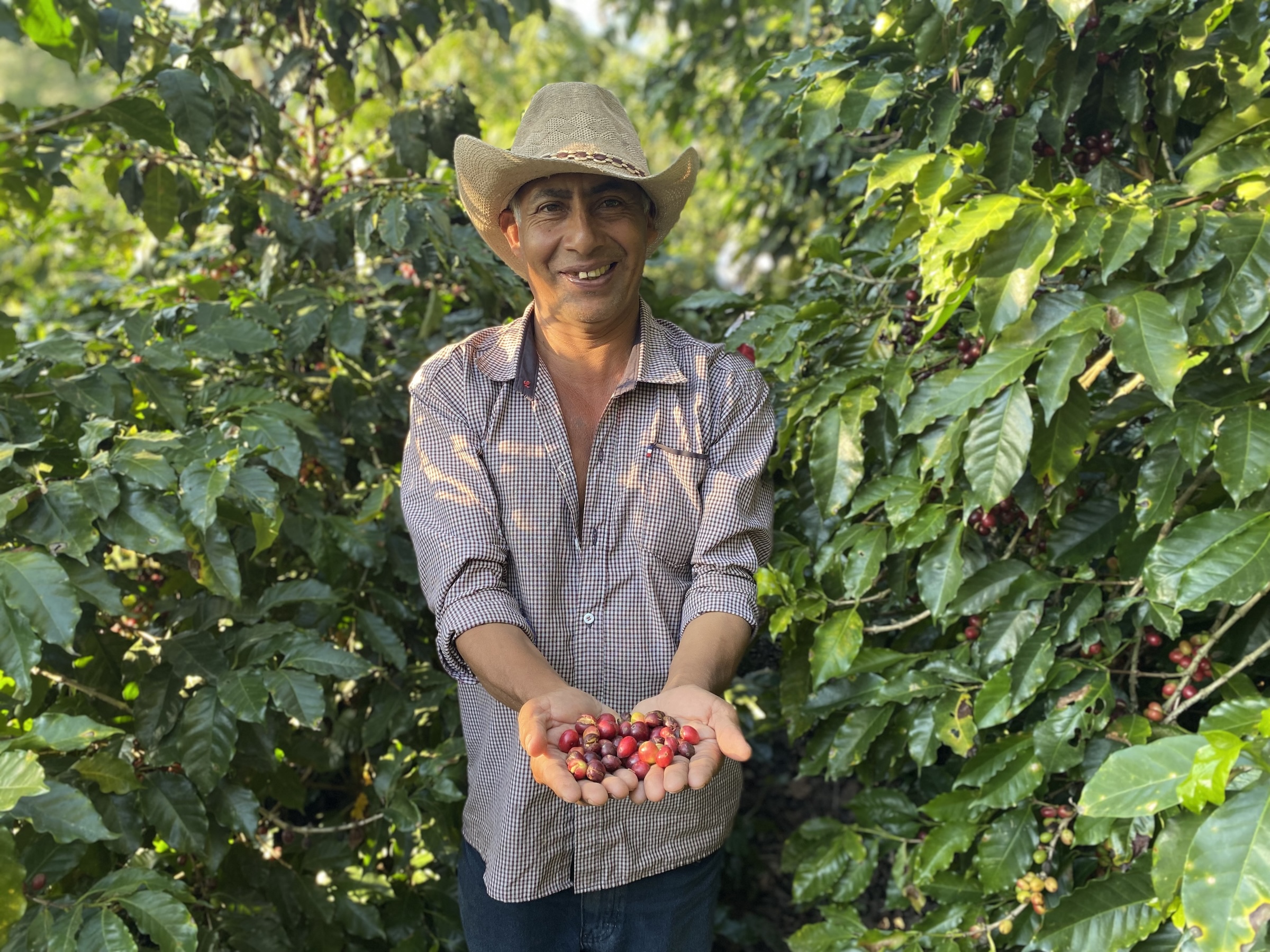
Banner image: Coffee farmer Gonzalo López, aged 54, from Concepción de Soluteca, has raised and educated his children and grandchildren thanks to coffee. Image by Sandra Weiss.
FEEDBACK: Use this form to send a message to the author of this post. If you want to post a public comment, you can do that at the bottom of the page.
