

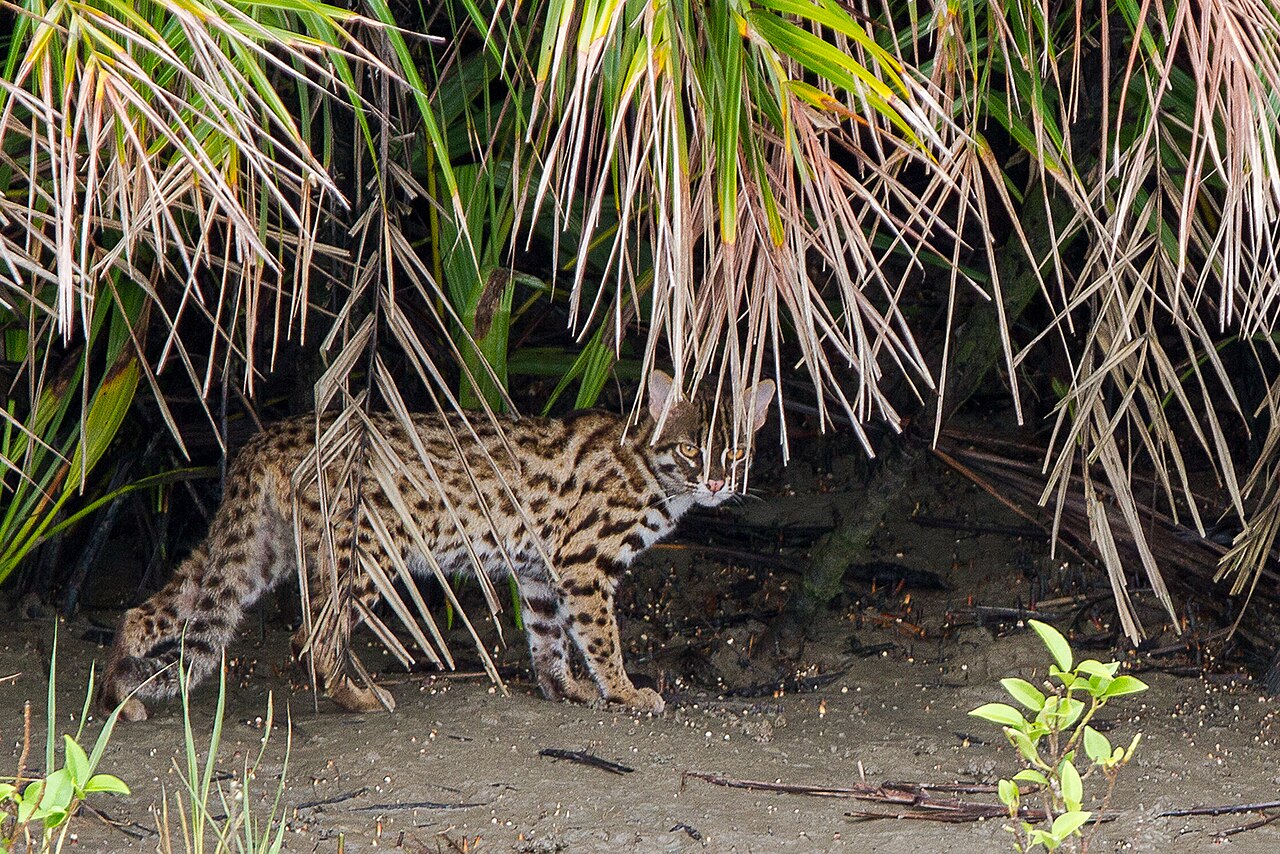
- Widespread, adaptable, and classified globally as a species of “least concern” on the IUCN Red List, the mainland leopard cat can be found across much of Asia. However, research on the species remains relatively limited.
- Despite its global status, local populations face serious threats — including habitat loss, hunting, vehicle collisions, and genetic isolation — and in some cases are considered locally critically endangered. Global assessments can mask these regional declines due to how conservation status is assessed.
- Researchers highlight knowledge gaps caused by underfunding, language and geopolitical barriers, along with unshared data. They stress that more focused studies, genetic research, and conservation initiatives that involve local communities are essential to protecting this ecologically important species.
There’s good news about Asia’s mainland leopard cat: Prionailurus bengalensis is thought to be one of the world’s most abundant, widely distributed wildcats. With a conservation assessment of “least concern” on the IUCN Red List, sightings are reported from India to the Russian Far East.
That’s partly because mainland leopard cats are highly successful generalists. With two recognized subspecies — P. b. bengalensis and P. b. euptilurus — this small cat is adaptable to multiple habitats, ranging from forest to shrublands to grasslands, and including areas altered by humans.
But this good news comes with a caution: Surprisingly little is known about this felid, say experts, and it may be less plentiful and more at risk than sightings alone indicate.
Leopard cats have been understudied, a trend common among small cat species, which garner less public interest than big cats, and a reality that translates into less funding for research and conservation. As a result, P. bengalensis population surveys have only been conducted at a handful of sites, leaving lots of blank spots on range maps.
Despite perceived abundance, researchers note that this felid also still faces conservation challenges and could benefit from more attention from funders and the public, as the species plays an important, if underappreciated, role in controlling rodent populations.
Of ‘least concern’ but at risk of local extinctions
Roughly the size of a domestic cat, Asia’s mainland leopard cat was first recognized as a distinct species in 2017, when recent molecular studies and morphological differences led scientists to list it separately from the Sunda leopard cat (Prionailurus javanensis) found on Southeast Asian islands.
The mainland leopard cat’s conservation status was most recently assessed for the IUCN Red List in 2021 by an international team of researchers, who, based on available evidence, determined that the species’ overall population and range “have remained more or less the same.”
However, country-level data on leopard cat populations, as with many smaller mammals, is spotty or generally does not exist, says Priya Singh, an India-based independent researcher and one of the IUCN assessment leaders.
“We have standalone studies, which cover small areas, and then based on those studies we have to extrapolate and make intelligent guesses about what the population of that species would be at a larger level,” Singh says.
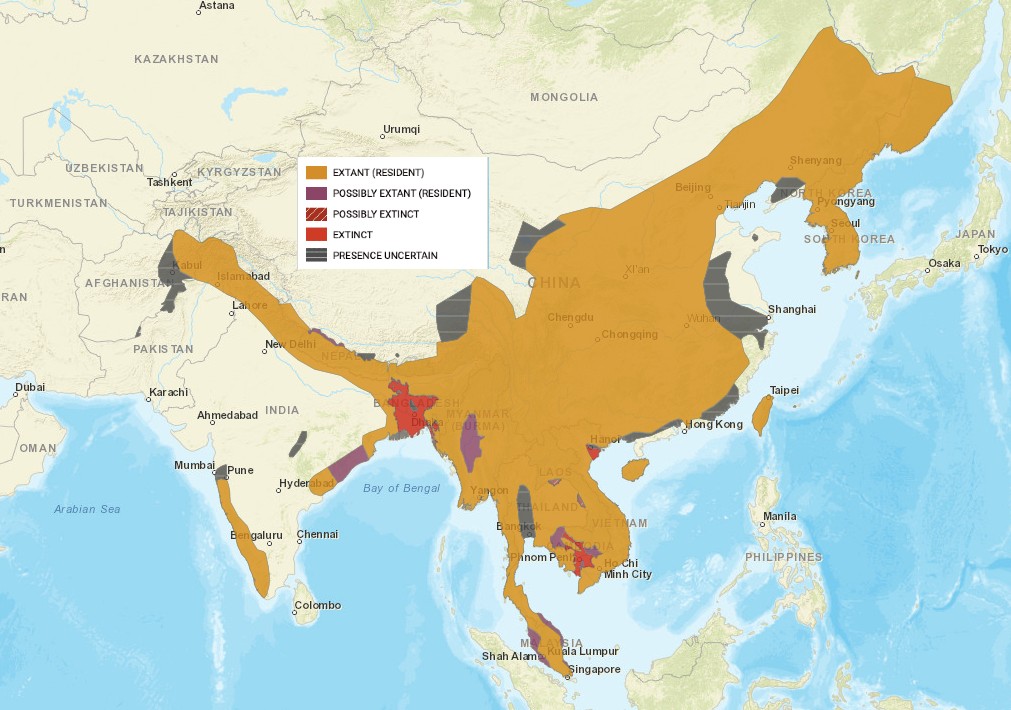
The design of the Red List framework can sometimes create misperceptions about actual conservation status, says Thomas Gray, tiger recovery lead at the WWF Tigers Alive Initiative, who was involved with the Red List assessment for the mainland leopard cat.
That’s because IUCN Red List assessments are based on a species’ three most recent generations, or a minimum of 10 years. “This shifting baseline means that some of the big declines in animal abundance that will have been caused by habitat loss over the past 30 years are kind of irrelevant in Red List assessments now,” Gray adds.
“You can [also] have situations where a species may be critically endangered in a place, may be extinct in [another] place, but its global conservation status remains ‘least concern’ because what we are looking at [with the Red List] is global, range-wide trends of population,” he says.
Critically endangered local leopard cat populations include those on Japan’s Tsushima and Iriomote islands, each of which hosts roughly 100 of the cats. Conservationists warn too that habitat loss and human activities have reduced leopard cat numbers in Taiwan, where fewer than 500 individuals remain, putting it perilously close to local extinction.
Alongside the 2021 Red List survey, the mainland leopard cat is also currently being assessed for the IUCN’s Green Status of Species, an additional evaluation that classifiers introduced in 2021 to measure the extent to which a species is depleted or recovered.
The Green Status is intended to address gaps in the Red List framework “by considering regional status, recovery status, and conservation impact,” explains Elliot Carlton, a species survival officer with the IUCN SSC Centre for Species Survival Cats.
He highlighted the example of the European wildcat, another small felid that was assessed to be of “least concern” for global extinction based on the Red List framework, yet whose Green Status assessment was found to be “largely depleted.”
“Hopefully, the Green Status assessment will provide insights into the differences in status, threats, and data quality across the mainland leopard cat’s range,” Carlton says. “I hope that, together with the Red List, the Green Status can highlight where further research efforts are needed and support planning for the species.”
Challenges to data gathering
Researchers, including IUCN collaborators making overall assessments, are confronted by many challenges in their attempts to study leopard cats, not least of which are the sociopolitical workings of human society that can vary widely between the 19 countries over which the cat’s range extends.
Language barriers are one factor that can hinder information sharing, with hundreds of languages spoken across the small cat’s far-flung territory, ranging from Mandarin Chinese to Russian, Hindi-Urdu to Nepali and Japanese. In addition, Northeast Asia tends to be underrepresented in Red List assessment teams, which primarily work in English, Gray says. As an example, he cites the “huge amount of very high-quality research that happens in China,” but which might not be fully incorporated into IUCN assessments.
Geopolitical tensions also create blind spots that hinder surveys and conservation planning. “Almost nothing is known about leopard cat populations in North Korea,” notes Kyungmin Kim, a postdoctoral researcher at the Research Institute of EcoScience at Ewha Womans University in South Korea.
“Recent research suggests that indiscriminate snaring is widespread across North Korea, with leopard cats reported as bycatch in this process,” she says, adding that some studies have indicated worrisome state involvement in illegal wildlife trafficking.
The extreme case of North Korea aside, other countries in the leopard cat’s range have less-than-stellar transparency records, though it’s unlikely governments hinder the sharing of knowledge about the species, according to Gray.
“For species that are highly politically significant and/or have had lots of money invested in them, it can be extraordinarily difficult to get the data you need,” he says. “For the leopard cat, it’s not as if no one cares, but for species [of] ‘least concern’ globally, there are no political concerns.”
Another problem: Data on leopard cats garnered during studies of other species, known as bycatch data, sometimes remain unshared and unutilized, says Yadav Ghimirey, director of Friends of Nature Nepal and first author of the Red List assessment for the mainland leopard cat.
“There are some organizations that do a lot of field work but publish only on some species. But camera trapping and other surveys provide data for a lot of other [bycatch] species as well,” Ghimirey says. He notes that this bycatch data could be shared with students and researchers to help governments with conservation planning.
Conservation threats and opportunities
While mainland leopard cats may be far from global extinction, the species does face numerous threats.
Among the most vulnerable are “island populations,” which include cats inhabiting actual islands, and those outside the species’ contiguous range on the mainland, such as the leopard cats of India’s Western Ghats region, Singh says. She notes that these isolated populations face risks related to inbreeding. “They are the ones that could end up losing out on their actual conservation or threat status when we do this wide-scale assessment.”
Vehicle strikes are also a common issue, especially as the cats’ habitat becomes increasingly fragmented by road construction. In addition, the IUCN Red List notes that “hunting and snaring occur in most parts of [the] Mainland Leopard Cat’s range and is particularly intense in South-east Asia.” The cat is also traded or hunted for its meat and fur, as well as for illegal adoption, domestication, and hybrid breeding, in parts of its range.
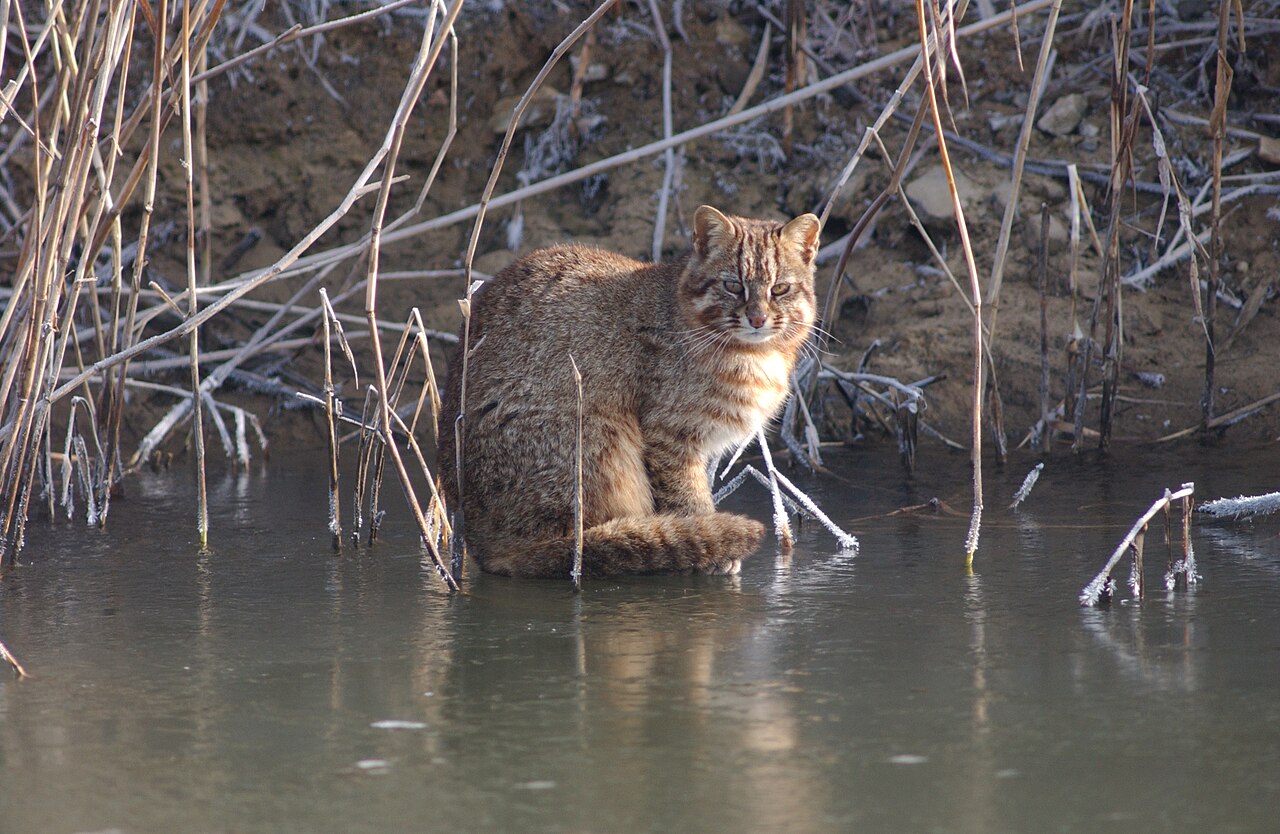
Another threat: conflict with humans over poultry, which leopard cats have been known to snatch. But in the Russian Far East, conservationists are meeting with success in dealing with these human-cat conflicts, says Ekaterina Blidchenko, a senior research assistant at Kedrovaya Pad State Biosphere Nature Reserve and at Land of the Leopard National Park.
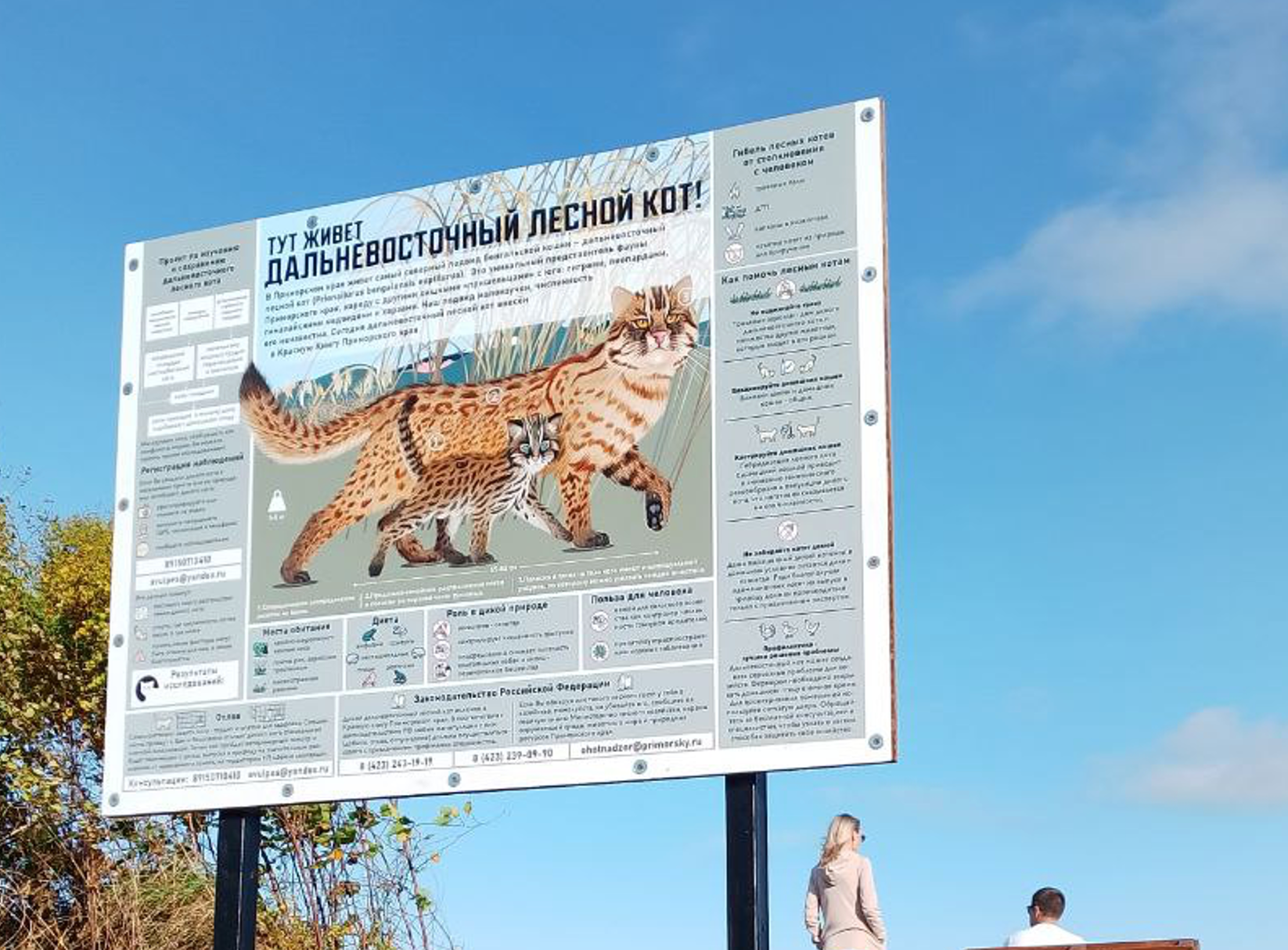
Blidchenko’s team developed a signboard to educate local farmers about the leopard cat and involve them in conservation. Placed in more than 10 villages adjacent to national parks, the signs offer contact information to local people interested in cat-proofing their poultry pens or requesting humane cat relocations. “People are increasingly resorting to humane methods of capturing leopard cats visiting chicken coops,” she says.
“[T]he leopard cat very often encounters people in anthropogenic landscapes (highways, agricultural lands, poultry houses), unlike large cats such as tigers and leopards. So it is very important to work with people to highlight the importance of preserving this species of small cat and its valuable place in the ecosystems of Northeast Asia,” Blidchenko adds.
The signs her team have placed in local communities also invite individuals to submit information on leopard cat sightings, which will help researchers map the cat’s range and populations, as well as improve understanding of threats.
Involving local communities is key to conservation, particularly outside of protected areas, Singh agrees. In her experience, “anyone who sees a wild cat — whether it’s big or small — out in the wild gets excited, whether it’s tourists or people working in their fields.”
Last cat standing
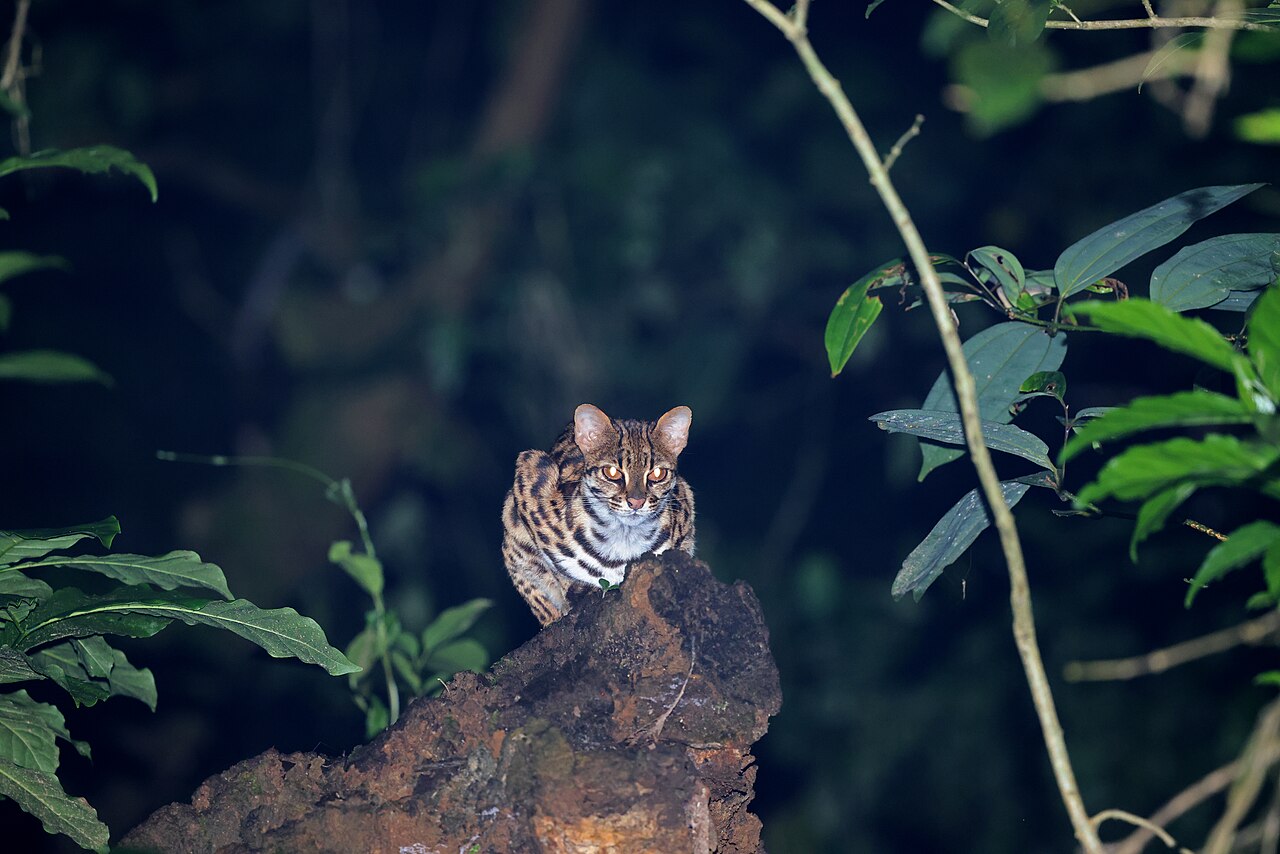
The leopard cat, perhaps due to its small size and adaptability, is sometimes the only non-threatened wild felid — or sometimes the only wild felid at all — left in parts of its range. This is the case in South Korea, which lost its Siberian tigers and Amur leopards in the 1920s and 1970s, respectively. There, the leopard cat, which prowls boundaries between forests and agricultural or residential areas, is under pressure from habitat fragmentation and vehicle strikes, Kim says.
“In South Korea, public awareness and interest in the leopard cat remains remarkably low relative to its ecological significance,” she says. “I believe that if more people came to know that this small and beautiful animal is Korea’s last remaining wild felid, public interest in, and commitment to, its conservation would grow quite naturally.”
Although South Korea’s case may be representative of the leopard cat’s low profile across its range, there have been notable exceptions: A leopard cat photo taken by Peking University professor Luo Shu-Jin via camera trap near the 2022 Winter Olympics ski slopes in Beijing (another locale where leopard cats are the only remaining wild felid) went viral when it was released in 2021, according to CNN.
The photo brought Beijing’s wildlife into view, Luo says. “In an age of rapid urban expansion, can humans and wildlife find a new equilibrium? The study on leopard cats in Beijing sets the stage for such a query,” she says.
China’s overall leopard cat population is estimated at 230,000 individuals, according to the IUCN, although Luo notes that detailed population surveys are still lacking across much of the country. In 2021, China designated the felid as a National Class II protected species. (For comparison, the giant panda is a Class I protected species.)
Elsewhere, “in Southeast Asia, the leopard cat is remarkably resilient and abundant,” Gray says. “It’s essentially the only wild cat left across the vast majority of Laos, Cambodia and Vietnam.”
He cited a 2022 study that found “relatively high” densities of leopard cats in three different forest types in Cambodia. The study’s authors note that leopard cats even appear to thrive in oil palm plantations due to the abundance of rodents there.
Given the historical lack of research into leopard cats, Singh says she would like to see new studies designed to focus specifically on leopard cat biology — as opposed to data produced only as a byproduct of big cat studies.
Genetic mapping is also needed to better understand population connectivity and inform management within distinct conservation units, Kim says.
Despite the leopard cat’s continent-spanning range, Blidchenko emphasizes the need for local focus. “While we can’t influence global processes, we can influence some specific situations,” she says. “Through the personal stories of leopard cats that have encountered humans, we can raise awareness of this species and highlight the challenges these beautiful creatures face.”
Banner image: Awareness of leopard cats is generally low across their range, as they are small, difficult to spot, and are sometimes mistaken for domesticated cats or leopard cubs. This one was photographed in the Sundarbans mangrove forest of West Bengal state, India. Image by Soumyajit Nandy via Wikimedia Commons (CC BY-SA 4.0).
Citations:
Kim, K., Jang, Y, & Borzée, A. (2021). Update on the range of leopard cats in the Republic of Korea. CATnews, 72, 38-39. Retrieved from https://www.researchgate.net/publication/349163657_Update_on_the_range_of_leopard_cats_in_the_Republic_of_Korea
Pin, C., Phan, C., Kamler, J. F., Rostro-García, S., Penjor, U., In, V., … Macdonald, D. W. (2022). Density and occupancy of leopard cats across different forest types in Cambodia. Mammal Research, 67(3), 287-298. doi:10.1007/s13364-022-00634-6
FEEDBACK: Use this form to send a message to the author of this post. If you want to post a public comment, you can do that at the bottom of the page.
