

- Every year, billions of birds migrate long distances with the changing of seasons — according to BirdLife Africa, 40 to 50 percent of avian species migrating to and from Africa are in decline.
- BirdLife Africa’s Kariuki Ndang’ang’a says climate change and infrastructure collision stand as three of the main reasons for the decline in migratory bird species.
- Because many birds rely on the same sites each year to make their transit, loss or degradation of even small areas can push an entire population towards collapse.
Each year in May, World Migratory Bird Day draws attention to the billions of birds that migrate long distances with the changing of the seasons, a living braid of ecosystems separated by thousands — even tens of thousands — of kilometers. According to Kariuki Ndang’ang’a, BirdLife International Africa’s regional director, about 2 billion birds fly along the African-Eurasian flyway every year: the populations of between 40 and 50 percent of these migratory bird species are in decline.
Ndang’ang’a told Mongabay added that the birds that travel furthest are at greatest risk. Some species, like Abdim’s stork (Ciconia abdimii), migrate relatively short distances within the continent, but palearctic migrants — those coming from distant landscapes in Europe or Asia — are particularly vulnerable, experiencing over a 30% decline in the past 30 years.
“Because these birds depend on specific stopover sites (like Lake Chad or the Nile Delta), the loss of even one small wetland can cause an entire population to collapse,” Ndang’ang’a wrote in an email.
According to Ndang’ang’a, habitat loss, climate change and infrastructure collision stand as three of the main reasons for the decline in migratory bird species.
“For instance, the drainage of wetlands for agriculture or urban expansion has greatly affected migratory birds as they search for resting and feeding ground,” he said. Lake Chad, on the southern edge of the Sahara Desert, has lost 90% of its surface area since the 1960s, depriving millions of birds such as the European roller (Coracias garrulus) a refuge.
Climate change presents another challenge for migrating birds, he said.
“Rising temperatures cause ecological mismatches where birds arrive at breeding grounds after their primary food sources (like caterpillars) have already peaked. The European warblers have ended up reaching their breeding grounds in poor condition because the Sahel wetlands in Africa are drying up earlier than usual due to changing rainfall patterns.”
“Thirdly, poorly manned infrastructure such as power lines and wind turbines cause thousands of deaths annually for large soaring birds like storks and raptors, which often follow [fly along] specific mountain ridges or valleys where wind farms are built,’’ he added.
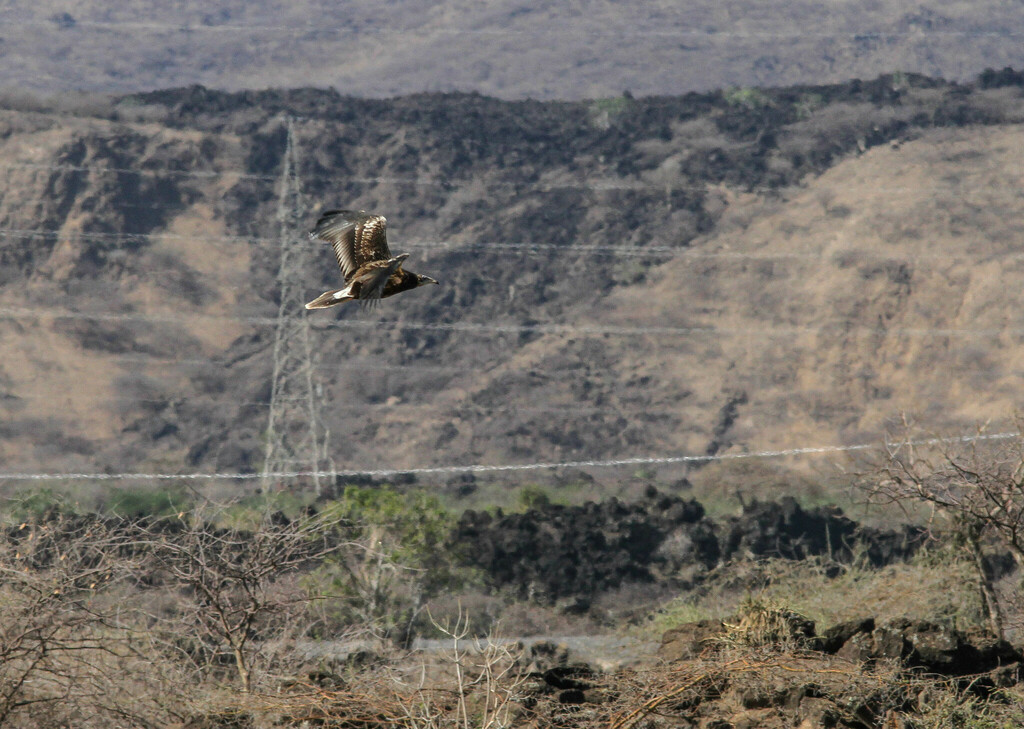
Paul Matiku, the executive director of conservation NGO Nature Kenya, says there are several successful projects aimed at preventing the death of migratory birds from collisions with energy infrastructure.
“For instance, in the intervention at the Gabal-el Zayt wind farm in Egypt, conservationists and engineers use a protocol to temporarily stop wind turbines when large flocks of migratory birds are detected approaching the site. This has significantly reduced the mortalities of birds such as the white stork from collisions without causing substantial power losses to the grid.”
In Sudan and Ethiopia, power lines have been retrofitted with visibility markers and insulation to prevent the electrocution of species like Egyptian vultures (Neophron percnopterus).
“In Kenya, Nature Kenya worked with Birdlife International and government partners and produced wind power strategic environment assessment report which helps to map places that are most important for migrating birds and which should be avoided during wind power placement,” Matiku said.
Nature Kenya has also enlisted residents of local communities with first hand knowledge of the most common places where birds fall victims of power lines. The NGO provides training for site support groups to gather better information to guide the relevant authorities to rethink powerline design.
From Africa to Central Asia, the European roller’s migration builds relationships

World Migratory Bird Day’s May date has been chosen to coincide with the peak migration period for birds using not only the African-Eurasian flyway, but others linking East Asia to Australia or North to Central and South America.
“Migratory birds connect continents,” said Blessings Chingagwe, who works for one of BirdLife’s partners, Wildlife and Environmental Society of Malawi in March.
“A bird feeding at Chia Lagoon may have travelled thousands of kilometres from Europe or Asia. If just one important wetland along the flyway is lost or degraded, it can affect populations across multiple countries. Protecting wetlands in Malawi is part of protecting a global ecological system.”
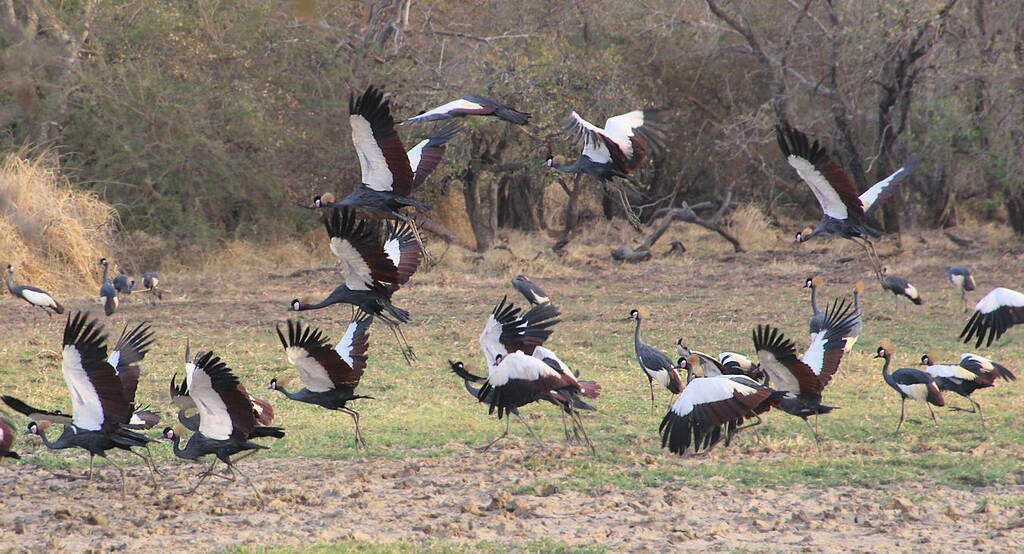
Banner image: Black crowned cranes (Balearica pavonina) at Guéra, Chad. Image by Michael 2020 via iNaturalist (CC BY-NC-ND 4.0)
Fewer migratory birds stopping at key Bangladesh wetland amid human disturbances
Feedback: Use this form to send a message to the author of this post. If you want to post a public comment, you can do that at the bottom of the page.
