

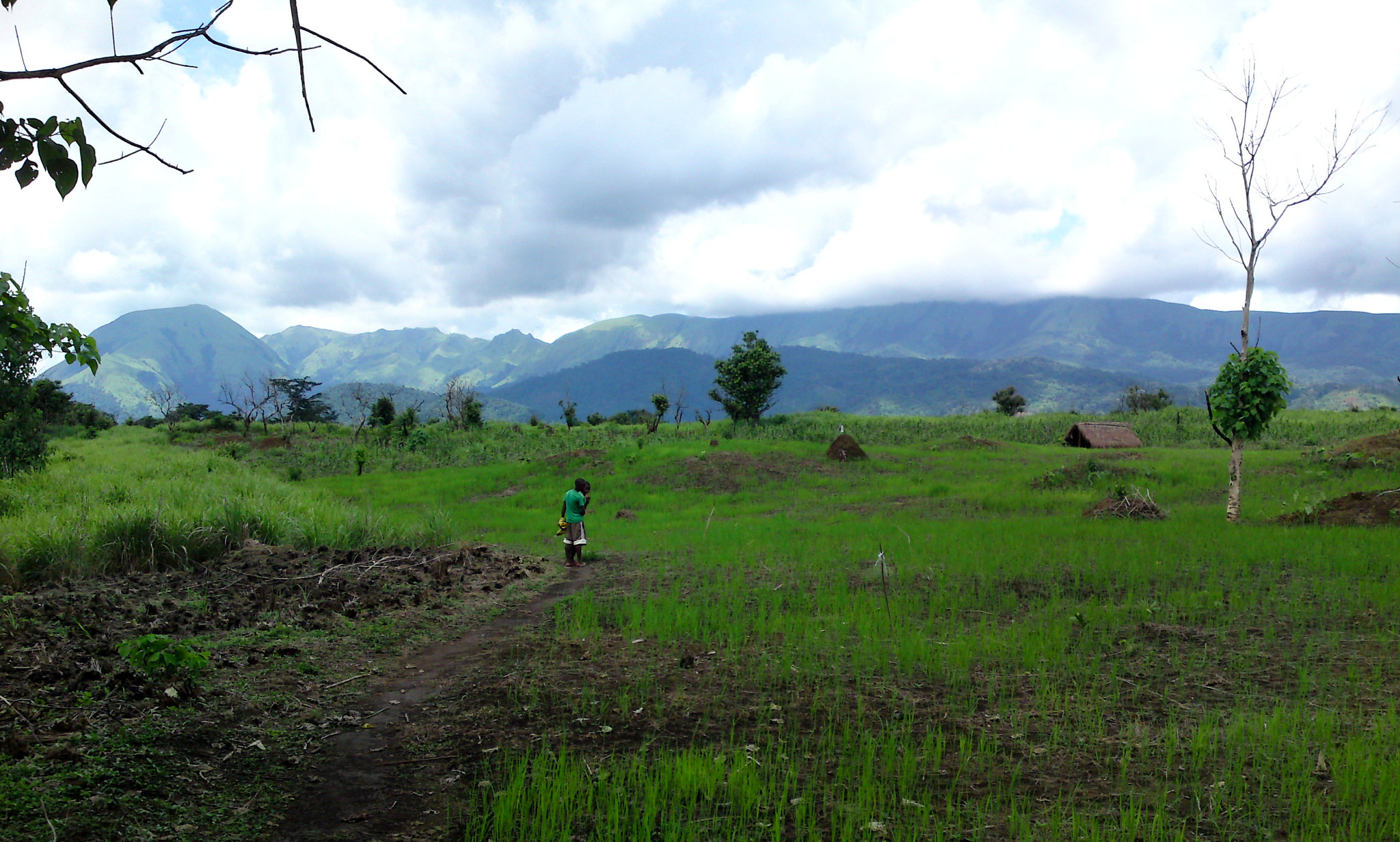
- The Nimba mountain range, which lies at the border of Liberia, Guinea and Côte d’Ivoire, is one of the most biodiversity-rich regions of West Africa.
- Home to western chimpanzees and other threatened species, it is also the site of some of the world’s highest-quality iron ore deposits.
- “Overburden,” a film produced by researchers and academics, explores the impact of mining on the Nimba range, and its increasingly close relationship with conservation.
For good reason, mining and conservation are typically understood to be activities that exist in opposition to each other. But a new film explores how in some landscapes, the two have developed a symbiotic relationship — for better and for worse.
Set in northern Liberia’s Nimba mountain range, Overburden examines the historical and ongoing impact of iron ore mining on a “hotspot” habitat for rare and threatened species like western chimpanzees (Pan troglodytes verus). Produced by Gregg Mitman, author of Empire of Rubber and a visiting professor at Germany’s Ludwig-Maximilians University, the film follows a cast of Liberian conservationists, forest rangers and community forest guards as they navigate the legacy of multinational extractive companies that have operated in the Nimba range since the early 1960s.
A high-elevation network of tropical forests and windswept peaks that straddles the borders of Liberia, Guinea and Côte d’Ivoire, the Nimba Mountains are one of the most unique biospheres in Africa. They contain the East Nimba Nature Reserve, which UNESCO describes as Liberia’s “richest forest domain … in terms of rarity and endemic species composition,” as well as Guinea’s Mount Nimba Strict Nature Reserve, a UNESCO World Heritage Site.
As such places often are, it is also the site of some of the most coveted mineral deposits on the African continent. The iron ore inside the mountains is of such a high grade that it’s suitable for low-carbon “green” steelmaking techniques. Nimba’s protected areas are thus uneasy neighbors with lucrative multinational concessions, some long-abandoned, others either currently operational or in the works.
The line between the range’s iron concessions and off-limits conservation areas can be so close that in one case the boundary between the two is literally marked with a white rope, as with U.S. firm Ivanhoe Atlantic’s proposed mine in Guinea.
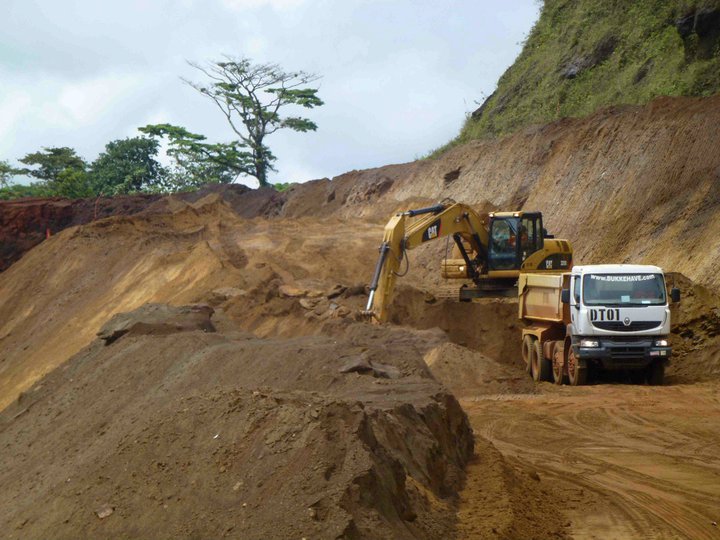
Overburden explores how this proximity has shaped Nimba’s landscape over the last 60 years. Over that period, miners like U.S.-Swedish LAMCO, now long defunct, have irrevocably altered its ecology, leaving behind craters so vast they’ve filled with water and are now akin to lakes.
Others, such as Luxembourg-based steelmaking giant ArcelorMittal, Liberia’s largest foreign investor, are closely tied to conservation efforts in Nimba meant to offset their impacts.
ArcelorMittal recently signed an agreement with the Liberian government to help manage the East Nimba Nature Reserve. The miner is also one of the primary channels for biodiversity research in the region, primarily through the surveys it finances to assess its environmental impact.
Mitman, the film’s creative producer, said Nimba is a case study in how mining companies are increasingly playing the dual role of extractor and conservationist.
“One of the things we’re looking at is how infrastructures of extraction like mining become the avenues through which conservation scientists come and start surveying and mapping these areas,” he said.
The financial weight of a company like ArcelorMittal can generate invaluable scientific knowledge. But it can also create a paradox where the actor that poses the largest threat to an ecosystem also becomes its most visible spokesperson and protector.
“It’s all about whose expertise is recognized, who is highlighted as a threat and by whom, and at the end of the day whose activity is seen as indispensable to the national economy,” said Shadrach Kerwillian, a Liberian conservation biologist who’s one of the film’s central characters as well as a Ph.D. student of Mitman’s.
Kerwillian is a former employee of the conservation organization Fauna & Flora, which has itself received funding from ArcelorMittal for its work in the East Nimba Nature Reserve, although he said his work was supported under a USAID project.
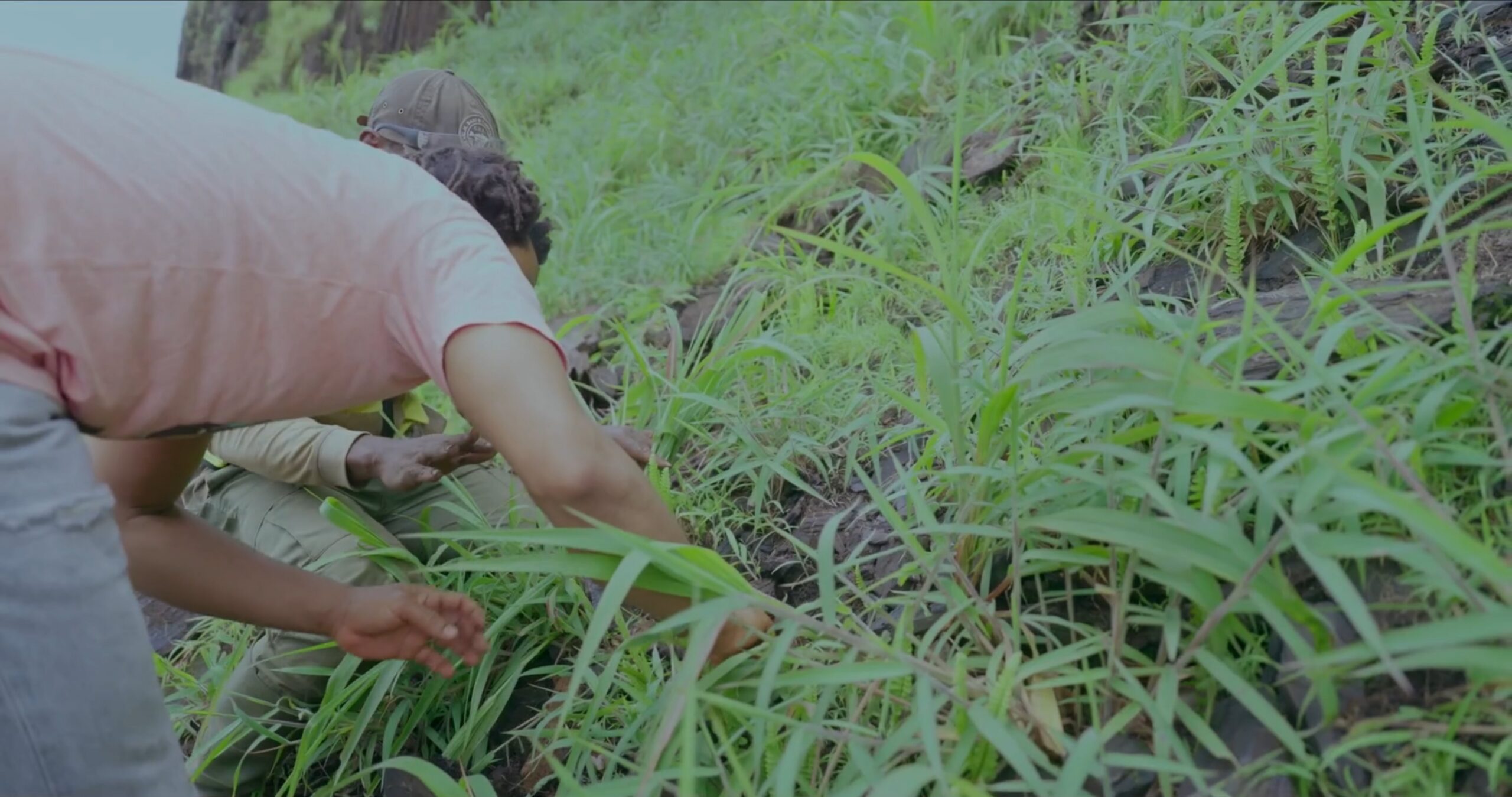
Most of Overburden takes place in community forests, protected areas, and the altered landscapes of former mining sites where wildlife have made new homes. In one of the film’s most impactful scenes, Kerwillian is accompanied by forest ranger Moses Darpey into the mist-shrouded ruins of LAMCO’s former operations, high on a grassy ridgeline that’s littered with rusting equipment. In his former life as a charcoal harvester, Darpey was once considered a threat to the reserve and a target of conservation enforcement. Now a government-recruited ranger, he points Kerwillian toward a pile of rocks.
Hidden inside is one of the rarest species in the range: a tiny Nimba toad (Nimbaphrynoides occidentalis). Classified as critically endangered on the IUCN Red List, they’re one of the few toads to reproduce through live birth rather than egg-laying. Only a handful are left in the wild.
Some of the film’s strongest moments are here in the ruins. Bats, chased away from their habitat by mining activities, find new homes in abandoned quarry buildings or man-made tunnels. There is an eerie reassurance in the emergence, however tentative, of new ecological formations out of decades-old wreckage. Nature is resilient — but it is also on its heels here in Nimba, and some species may not survive.
“How do we think about these highly terraformed landscapes and care within those spaces?” Mitman said. “Because that’s what we have to live with, and that’s what the people that are there are confronted with and will be long after these mining companies have gone.”
There are gaps in Overburden’s narrative structure, but what it lacks in focus it makes up for in gorgeous imagery and a sophisticated look at the reality of mineral extraction in a place like Nimba. The geopolitics and profits at stake in the range’s iron deposits make it all but certain that they will continue to be exploited. What changes nature and the people who rely on it will have endured by the time the last trainload of ore departs Nimba remains to be seen.
“It’s not a simple story of good conservation, bad mining, or good company, bad people or something like this,” Kerwillian said. “It’s a complex story that requires people pay attention to be able to work out solutions that are specific to the place.”
Banner image: The Nimba mountain range as seen from southern Guinea. Image by Maarten van der Bent via Flickr (CC BY-SA 2.0).
Citation:
Giljum, S., Maus, V., Sonter, L., Luckeneder, S., Werner, T., Lutter, S., … Bebbington, A. (2025). Metal mining is a global driver of environmental change. Nature Reviews Earth & Environment, 6(7), 441-455. doi:10.1038/s43017-025-00683-w
FEEDBACK: Use this form to send a message to the author of this post. If you want to post a public comment, you can do that at the bottom of the page.
