

This year, Martinez became a beneficiary of the very programs he helped negotiate back on the commissioners court: He received two donations from NextEra, totaling $3,000 — Coz 4 Oz’s entire budget for the moment.
It’s not just medical emergencies that create transportation woes in Ozona. Ordinary errands can be just as burdensome. As in many small towns, the local grocery store prices are high. Prices are better in San Angelo, so seniors will often carpool for the 90-minute drive, or if someone is planning to make a trip, they’ll take a list of what their neighbors need. Much of the impromptu organizing runs through the senior center, said Director Emily Marsh. “It’s like a huge family.”
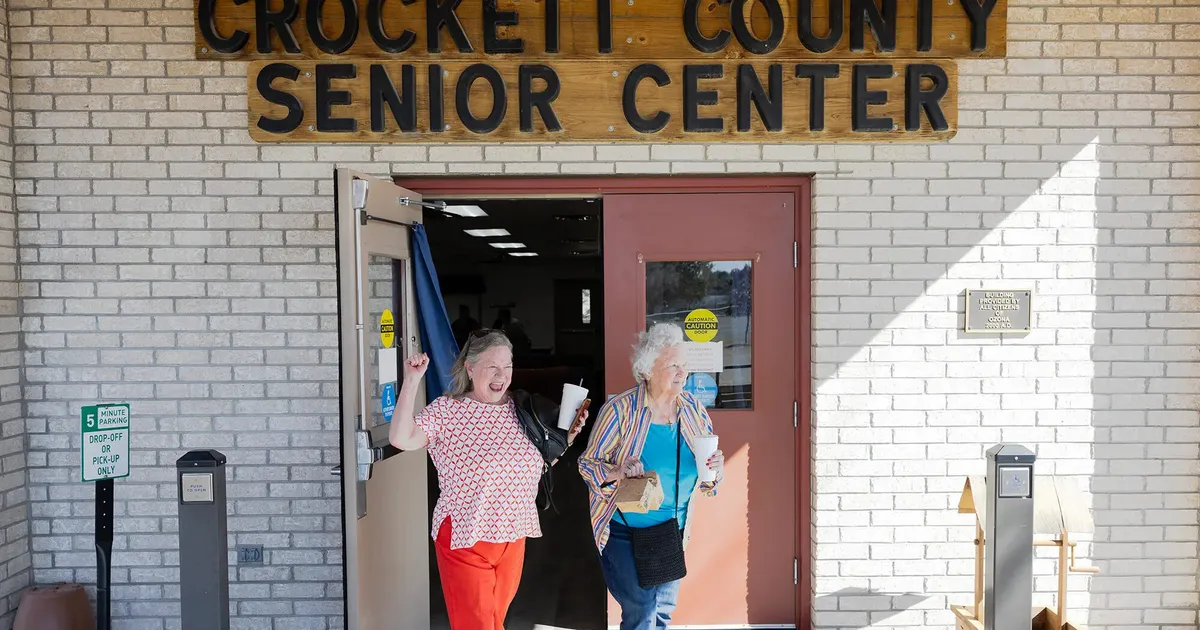
Back at the Crockett County Senior Center, while Flores and her friends were working on their puzzles, 69-year-old Arletta Gandy loaded trays of hot meals into her small SUV. The former grocery store manager’s dangly, candy heart–inspired earrings bobbled as she heaved a box full of lunch sacks onto the back seat. She and two other volunteer drivers show up to the senior center every weekday to drive the three “Helping Hands” routes, delivering meals to 42 seniors around Ozona. It’s a good way to get out of the house in her retirement, said Gandy, who doesn’t consider herself “from Ozona” because, as she said, “I’ve only been here over 20 years.”
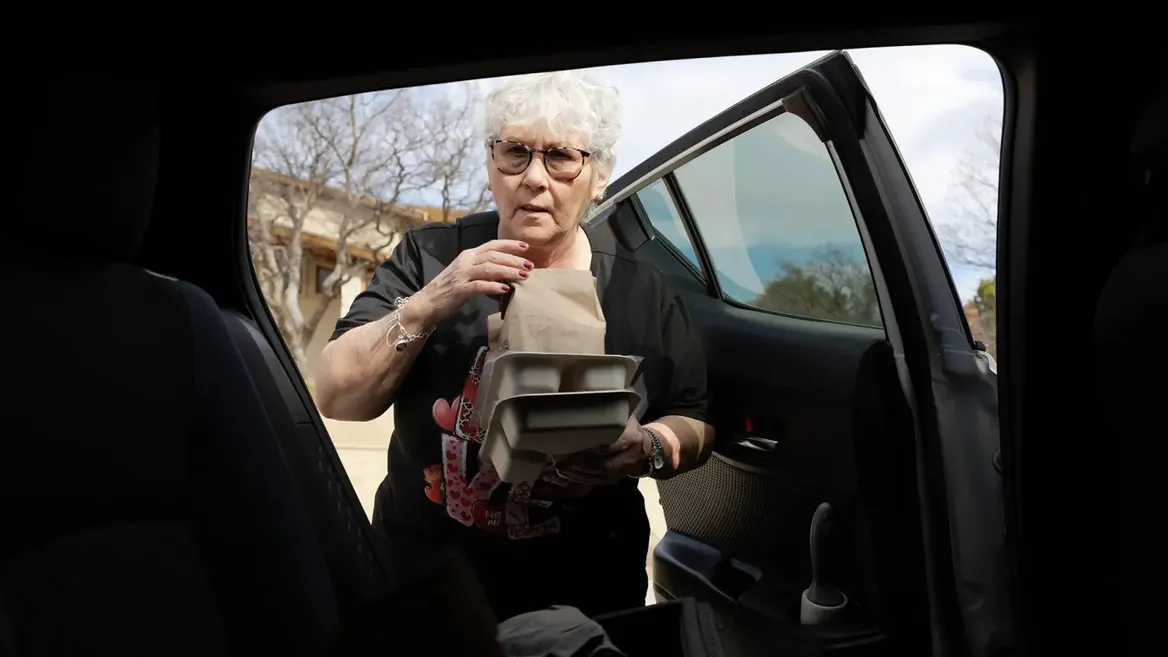
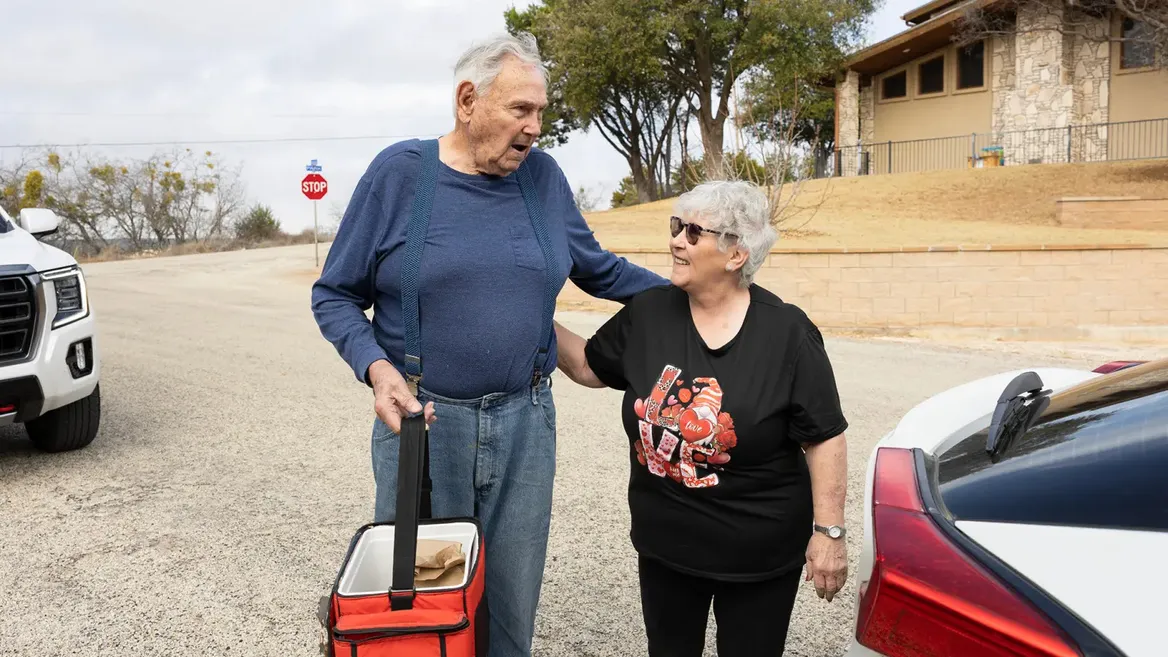
After eight years delivering meals in the community, she knows the routes by heart. She knows which recipients have dietary restrictions and which dogs will run out of the house if she opens the door too wide. At some houses, she chats briefly. Others have their own rituals. One man does little more than reach out from behind his screen door, but every day, as Gandy walks back down the plywood ramp overpassing the porch stairs, he says, “See you later, alligator.”
“After a while, crocodile,” Gandy responds.
“Nacho nacho,” the man calls back.
“Nacho nacho,” Gandy replies.
The Helping Hands program has been operating in Ozona for as long as Director Stacy Mendez can remember. She’s been involved since childhood. “I remember helping my grandmother and aunt deliver meals,” Mendez said. The program began in a local Catholic church, and when the Crockett County Senior Center opened with its commercial kitchen over 20 years ago, Helping Hands moved in.
In Texas alone, an estimated 100,000 seniors rely on meals funded through Meals on Wheels programs like this one. Across the board, federal funding for these programs has dwindled as pandemic-era appropriations expired and the Trump administration began canceling grants and slashing federal budgets. A government shutdown in the fall further disrupted an already unstable funding stream. Last September, a $20,000 donation from NextEra came just in time, Mendez said. It kept their lean operation afloat, replacing the lost federal dollars and allowing Helping Hands to continue operating through the shutdown, while other programs around the state had to cut back services.
Other Texas counties could also use the renewables boom to meet local needs. The number of Texans 65 and older is expected to more than double, from 3.9 million in 2020 to 8.3 million by 2050, making it the state’s fastest-growing population, according to AARP. That’s a concern for hunger advocates like Jeremy Everett, director of the Baylor Collaborative on Hunger and Poverty, because seniors are already one of the most food-insecure groups, after young children. But while kids can get food through their schools, such hubs don’t usually exist for seniors, especially in rural areas. In 2026, Meals on Wheels reported that nearly 14 million seniors worried about having enough food.
“Without the ability to safely and reliably access affordable food, senior adults may no longer be able to live in the rural communities they have called home,” Everett said. In Crockett County, money from the wind farms is helping to address that issue. The county is also working with the Baylor Collaborative on Hunger and Poverty to identify ongoing gaps. Especially in times of economic uncertainty, a coalition-based approach to senior hunger is vital, said Everett. No one sector can meet every need, so partnerships between local governments, industry, and nonprofits are key. “That’s how strong food systems are built from the ground up,” Everett said.
There’s another group of Crockett County seniors who benefit from the wind farms: ranchers. Steve Wilkins’ family has owned and operated the 6,000-acre Flying W Ranch for four generations, and he and his wife, Belinda, now breed Brahman beef cattle and lease part of their land to hunters. Belinda also sits on the board of the senior center.
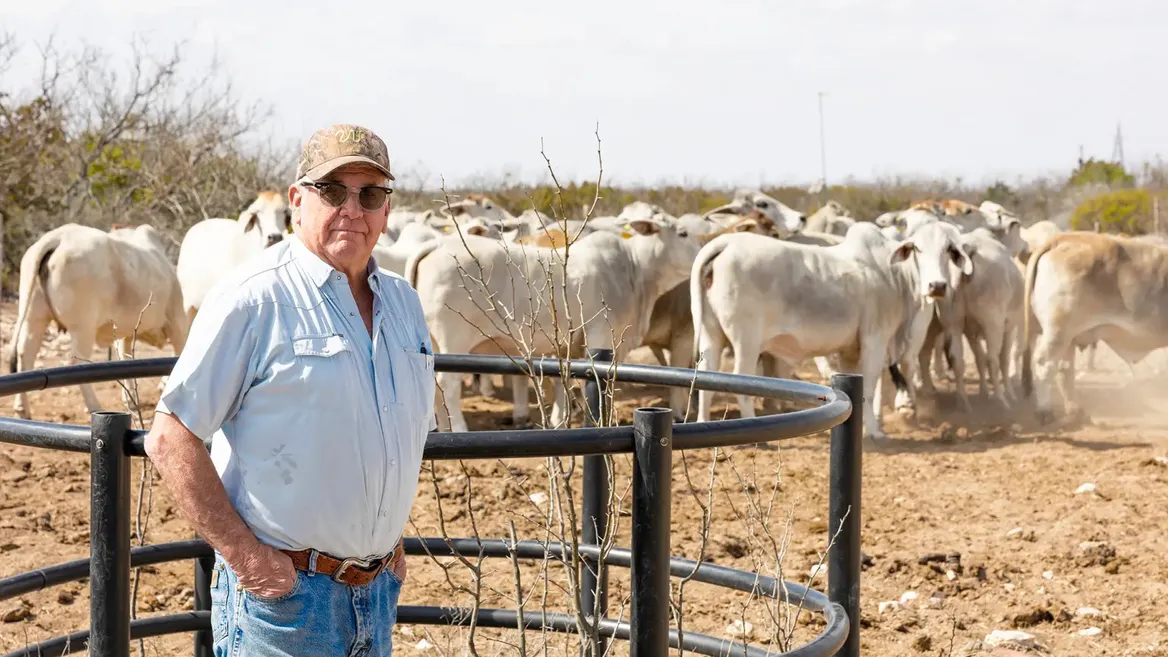
As of Valentine’s Day, Wilkins reckoned he was probably a month or so away from signing a deal to lease part of his family ranch to a wind company. Most of the ranches around them have already done so. “I’ve kind of been dragging my feet on it,” Wilkins said. He’s not sure how he feels about wind energy, but these days ranchers have to be pragmatic. Many also lease to oil and gas companies — one of the more lucrative ways to keep a ranch intact. But in “mature regions” like Crockett County, many oil wells have already been producing for decades, putting them near the end of their productivity. Natural gas can have a similar lifespan, but big profits tend to drop sharply after the first six months to two years.
Wind, of course, is not a finite resource. Theoretically, the region could keep producing wind and reaping the benefits indefinitely, or as long as demand for electricity continues apace. Still, there’s skepticism about how long it will last, Belinda said. If the wind boom comes and goes, they’ll just have to keep adapting, as they always have.
In any case, the wind farms are a longer-term investment. Wind money doesn’t start flowing to the ranchers immediately, Wilkins said. The companies told him that it could be seven or eight years before they start seeing royalties. At 70, Wilkins said that this is of little use to him. But ranchers are also used to seeing land management in generational terms. “Maybe my kids can keep the ranch,” he said.
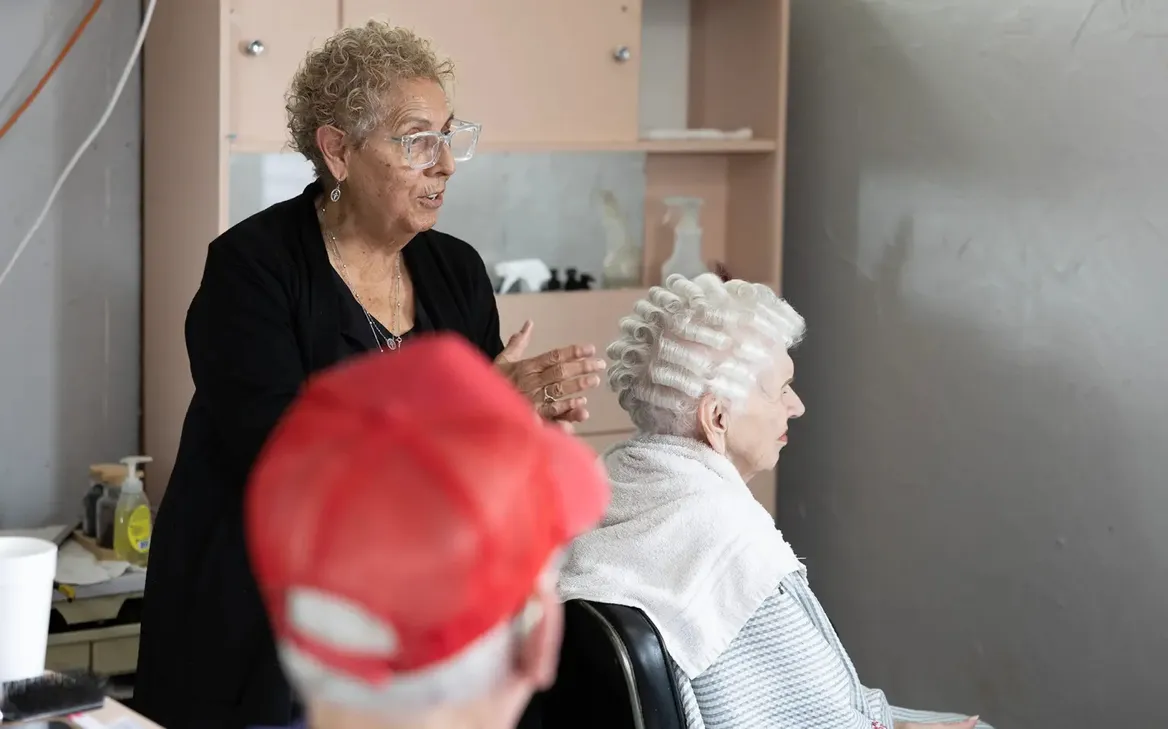
In the hours leading up to the Valentine’s Day dance, Jerry and Willa Perry checked in for their weekly appointment at Flores’ in-home salon. Jerry removed a red MAGA-style cap that said “Make Texas A Country Again” and placed his hearing aids inside while Flores trimmed his white hair. Willa, his wife of 70 years, looked on, smiling. “I can’t wait to get you home,” she joked, raising her eyebrows playfully. Jerry smirked — although he could not hear her, he got her meaning just fine.
Flores charges on a sliding scale from about $12 to $40 to make sure all her clients can afford to stay coiffed. She makes enough to stay in the house, which she rents. But at her age, she said, she knows that she’s just one medical emergency away from needing full-time care, which she’ll likely find at the county’s local public nursing home.
After finishing with her last clients, Flores changed into a billowy red pantsuit, pearls, and bedazzled sneakers. The dance didn’t start until 6 p.m., but she and several other regulars were there by 5 to get a good table. Emily Marsh and Belinda Wilkins enlisted their help setting out food on the long buffet. By the time the DJ fired up the first cumbia number, about 60 seniors were seated around the dance floor with plates of chips, cookies, and veggies with dip.
Things started slowly, but began to pick up when a country two-step song came on. Judge Tambunga and his wife got up to dance, and other couples immediately followed. At the next cumbia, Flores rustled up a group of single ladies to take the floor. A couple songs later, she led a conga line.
This story was supported by a grant from the Solutions Journalism Network.