

- A new study identified more than 1,000 conflicts in Africa over an 11-year period and found that nearly 75% were disputes over access to spaces and resources.
- The study calls for more participatory and transparent governance to reduce conflicts, warning that without such reforms, conflicts could derail African policymakers’ sustainability and equity goals.
- The analysis, based on media reports and academic articles, found that the underlying drivers of the conflicts, some more direct than others, included illegal fishing, changes in distribution of benefits, weak governance and resource degradation caused by human activity.
Marine resource conflicts can arise when industrial vessels enter coastal waters used by small-scale fishers, a port is built on a mangrove restoration site or a shipping lane runs through a marine protected area.
A new study identified more than 1,000 such conflicts in Africa over an 11-year period and found that nearly 75% were disputes over access to spaces and resources. The study, published April 17 in the journal One Earth, calls for more participatory and transparent governance to reduce conflicts, warning that without such reforms, conflicts could derail African policymakers’ sustainability and equity goals.
“Ensuring meaningful participation of affected groups is one of the biggest takeaways,” Elizabeth Selig, managing director at the Center for Ocean Solutions at Stanford University in the U.S. and lead author of the study, told Mongabay. “If you embed [these groups] within decision-making processes and are conscious of [future] actions that could affect them, you are more likely to be able to avoid conflict.”
The ocean is a site of both increased conservation interest and economic activity, Selig and her co-authors write.
“The compound impacts of a growing ocean economy, climate-change-associated shifts in marine resources’ availability, and the expansion of spatial conservation measures” increases the risk of conflicts,” they write.
The concept of blue economy, which attempts to reconcile business, sustainability and equity goals, has gained currency among coastal states across the world, including in Africa. The African Union has adopted a Blue Economy Strategy, and some African nations such as Kenya have their own.
“The prominence of the blue economy in regional and national policies across Africa, coupled with rapid ocean development, requires a better understanding of where conflicts occur, who is involved, and the nature of the disputes to find pathways to resolution,” they write.
The study looks at marine resource conflicts in 34 coastal countries in Africa from 2008-18 based on news media reports and academic literature in English, French and Portuguese.
The study doesn’t capture any definitive trends in the occurrence of conflicts. The researchers were more focused on understanding the roots of the conflicts. Of the 1,013 cases, 73% of the cases dealt with access to space or resources — for example, friction between different groups over fishing grounds and fishing licenses or quotas.
In Ghana, small-scale fishers advocated for more space exclusively for their own fishing activities and in which industrial vessels would be kept out. (That story has continued to evolve: In 2025, the government expanded the space reserved for small-scale fishers.) Other, less common types of conflict included usage of space — for example, whether a coastal site would be used for conservation work or turned into a hotel — and distribution of benefits, such as from tourism.
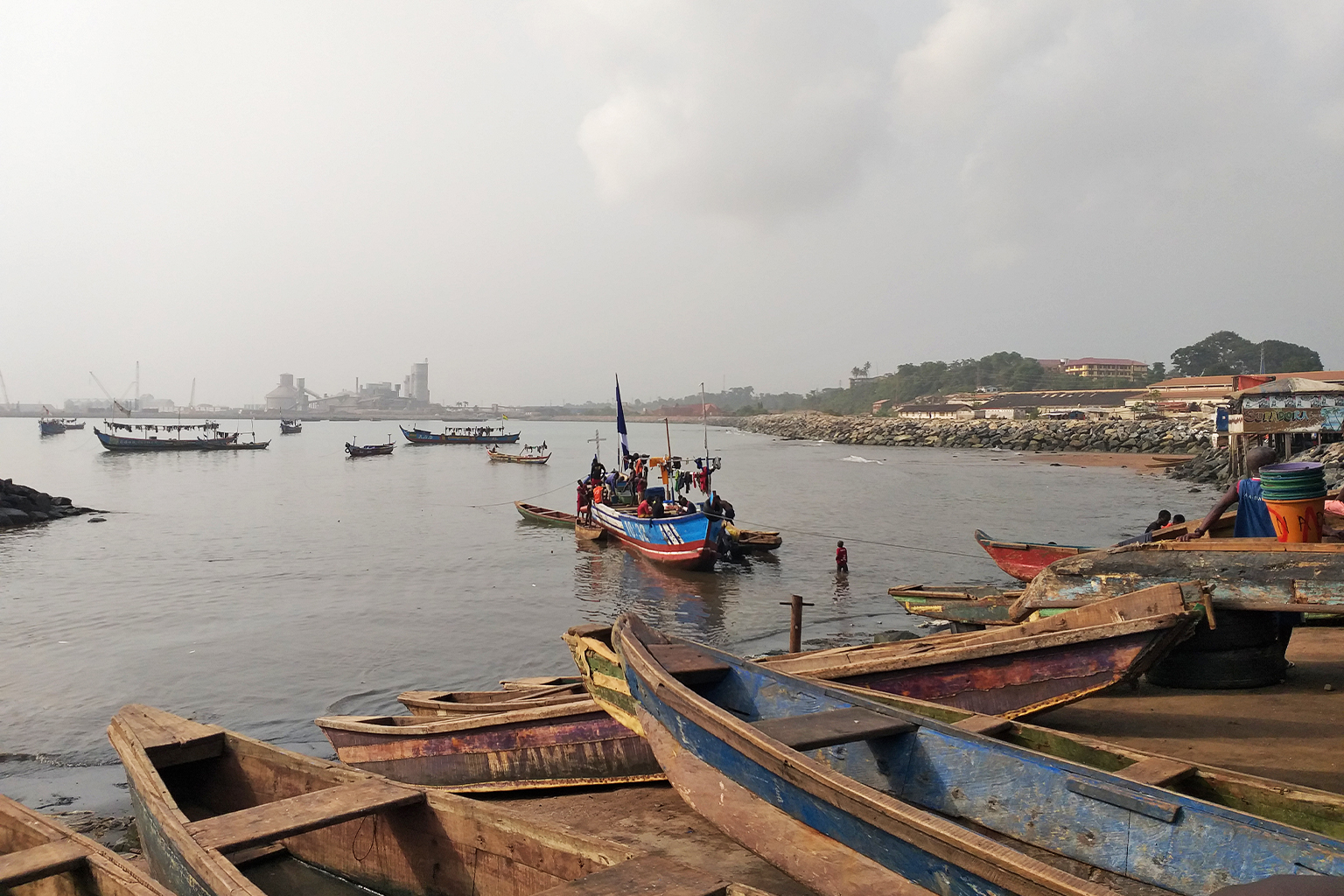
The vast majority of the 1,013 conflicts were nonviolent, the data show , only 2% involved deaths, with those that did often involving illegal fishing. More than 25% didn’t involve fishing, indicating the diversity of sectors at play in marine disputes. Examples of non-fisheries conflicts include disputes between sand miners and governments or hotel developers and communities, according to an article in The Conversation by Selig and three of her study co-authors.
The researchers found that fewer than one-third of the conflicts were resolved during the study period. They marked a conflict as resolved when an article in the database indicated it had come to an end.
“Conflict resolution is not well-studied in the literature for marine conflicts, so our findings represent an initial picture of patterns,” Selig told Mongabay in an email. “Low resolution rates for distribution of benefits and usage of space conflicts point to a need for additional or different approaches for resolving them.”
Inevitably, some marine resource conflicts in Africa weren’t captured in the database, and the authors acknowledge potential biases from factors such as “journalists’ perceptions of newsworthiness.”
Based on the news media and academic articles, the researchers found that the underlying drivers of the conflicts, some more direct than others, included illegal fishing, changes in distribution of benefits, weak governance and resource degradation caused by human activity.
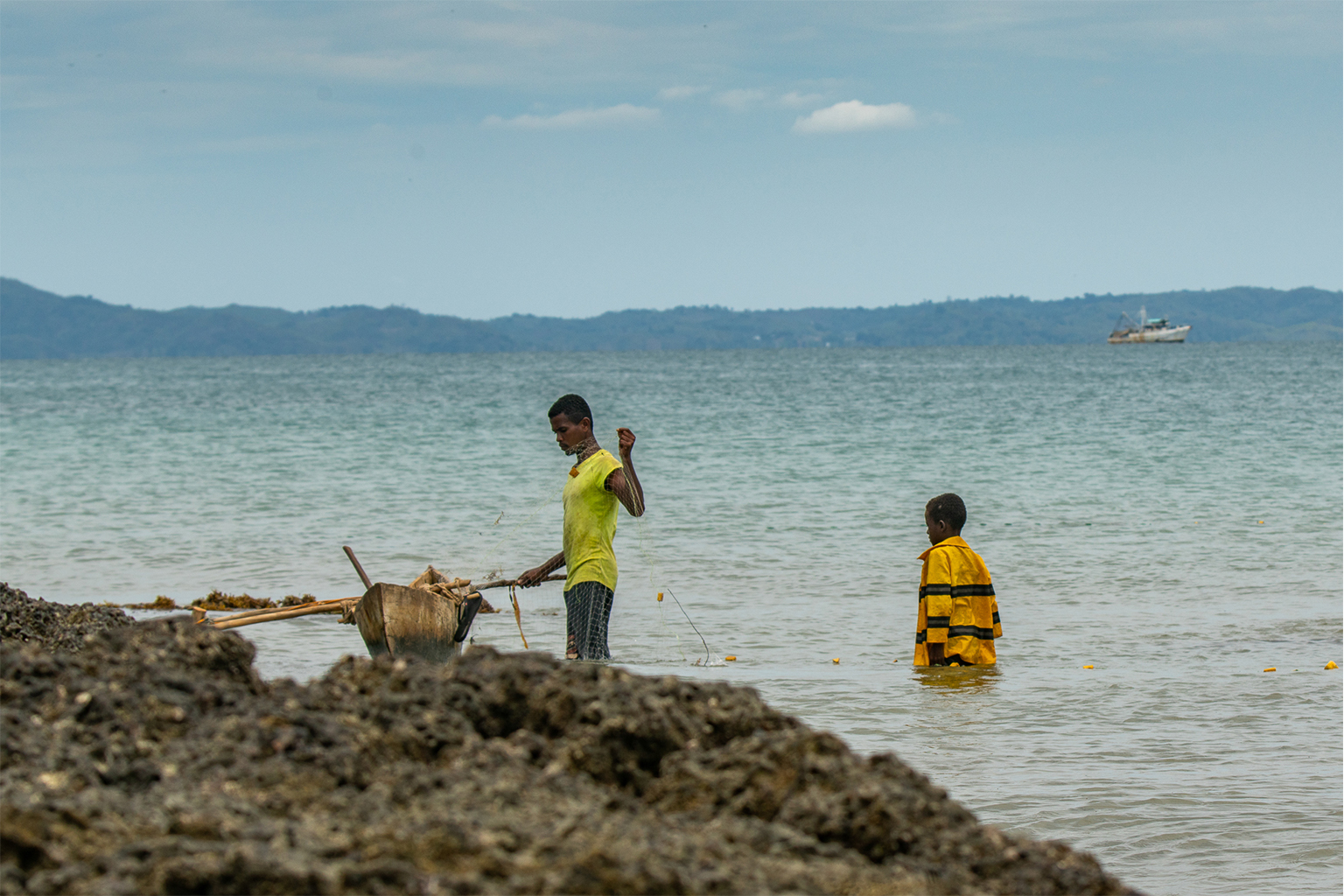
Small-scale fishers set a net close to shore on Nosy Faly in Madagascar as an industrial trawler fishes further offshore. Image by Mongabay.
Ifesinachi Okafor-Yarwood, a lecturer in the School of Geography and Sustainable Development at the University of St Andrews in the U.K., who wasn’t involved with the study, told Mongabay in an email that it “pulls together evidence on marine resource conflicts across a wide range of African coastal contexts, and shows just how widespread and persistent these disputes are. The emphasis on access as the main driver is particularly important because it captures one of the central pressure points in coastal and marine governance.”
While the study “works well as a broad empirical synthesis,” Okafor-Yarwood said, its analysis is “limited” because it doesn’t deal with the external drivers of conflicts. Factors such as distant-water fishing and global demand for marine commodities are not fully under domestic control, so a more global perspective is necessary, she said.
“So while the emphasis on more inclusive governance is important and apt, it probably needs to be read alongside a clearer recognition of external constraints and the fact that marine governance in African contexts operates across multiple levels,” Okafor-Yarwood said. “This underscores the need for greater attention to regional and global governance arrangements that shape outcomes in African marine spaces.”
In response, Selig said this was an “excellent point” and that “broader structural and historical dynamics beyond national governance play critical roles in shaping access and conflict dynamics in African marine spaces.”
“Our analysis was intentionally focused on documenting patterns in marine resource conflicts, including conflict types, actors and resolution status, based on what is reported in periodical sources,” she added. “Consequently, the set of drivers we analyze reflects those mentioned in reports and is therefore limited.”
Selig said her team aimed to assess a “wider set of potential conflict drivers” as part of follow-up research.
The database isn’t currently accessible on a user-friendly platform and doesn’t contain data past 2018, Selig said. The team started to build the database in 2019 and completed it in about three years, before artificial intelligence tools were available to help, she said.
“We would like to have something like the Environmental Justice Atlas that would let people get some information associated with particular conflicts and click on it,” she said, referring to a platform run by researchers and activists that maps conflicts over environmental issues. “We don’t have the funding for it now, but there’s many new techniques that would enable us to take this to more recent events, probably in an easier way than we did when we did the study.”
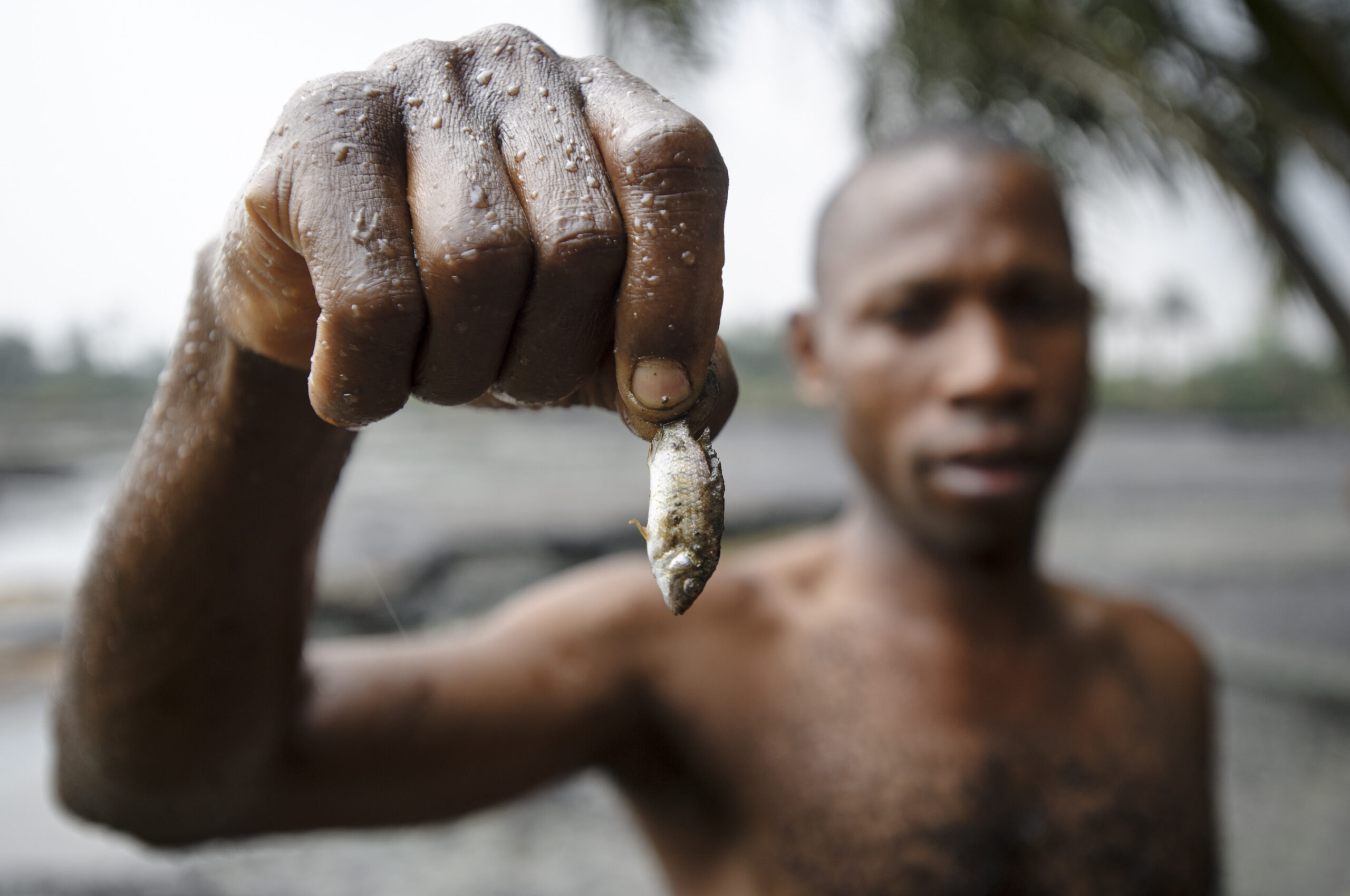
Banner image: A fisher displays a meager catch at Goi Creek, Nigeria, in 2013, following oil spills in the area in years prior. Image by Milieudefensie via Flickr (CC BY-NC-SA 2.0).
With high seas treaty in place, West African countries plan for protected area
Citation:
Selig, E. R., Achi, N. G., Sundnes, F., Wabnitz, C. C., Nakayama, S., Hjermann, D. Ø., … Tollefsen, A. F. (2026). Patterns of marine resource conflicts across Africa highlight need for fair access and benefit sharing for a blue economy. One Earth, 9(4), 101644. doi:10.1016/j.oneear.2026.101644
Feedback: Use this form to send a message to the author of this post. If you want to post a public comment, you can do that at the bottom of the page.
