

All five offshore wind farms being built in the U.S. are on track to hit key construction and operational milestones this month — even as the Trump administration continues its campaign to halt their development.
Coastal Virginia Offshore Wind, a 2.6-gigawatt project near Virginia Beach, Virginia, is expected to begin delivering power to the state’s energy-hungry grid by the end of March, according to its developer, Dominion Energy. As the first turbines start spinning, construction will proceed on the rest of the 176-turbine wind farm, which is now more than 70% finished.
Farther up the east coast, near Martha’s Vineyard, Massachusetts, the 800-megawatt Vineyard Wind is effectively complete.
Iberdrola, the parent company of Avangrid, which is one of Vineyard Wind’s developers, said on Feb. 25 that the final two of the 62 turbines would be installed “in the next days,” and that about 85% of the turbines are either operating or approved to begin exporting electricity.
Ørsted, which is developing the 704-MW Revolution Wind near Rhode Island, said the project was expected to begin generating electricity “within weeks” of a Feb. 6 earnings call. At that time, the Danish developer was pushing to install the last of its 65 turbines before its contract with a specialized turbine-installation vessel expired in late February. As of Tuesday, 60 of the total turbines have been installed, a spokesperson confirmed.
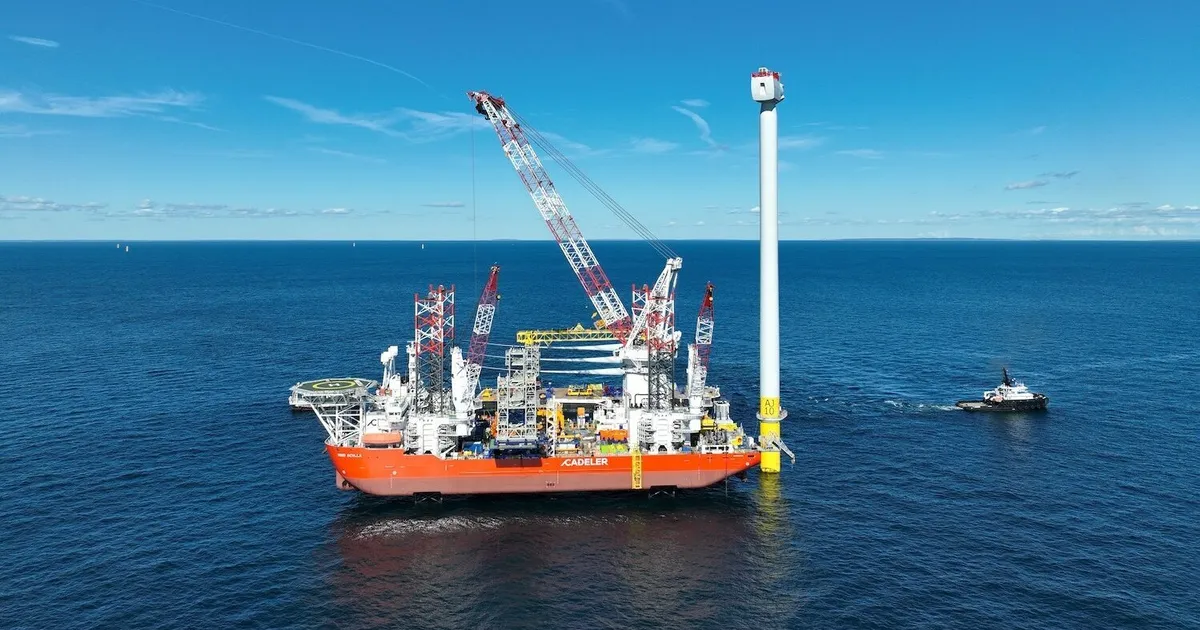
The vessel, called Wind Scylla, is now at the Port of New London in Connecticut, where its equipment is being recalibrated as part of ongoing construction operations at Ørsted’s Sunrise Wind project. Work on that 924-MW installation, off the coast of New York, was nearly halfway complete as of last month’s earnings call.
Meanwhile, Equinor’s Empire Wind just notched another legal victory. On Tuesday, a federal judge rejected the Trump administration’s latest effort to further delay construction on the 810-MW wind farm near New York. The project, which is more than 60% complete, is set to receive a new turbine-installation vessel this month to start putting towers and blades in the ocean.
Interior’s sweeping suspension order threatened to derail the multibillion-dollar energy projects — which are meant to supply huge amounts of carbon-free power to a region that’s barreling toward an electricity shortfall. Developers said the forced pauses cost them millions of dollars a day and put them at risk of losing access to the specialized vessels they need to install turbines and other offshore equipment.