

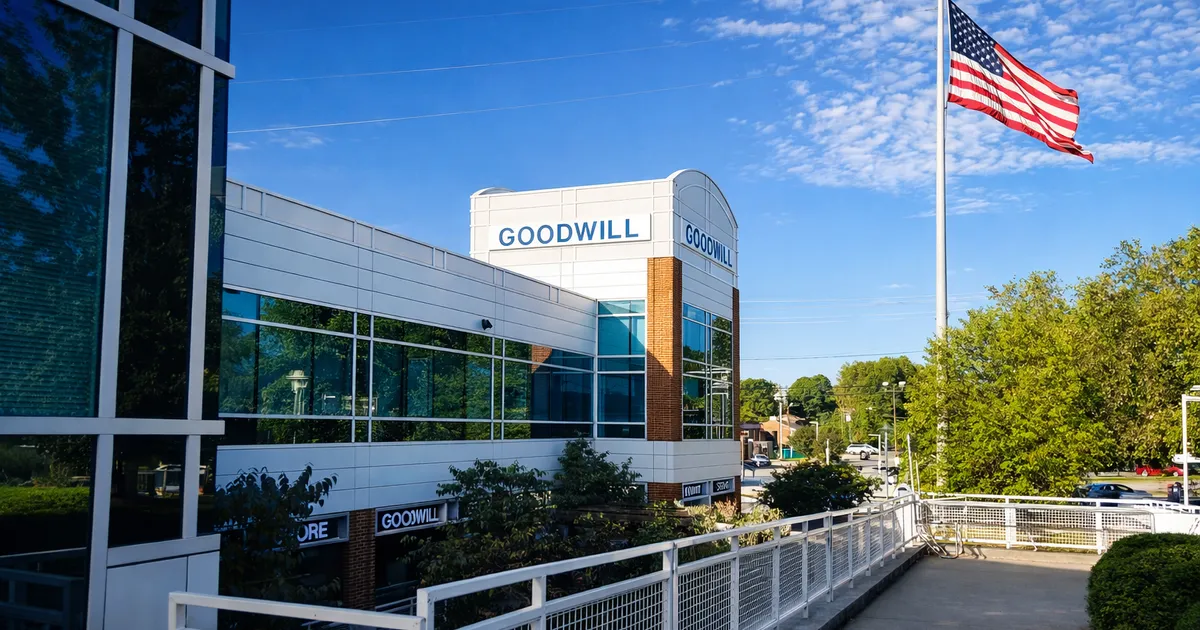
“This past year, we purchased carbon-tracking software to help us benchmark where we’re at,” Haymore said. “Once we feel very, very confident with what our carbon footprint is, we’ll be able to measure success.”
As did Second Harvest, Goodwill will reap a 30% tax credit in the form of direct pay — a mechanism established by the Biden-era Inflation Reduction Act that allows nonprofits to access the incentive, which was formerly available only to entities that pay income tax. The organization also hopes to get a 10% bonus credit since it, like the food bank, is located in a low-income census tract.
These levers, designed to help institutions with no tax liabilities and thin operating margins, remain intact at least through the end of next year — despite the axe that congressional Republicans took last summer to a host of clean energy inducements established or enhanced during the Biden years.
But last summer’s law did include new red tape: Beneficiaries of clean energy tax credits now must verify that no components of their new systems were produced by a “foreign entity of concern.” The requirement took effect at the beginning of this year, spurring Goodwill to contract for the project by Dec. 31. The installation is expected to be completed sometime this fall.
Both Goodwill and Second Harvest were recruited to go solar by the Piedmont Environmental Alliance, a local group that formed the Green Business Network to encourage businesses and nonprofits to install solar, electrify their vehicle fleets, and reduce food waste.
If there was a “silver lining” to last summer’s clean energy rollbacks, it was that “Second Harvest and others were feeling the pressure that these tax credits might not exist forever,” said Will Eley, director of the alliance’s green economy program. “They wanted to move as quickly as possible, and Goodwill was certainly responsive to that.”
Eley and his group have been a key force behind an array of initiatives in Winston-Salem and the surrounding region, including the newly launched “Electrify the Triad” campaign and a training program for clean energy jobs hosted at the Goodwill.
That’s why Eley is most excited about the fact that the solar panels will be installed by workers trained at the nonprofit.
“You can actually see the rooftop from the classroom that’s been used for that,” he said. “It’s the full circle of positive feedback loops. It’s been a lot of fun.”