

Support CleanTechnica’s work through a Substack subscription or on Stripe.
Energy storage has steadily expanded over the last twelve years. This growth may be mostly because of how much battery prices have dropped in the period, which is as much as a 75% decline. Individual homeowners and some business owners, because of how much more affordable batteries are now, may also have become much more interested than they were just a dozen years ago.
It might sound sort of unusual, but Puget Sound Energy is paying customers to get their own batteries. When there are enough individually-owned batteries within a certain area they can be used as a virtual power plant to support local utilities and grids. That is, they operate as a huge, distributed energy storage system and to the extent sometimes it may not be necessary to build a new natural gas peaker plant to use for backup.
Gary Lam, CEO and co-founder of FranklinWH, answered some questions about the program for CleanTechnica.
Is the $1,000 per battery offer a rebate, or a tax credit?
It is a rebate. When a homeowner enrolls in PSE’s Flex Batteries Program, they receive $75 per kWh of battery storage (up to $1,000). They also receive $.50 per kWh for participation in Flex events (up to $500 per year)
Why is Puget Sound Energy (PSE) making the offer?
To help take the strain off the grid during high energy use periods and create a more stable energy system across the Greater Seattle area.
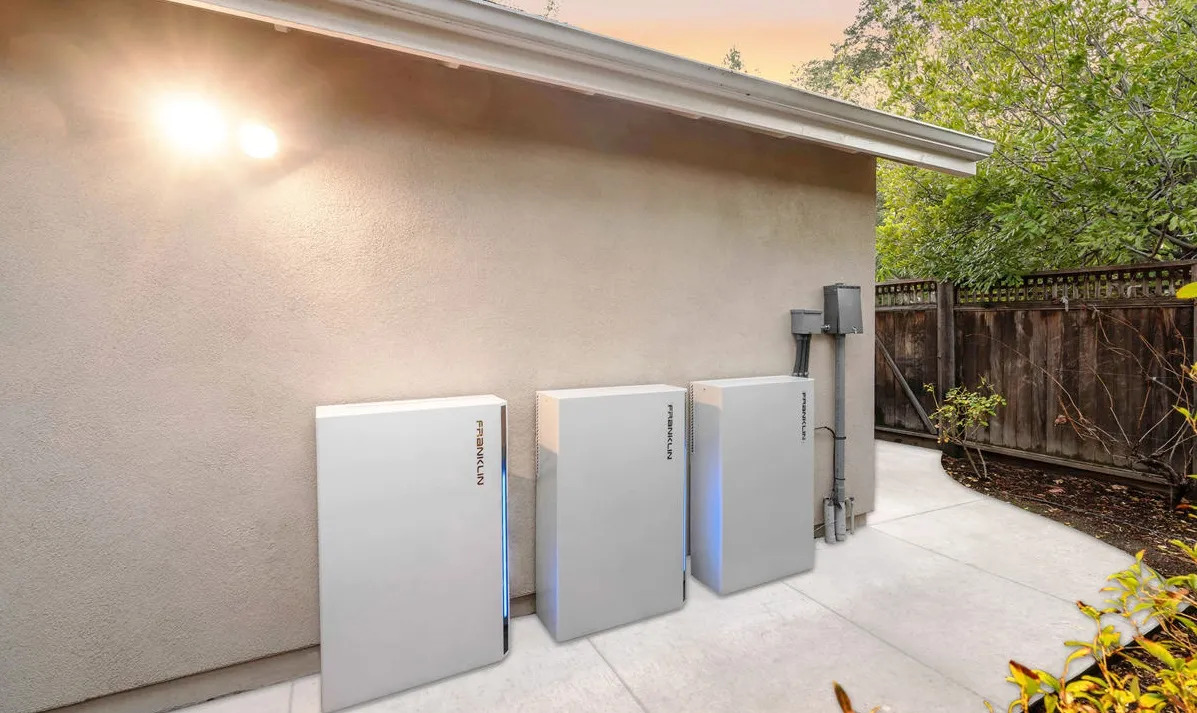
What is the capacity of each FranklinWH battery, cost, and battery chemistry?
15 kWh, Lithium Iron Phosphate (LFP) and can scale up to 225 kWh.
FranklinWH distributes its battery systems through certified installers and distribution partners, so pricing varies by market and installation scope rather than a single retail price.
What are the weight and dimensions of each battery?
The aPower S is 388 lb (176 kg) for the complete unit, including the cover. The unit without the cover weighs 365 lb (166 kg). It is an AC-coupled 15kWh LFP battery designed for wall or floor mounting, measuring 45.2 in × 29.5 in × 11.8 in (H × W × D).
The aPower 2 is 357 lb (162 kg) for the complete unit, including the cover. The unit without the cover weighs 335 lb (152 kg). It is an AC-coupled 15kWh LFP battery designed for wall or floor mounting, measuring 45.2 in × 29.5 in × 11.8 in (H × W × D).
What is each battery’s warranty?
15 years.
Can these batteries be paired with home solar power?
Yes. Both FranklinWH batteries can be paired with solar power. The aPower S offers a direct solar connection by integrating formerly external inverters into the battery. They are also unique in their ability to pair with generators. Both systems are designed to power both essentials and large home loads (AC, heaters, electric vehicles, etc.)
Sign up for CleanTechnica’s Weekly Substack for Zach and Scott’s in-depth analyses and high level summaries, sign up for our daily newsletter, and follow us on Google News!
Have a tip for CleanTechnica? Want to advertise? Want to suggest a guest for our CleanTech Talk podcast? Contact us here.
Sign up for our daily newsletter for 15 new cleantech stories a day. Or sign up for our weekly one on top stories of the week if daily is too frequent.
CleanTechnica uses affiliate links. See our policy here.
CleanTechnica’s Comment Policy